Use this new driver hazard checklist to spot risks early, build safer habits, and prepare for confident California driving practice and DMV road tests.
How Much Is Behind the Wheel Drivers Training?
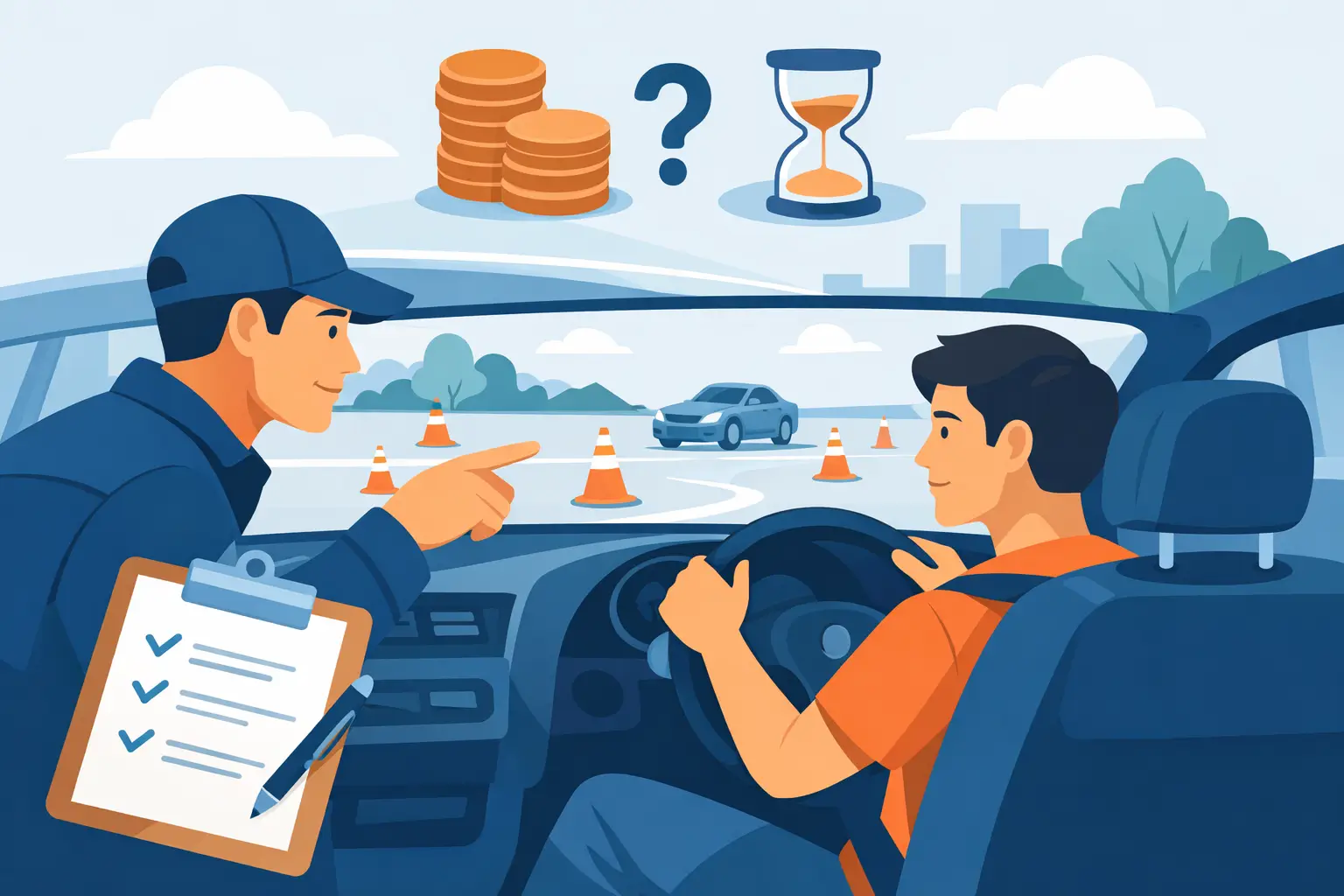
Sticker shock is common when families first ask how much is behind the wheel drivers training, especially in California where lesson quality, instructor experience, and local demand can vary quite a bit. The short answer is that pricing usually depends on how many hours you need, what kind of student you are, and whether the school includes extras like pickup, DMV test prep, or a road test vehicle.
For most students, the smarter question is not just what it costs, but what you are actually getting for that price. A lower rate can look appealing at first, but if the instruction is rushed, poorly structured, or not tailored to the driver, it may end up costing more in extra lessons, failed tests, or preventable mistakes behind the wheel.
How much is behind the wheel drivers training in California?
In California, behind-the-wheel driver training often falls into a few common price ranges. A single two-hour lesson may run anywhere from about $100 to $200, depending on the school, the location, and the instructor’s experience. Multi-lesson packages usually offer better value, and teen programs that meet state requirements often cost several hundred dollars.
For teenagers, the state-required six hours of professional behind-the-wheel instruction is often sold as a package. In many markets, that package may land somewhere between $350 and $700. In higher-cost areas or with premium service options, it can be more. For adults, pricing is often more flexible because training plans are built around the student’s current skill level rather than a fixed requirement.
Orange County pricing tends to sit on the higher end of the range compared with less densely populated parts of California. That does not automatically mean schools are overcharging. It often reflects operating costs, insurance, instructor wages, traffic conditions, and the fact that students want convenience, safety, and reliable scheduling.
What affects the cost of behind the wheel driver training?
The biggest price factor is usually lesson length and package size. Buying one lesson at a time almost always costs more per hour than purchasing a bundled program. That is true whether the student is a teen completing required training or an adult preparing for a DMV road test.
Instructor quality also matters. DMV-certified, experienced instructors who know how to work with nervous beginners, teens, seniors, or international drivers may charge more, but they often teach more efficiently. A patient instructor who can quickly identify weak spots, whether it is lane changes, turns, speed control, or parking, can reduce the total number of lessons needed.
Vehicle type and service level can also change the price. Lessons in a standard automatic training car are usually the baseline. If a student wants manual transmission training, specialized senior evaluation, defensive driving, or a vehicle for the DMV road test, the rate may be higher.
Location plays a role too. Busy urban and coastal areas generally come with higher prices because the school is dealing with more traffic time, tighter scheduling, and higher business overhead. Pickup and drop-off service, while extremely convenient for families and working adults, is another feature that can be reflected in the total cost.
Why the cheapest option is not always the best value
Driving instruction is not a commodity. Two schools can advertise the same number of hours and deliver very different outcomes. One may simply supervise the student. Another may actively coach, correct, build confidence, and prepare the driver for real California roads.
That difference matters most for students who are anxious, inexperienced, or have already had a rough start. A bargain lesson is not a bargain if the student finishes still struggling with scanning, intersections, freeway merging, or DMV test routes. In those cases, the family often pays again for more lessons somewhere else.
Good training should be structured and personalized. A beginner needs a different pace than someone who already has practice at home. An adult learner may need help overcoming fear. A foreign driver may understand traffic flow well but need support with California-specific rules and DMV expectations. When a school adjusts the training plan to the student, the money tends to go further.
Teen drivers, adult learners, and specialty training all price differently
Teen training is often the most standardized. California requires six hours of professional behind-the-wheel instruction for drivers under 18, so many schools build packages around that rule. Parents should also ask whether progress reports, flexible scheduling, and home or school pickup are included, because those details affect both convenience and actual value.
Adult lessons are usually more customized. Some adults need only a few sessions before the DMV test. Others need a full foundation because they never learned to drive, have not driven in years, or are adjusting to traffic in the United States. That means the total cost can be lower or higher than a teen package depending on the student’s starting point.
Specialty programs are often priced separately for a reason. Manual transmission training, senior driving assessments, remedial lessons after a collision, or instruction for drivers with learning differences all require a more specialized teaching approach. These are not areas where rushed instruction helps. The right fit matters more than getting the lowest advertised number.
What should be included in the price?
When comparing schools, ask what the quoted price really covers. Some schools advertise an attractive starting number, but the package may be very limited. Others are more upfront and include services that save time and stress.
A strong program often includes a DMV-certified instructor, a properly insured training vehicle, a clear lesson plan, and enough time for actual coaching rather than just driving around. Many students also benefit from pickup and drop-off service, skill evaluations, road test preparation, and scheduling that works around school or work.
If a student is close to the DMV exam, test-day support can be especially valuable. Using a familiar training vehicle and having a lesson right before the road test can make a big difference in confidence and performance. That service usually costs more, but for many students it is worth it.
How many lessons do most students need?
This is where cost becomes personal. A teen who practices regularly with a parent between professional lessons may need only the required package plus one or two extra sessions for polish. Another student with limited practice opportunities may need significantly more time.
Adults often vary even more. Someone with prior driving experience from another country may only need a small number of lessons focused on California rules, parking, and DMV expectations. A complete beginner may need a longer training plan to build safe habits from the ground up.
That is why honest schools do not promise the exact same number of lessons for everyone. Safe driving is a skill, not a checkbox. The best pricing conversation starts with a realistic assessment of the student’s goals, confidence level, and timeline.
How to choose a school without overpaying
Start by looking past the headline price. Ask whether the school is licensed, how experienced the instructors are, and whether they regularly work with students like yours. A parent of a first-time teen driver should not evaluate a school the same way as an adult who simply needs a refresher before the road test.
It also helps to ask how lessons are taught. Does the instructor provide clear feedback? Are lessons adjusted to the student’s progress? Is safety the top priority? Those answers often tell you more than the brochure price ever will.
In Orange County, many families and adult learners are not just buying driving time. They are buying professional guidance, peace of mind, and a safer path to passing the DMV test. An experienced school such as Newport Driving School can be especially helpful when the student needs more than basic instruction, whether that means patient coaching, test preparation, or a personalized lesson plan built around real-world needs.
If you are trying to decide what a fair price looks like, focus on the total outcome. The right training should help the student become safer, calmer, and more capable, not just spend a few hours in the driver’s seat. When a program is well structured and matched to the learner, the cost makes a lot more sense – and the confidence that follows is hard to put a price on.

Related Posts
Comments (0)