Learn the four way stop procedure, right-of-way rules, and safe steps California drivers can use to handle intersections with confidence every day.
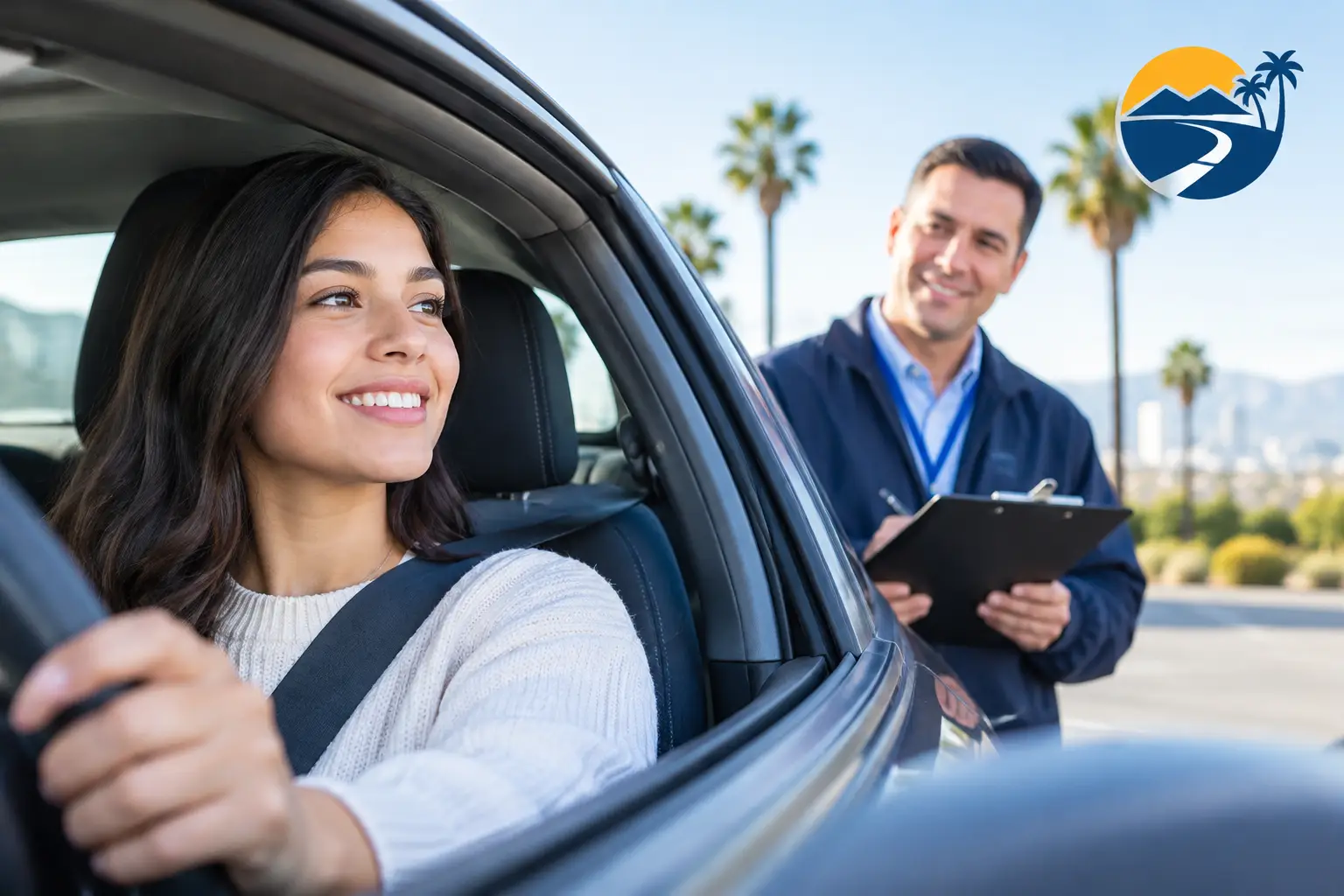
DMV Road Test Checklist for California Drivers
A missed turn signal, an expired insurance card, or a rushed lane change can change the tone of a driving test quickly. A practical DMV road test checklist helps you focus on what matters before the examiner gets in the passenger seat: a safe vehicle, the right documents, and steady driving habits that show you can handle everyday traffic responsibly.
The California behind-the-wheel test is not designed to reward perfect driving. It is designed to confirm that you can make safe decisions, follow traffic laws, control the vehicle, and respond appropriately to changing conditions. Preparation gives you more room to think clearly instead of trying to remember everything at once.
DMV Road Test Checklist: What to Bring
Start preparing the day before your appointment, not in the parking lot. Test-day requirements can change, and your appointment confirmation is the best place to verify what the DMV expects for your specific situation.
Bring your valid California instruction permit and any paperwork required for your application or appointment. If you are under 18, make sure you have completed the required driver education and training steps before scheduling the test. A licensed driver who meets California’s supervision requirements must accompany a permit holder to the DMV, since you cannot legally drive there alone.
You will also need a vehicle that is properly registered and insured. Keep current proof of insurance available in the car, whether it is a paper card or an accepted electronic version. If you are using a family member’s car, confirm in advance that the registration and insurance are current and that the owner is comfortable with you taking the test in it.
Arrive early enough to park, check in, and settle your nerves. Aim for about 15 to 20 minutes before your appointment. Arriving extremely early is usually unnecessary, but arriving late can mean losing the appointment you worked hard to secure.
Check Your Vehicle Before the Examiner Does
Before the road test begins, the examiner may conduct a vehicle safety check. If the vehicle does not meet basic requirements, the test may not proceed. This is one of the most preventable test-day problems.
Walk around the car and check these items before leaving home:
- Current registration, insurance, and license plates
- Working brake lights, turn signals, headlights, and windshield wipers
- A functioning horn, parking brake, and driver-side window
- Tires with adequate inflation and visible tread
- Clear mirrors, windows, windshield, and license plates
- Doors that close securely and a passenger seat available for the examiner
Do not wait until the appointment to discover a burned-out brake light or a low tire. Ask another person to stand behind the vehicle while you test the brake lights and signals. If rain is possible, make sure the windshield wipers work and the windshield is clean enough for safe visibility.
Your car does not need to be new or expensive. It does need to be safe, legal, and familiar to you. Taking the test in an unfamiliar vehicle can add avoidable pressure because the brake response, mirror placement, blind spots, and steering feel may be different.
Set Up the Driver’s Seat Correctly
The first minute of the test matters because it shows your readiness. Before putting the car in gear, adjust your seat so you can fully press the brake pedal without stretching. Set the mirrors, fasten your seat belt, and confirm that the parking brake is released when you are ready to move.
This is also the time to remove distractions. Put your phone away, lower music volume to zero, and ask passengers to remain quiet before the examiner enters the vehicle. The examiner gives directions, but you are still responsible for observing signs, traffic, pedestrians, cyclists, and road conditions.
If you do not understand a direction, ask for clarification before making a sudden move. It is better to calmly say, “Could you please repeat that?” than to guess and turn unsafely. Do not ask the examiner whether you passed or discuss errors during the drive. Keep your attention on the next safe decision.
Driving Habits the Road Test Evaluates
Many applicants focus on special maneuvers while overlooking ordinary driving. The examiner is watching how you handle the routine actions that protect people every day: starting smoothly, checking traffic, maintaining position in the lane, stopping fully, and controlling speed.
Observation Must Be Visible
Examiners need to see that you are checking your surroundings. Use mirrors regularly, look over your shoulder for blind-spot checks before changing lanes or moving away from a curb, and scan intersections before entering them. A quick glance that is too subtle may not demonstrate what you observed, so make deliberate but natural head movements.
At stop signs, come to a complete stop behind the limit line, crosswalk, or corner. Then look left, right, and left again before proceeding when appropriate. Rolling through a stop is a common and serious mistake, even when the intersection appears empty.
Speed Control Is More Than Following the Limit
Drive at a safe speed for the posted limit, traffic flow, weather, visibility, and road conditions. Going far below the speed limit without a reason can also create problems by interrupting traffic flow. The right speed depends on the situation.
Slow down before turns rather than braking hard in the middle of them. Keep both hands in a controlled driving position, steer smoothly, and accelerate gradually after checking that the path is clear. If traffic is heavy, leave a safe following distance instead of feeling pressured to crowd the vehicle ahead.
Turns and Lane Changes Need a Routine
Use the same sequence every time: check mirrors, signal early, check your blind spot, position the vehicle correctly, and complete the movement only when it is safe. Signal for turns and lane changes even if the road looks empty.
For right turns, approach near the right side of your lane without entering a bike lane too early. Check carefully for pedestrians in crosswalks and cyclists traveling alongside you. For left turns, enter the intersection only when appropriate, keep the wheels straight while waiting, and yield to oncoming traffic and pedestrians before completing the turn.
Avoid changing lanes in an intersection or making last-second decisions because the examiner mentioned a turn. If you safely miss a turn, continue driving and wait for the next instruction. Missing a direction is usually less serious than making an unsafe maneuver to correct it.
Practice the Skills That Cause the Most Stress
A road test can include residential streets, busier roads, intersections, lane changes, parking near a curb, backing in a straight line, and traffic situations that require judgment. The route varies, so practice should build adaptable skills rather than memorizing one neighborhood.
Spend practice time on the areas that make you hesitate. If lane changes feel difficult, practice finding a safe gap, checking mirrors and blind spots, signaling, and moving over gradually. If curb parking causes stress, practice approaching slowly, checking for traffic, and parking within a reasonable distance of the curb without touching it.
New drivers often benefit from practicing at the same time of day as their scheduled test. Morning traffic, school-zone activity, and afternoon congestion can create different challenges. However, do not depend on driving the exact DMV route. A safe driver should be prepared for unfamiliar streets, unexpected pedestrians, and changing traffic patterns.
Professional instruction can be especially useful after a previous failed test, for drivers who experience anxiety, or for adults and international drivers adjusting to California driving expectations. Newport Driving School instructors help students identify the specific habits that need work, rather than repeating practice that already feels comfortable.
The Night-Before and Test-Day Routine
The night before, place your permit, appointment details, insurance information, and registration in one location. Check the vehicle lights and fuel level. Choose comfortable shoes that give you reliable pedal control, and get enough rest to stay alert.
On test day, take a few minutes to breathe and review your driving routine: seat, mirrors, seat belt, parking brake, signal, blind spot, smooth speed control. Do not try to learn new techniques in the waiting area. Trust the practice you have done and focus on being careful, observant, and predictable.
A calm test drive is built one safe choice at a time. Give yourself permission to pause, look carefully, and make the decision that protects everyone sharing the road.

Related Posts

Comments (0)