Build confidence with a manual driving course that teaches clutch control, shifting, hill starts, parking, and safer real-world driving habits for drivers.
Rental Car Versus School Vehicle for DMV Tests
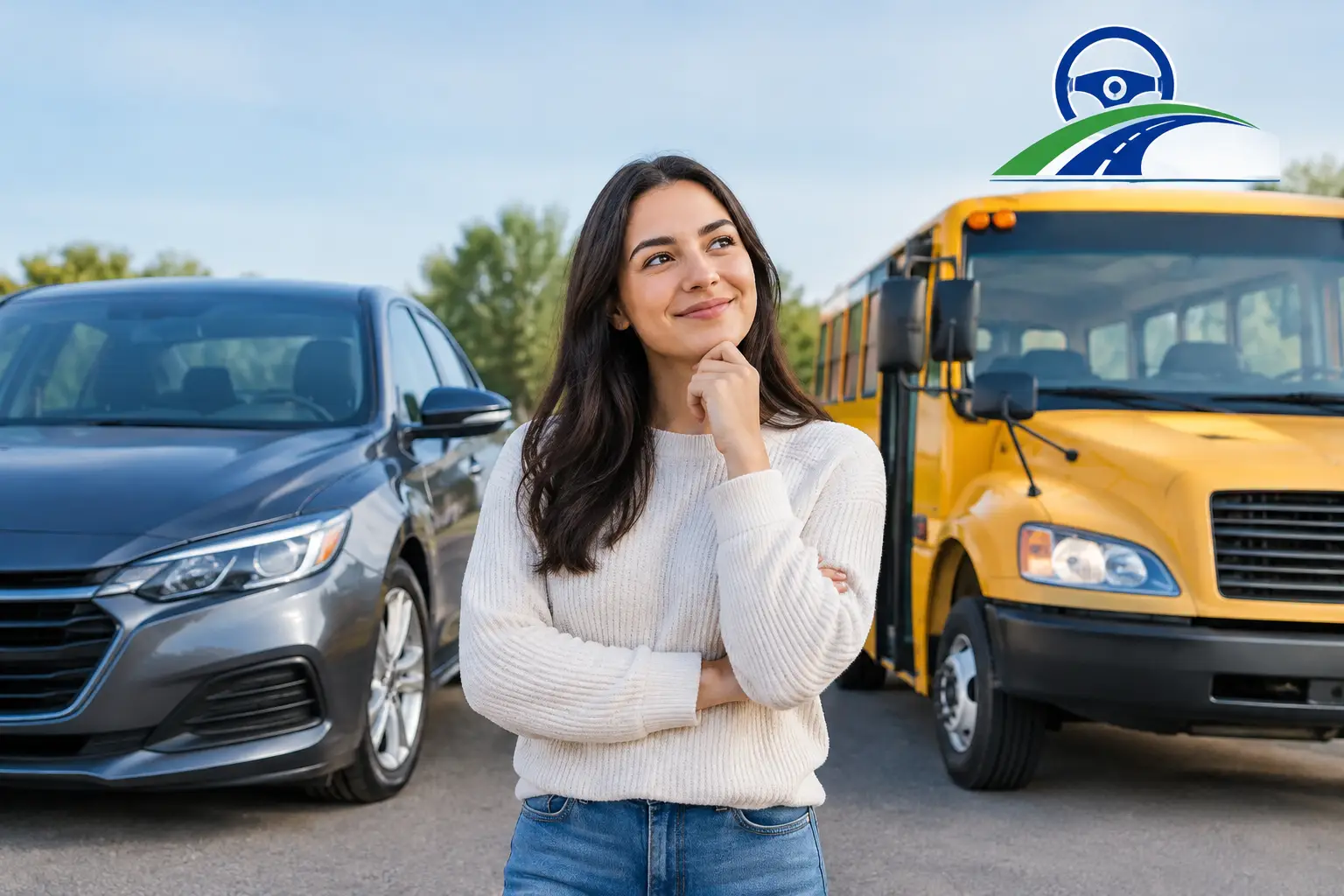
A road test appointment can feel like the finish line, but the vehicle you bring may affect how prepared you feel when the examiner says, “Begin when you are ready.” Choosing a rental car versus school vehicle is not simply a matter of convenience. It affects your familiarity with the controls, the insurance and rental rules you must verify, and your ability to focus on safe driving rather than an unfamiliar car.
For many California learners, a driving school vehicle is the lower-stress choice. A rental car can work in certain situations, especially for an adult who already drives regularly and needs a vehicle for a retest. The right answer depends on your experience, your practice time, and whether the vehicle meets every DMV and rental-company requirement.
Rental Car Versus School Vehicle: What the DMV Requires
Before comparing comfort or cost, start with eligibility. A vehicle used for a California behind-the-wheel test must be safe and legally operable. Expect the examiner to check for working brake lights, turn signals, seat belts, mirrors, a windshield with clear visibility, valid registration, and proof of financial responsibility. The vehicle also needs to be appropriate for the test, with no safety defects that could cause the appointment to end before it starts.
A rental vehicle adds another layer of responsibility. You must confirm that the rental company permits the car to be used for a DMV driving test and that its agreement allows a permit holder to operate it. Rental policies, minimum-age rules, additional-driver requirements, and insurance coverage can vary widely. Never assume a booking confirmation means the vehicle is approved for a road test.
A school vehicle is typically maintained and insured specifically for instruction and testing. That does not remove the need for a pre-test inspection, but it reduces the number of details a student must manage independently. A professional driving school should also make sure the vehicle is clean, safe, and ready for the skills expected on a DMV test.
When a Rental Car May Make Sense
A rental car may be practical for an experienced adult whose own vehicle is unavailable. For example, someone who previously held a license in another country, has completed California practice requirements, and is comfortable adapting to different vehicles may see a rental as a reasonable option. It can also help when a family vehicle is being repaired or cannot safely be used for the appointment.
The benefit is flexibility. You may be able to choose a pickup location, reserve the vehicle around your appointment, and use the same car for errands or practice before test day. However, that convenience disappears quickly if you receive a car with controls you have never used or discover a policy restriction at the counter.
Modern rentals can create small but meaningful distractions. You may need time to learn the parking brake, gear selector, windshield wipers, headlight controls, backup camera, blind-spot alerts, and screen-based climate settings. A backup camera can be useful, but it does not replace the required observation habits of checking mirrors and looking over your shoulder.
There is also the cost question. The daily rental rate may look manageable, yet the final expense can include insurance options, deposits, fuel, mileage, additional-driver charges, and pickup time. If the car is not available in the size or model reserved, you may have to adjust to an unfamiliar substitute on short notice.
Why Many New Drivers Prefer a School Vehicle
A school vehicle provides something a rental cannot guarantee: continuity. If you have taken behind-the-wheel lessons in that car, you already know where the controls are, how the brakes feel, how quickly the vehicle accelerates, and how much steering input it needs. Those details matter when nerves are high.
For a first-time driver, familiarity supports better decisions. Instead of searching for the defroster or wondering whether the car has an electronic parking brake, you can keep your attention on scanning intersections, maintaining speed, making complete stops, and responding safely to traffic conditions.
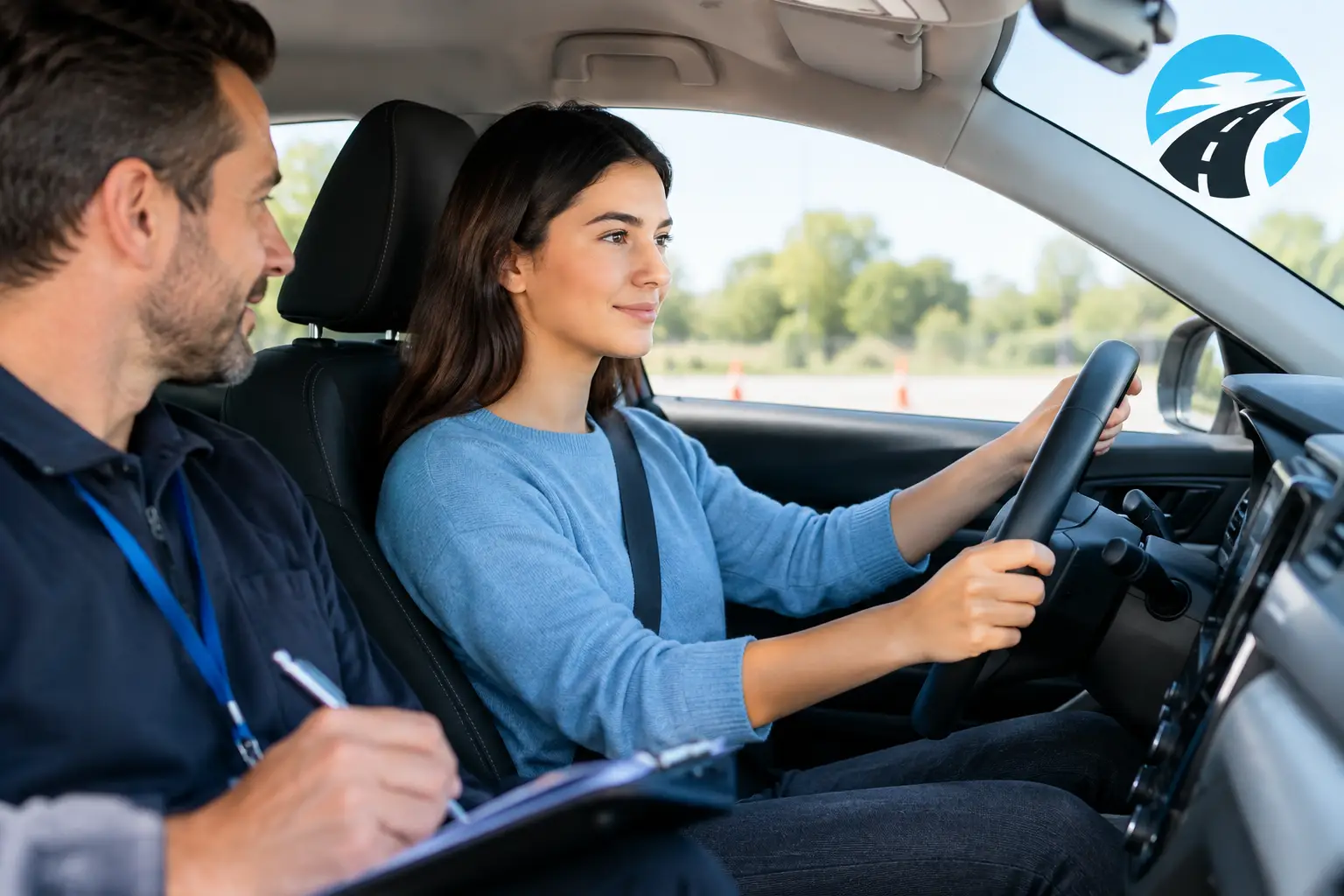
Many training vehicles also have an instructor brake on the passenger side. During lessons, this is an added safety measure that allows instructors to intervene if necessary. It can be especially reassuring for parents of teen drivers and for adults rebuilding confidence after a long break from driving. The DMV examiner, not the instructor, conducts the road test, but the value of dual-control training comes from the practice completed before the appointment.
Using a school vehicle can also simplify the final preparation process. At Newport Driving School, students can use lesson time to rehearse vehicle setup, mirror adjustment, parking maneuvers, lane changes, and the driving behaviors examiners observe. The goal is not to memorize a route. It is to arrive prepared to operate the vehicle calmly and safely in ordinary traffic.
The Practice Vehicle Matters More Than Most Students Expect
The best test vehicle is usually the one that feels predictable. A student who has spent several hours practicing in a midsize sedan may need time to adapt to a taller SUV with a wider turning radius. A driver who has learned in a vehicle with a traditional gear selector may hesitate in a rental with push-button shifting. Neither situation makes a person incapable of passing, but both add avoidable pressure.
Try to practice in the exact vehicle you plan to use for the test whenever possible. If you must use a rental, schedule enough time before the appointment to become comfortable with its basic operation. Adjust the driver’s seat, mirrors, steering wheel, and climate controls before you begin driving. Locate the headlights, hazard lights, wipers, defroster, parking brake, fuel door release, and gear selector. Then practice backing, smooth braking, turns, parking, and lane changes in low-pressure conditions.
This preparation should include a simple safety check. Confirm that the horn works, the tires appear properly inflated, the fuel level is sufficient, and warning lights are not illuminated. Check that every passenger has a functioning seat belt and that the license plates, registration, and insurance documentation are available as required.
Choose Based on Your Situation, Not Just the Price
For teens completing their first DMV test, a school vehicle is often the most dependable option because it pairs a familiar car with structured preparation. The same is true for anxious drivers, adults learning later in life, and international drivers who are still adapting to California road rules and local traffic patterns.
A rental car may be a suitable choice for a confident, experienced driver who has verified all rental conditions and can practice in the vehicle beforehand. It may not be the best choice for someone taking the test immediately after picking up an unfamiliar car. Saving money on one part of the process is rarely worthwhile if it creates uncertainty during the test.
Parents should also consider logistics. If a school vehicle is used, the student may have access to a warm-up lesson before the appointment, depending on the program selected. That final drive can help an instructor identify last-minute habits, such as incomplete stops, late signaling, rushed turns, or missed mirror checks. If a family member provides a vehicle, make sure the student has driven it enough to understand its size and response.
Questions to Settle Before Test Day
Whether you select a rental or a school vehicle, resolve the details several days in advance. Confirm your DMV appointment time, required identification, permit status, and any documents you must bring. For a rental, speak directly with the company about permit-holder use, test use, authorized drivers, insurance, and minimum-age policies. Ask for clarification in writing when possible.
For a school vehicle, ask whether use of the car includes a pre-test lesson, transportation to the DMV office, or a return ride after the test. Confirm the vehicle type and make sure it is one you have practiced in. If you need manual transmission training, do not assume a standard test vehicle will be manual. Most students test in an automatic vehicle, and the vehicle arrangement should match the skills you have trained to use.
Arrive early enough to avoid rushing. Rushing can lead to missed paperwork, poor seat positioning, and a tense start. Take a minute in the driver’s seat to adjust your mirrors, fasten your seat belt, silence your phone, and breathe. The examiner is assessing safe, lawful driving, not perfection.
The vehicle should support your preparation, not become another problem to solve. Choose the option that gives you the most practice, the clearest documentation, and the calmest start to your DMV appointment. A well-prepared driver is better positioned to show the safe habits that will matter long after the test is over.

Related Posts
Comments (0)