Senior driver programs help older adults refresh skills, adapt to changing abilities, and make practical choices for safe, confident California driving.
Driving School for Immigrants in California
Moving to California can make driving feel less like a convenience and more like a necessity. A driving school for immigrants in California can help turn an unfamiliar set of road rules, signs, and DMV requirements into practical skills you can use with confidence. The goal is not simply to pass a test. It is to understand how to make safe decisions on busy freeways, neighborhood streets, parking lots, and everything in between.
For many new residents, prior driving experience is valuable, but it may not match California rules or local traffic patterns. Others have never driven before, feel nervous speaking English during a lesson, or need a structured plan before taking the DMV knowledge and road tests. Professional, patient instruction gives each student a place to start.
Why California driving takes adjustment
California roads can be demanding even for experienced drivers. Traffic moves quickly, freeways often have several lanes, and drivers are expected to make informed decisions around motorcycles, bicycles, pedestrians, transit vehicles, and emergency responders. Knowing how to operate a vehicle is only one part of driving safely here.
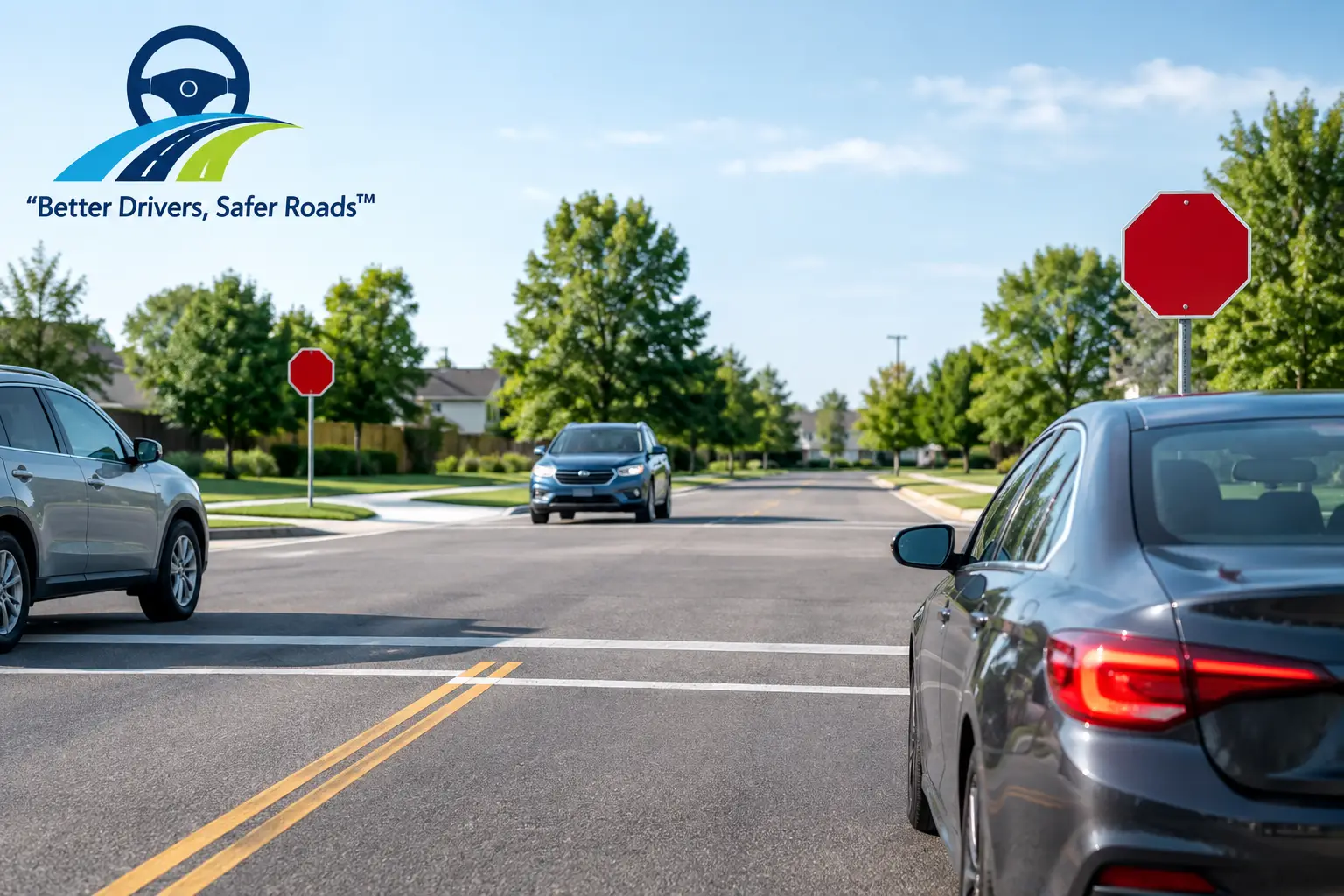
A driver who learned abroad may notice differences in lane markings, right-of-way rules, school-zone procedures, parking restrictions, and the use of four-way stops. For example, the first vehicle to arrive at a four-way stop generally has the right-of-way, but drivers must also communicate through timing and caution when vehicles arrive at the same time. Small misunderstandings like this can create unsafe situations or cost points during a road test.
California also has rules that may be different from those in another country, including requirements related to seat belts, hands-free phone use, yielding to pedestrians, speed limits, and stopping for school buses. A good instructor explains the reason behind a rule, then helps you practice it until the correct response becomes natural.
What a driving school for immigrants in California should provide
The right school should meet you at your current skill level. An adult who has driven for 15 years in another country needs a different lesson than a first-time driver. Before enrolling, ask whether the school can assess your experience and create lessons around the areas where you need the most support.
Clear communication matters just as much as technical instruction. If English is new to you, look for instructors who can explain directions patiently and, when available, offer multilingual instruction options. You should never feel rushed or embarrassed for asking a question about a traffic sign, a DMV term, or a maneuver you have not practiced before.
A professional program should also use properly equipped training vehicles and provide behind-the-wheel instruction that covers real driving environments. Parking-lot practice is useful at the beginning, but students also need supervised experience with residential streets, intersections, lane changes, merging, parking, and freeway driving when they are ready.
When comparing programs, consider these practical questions:
- Does the school work with adult beginners and international drivers?
- Are lessons personalized after an initial skills assessment?
- Can the instructor help you prepare for both the knowledge test and the behind-the-wheel test?
- Are scheduling and pickup options available where you live?
The answers will help you choose training that fits your needs instead of paying for a generic package that may be too basic or too advanced.
Start with the licensing process, not assumptions
California DMV requirements can depend on your age, residency status, identity documents, and driving history. Requirements also change, so it is wise to review current DMV guidance before your appointment rather than relying on advice from friends or social media.
Generally, applicants should be prepared to complete an application, provide required documentation, pass a vision screening, pass the knowledge test, and complete a behind-the-wheel test when required. You may also need to provide proof of insurance for the vehicle used during the road test. A driving school can help you understand what to practice, but it cannot determine your eligibility or replace official DMV instructions.
If you already have a license from another country, do not assume it automatically gives you the same driving privileges after becoming a California resident. The rules can depend on your specific circumstances. Treat the transition seriously, verify the current requirements, and begin preparing early so an unexpected document issue does not delay your plans.
Build confidence in the order that makes sense
Confidence grows from repeated, correct practice. It does not come from being pushed into traffic before you understand the controls or traffic rules. For a new driver, lessons may begin with seat position, mirrors, steering, braking, turns, and scanning habits. From there, an instructor can gradually introduce intersections, lane changes, parking, and higher-speed roads.
Experienced drivers often need a different sequence. They may be comfortable controlling the car but need help recognizing California road signs, checking blind spots before changing lanes, making safe turns at large intersections, or merging at freeway speed. This is where personalized instruction saves time. Instead of repeating skills you already know, you can focus on habits that must change.
Driving anxiety deserves the same patient approach. Nervousness is common after moving to a new place, especially when learning in a second language or driving around unfamiliar traffic. A qualified instructor can break difficult tasks into manageable steps and give calm, specific feedback. The best progress usually comes from regular practice, not one long lesson followed by several weeks away from the wheel.
Prepare for the DMV road test without practicing only for the test
Road test preparation should include the maneuvers examiners evaluate, such as safe turns, complete stops, lane changes, backing, parking, speed control, and observation. Students should understand how to check mirrors and blind spots, respond to signs, maintain appropriate space around the vehicle, and demonstrate control without hesitation.
Still, passing the road test is not the finish line. A student can memorize a test route and miss the larger purpose of driver education. California driving requires judgment after the license is issued: choosing a safe following distance in rain, recognizing a distracted driver nearby, sharing the road with a cyclist, and refusing to drive when tired or impaired.
That is why a strong program combines DMV-focused practice with defensive driving habits. You want to leave each lesson knowing not only what an examiner expects, but what helps protect you, your passengers, and other people on the road.
Make practice outside lessons productive
If you have access to a qualified supervising driver and a properly insured vehicle, practice between lessons can reinforce what you learn. Keep those sessions focused. One day might be devoted to smooth stops and turns; another might focus on parking or lane changes. Trying to practice every skill at once can make a new driver feel overwhelmed.
Before starting the car, agree on simple directions and a calm feedback style. Corrections should be specific: check the right blind spot before moving over, begin braking earlier, or look farther ahead. Vague criticism makes anxiety worse and does little to build safe habits.
It also helps to practice in different conditions once your instructor believes you are ready. Daytime residential driving is a sensible beginning, but drivers eventually need experience around heavier traffic, darkness, and changing weather. The pace should be gradual. Challenging practice is useful only when it is matched to your skill level.
Choose instruction that respects your goals
Some immigrants need a license quickly for work, school, or family responsibilities. Others want a slower, more comfortable path after years without driving. Both goals are valid, and the best program is one that is honest about the time and practice required for safe progress.
Newport Driving School has served California drivers since 1997 with personalized instruction for adult learners, international drivers, first-time drivers, and students preparing for DMV testing. Professional guidance can help you identify the skills that need attention and practice them with a clear plan.
A California license represents independence, but safe driving is the lasting achievement. Give yourself permission to learn at a steady pace, ask questions often, and keep practicing until the road feels familiar rather than intimidating.

Related Posts
Comments (0)