Make your international driving transition safer with practical California rules, licensing steps, and professional guidance for confident daily driving.
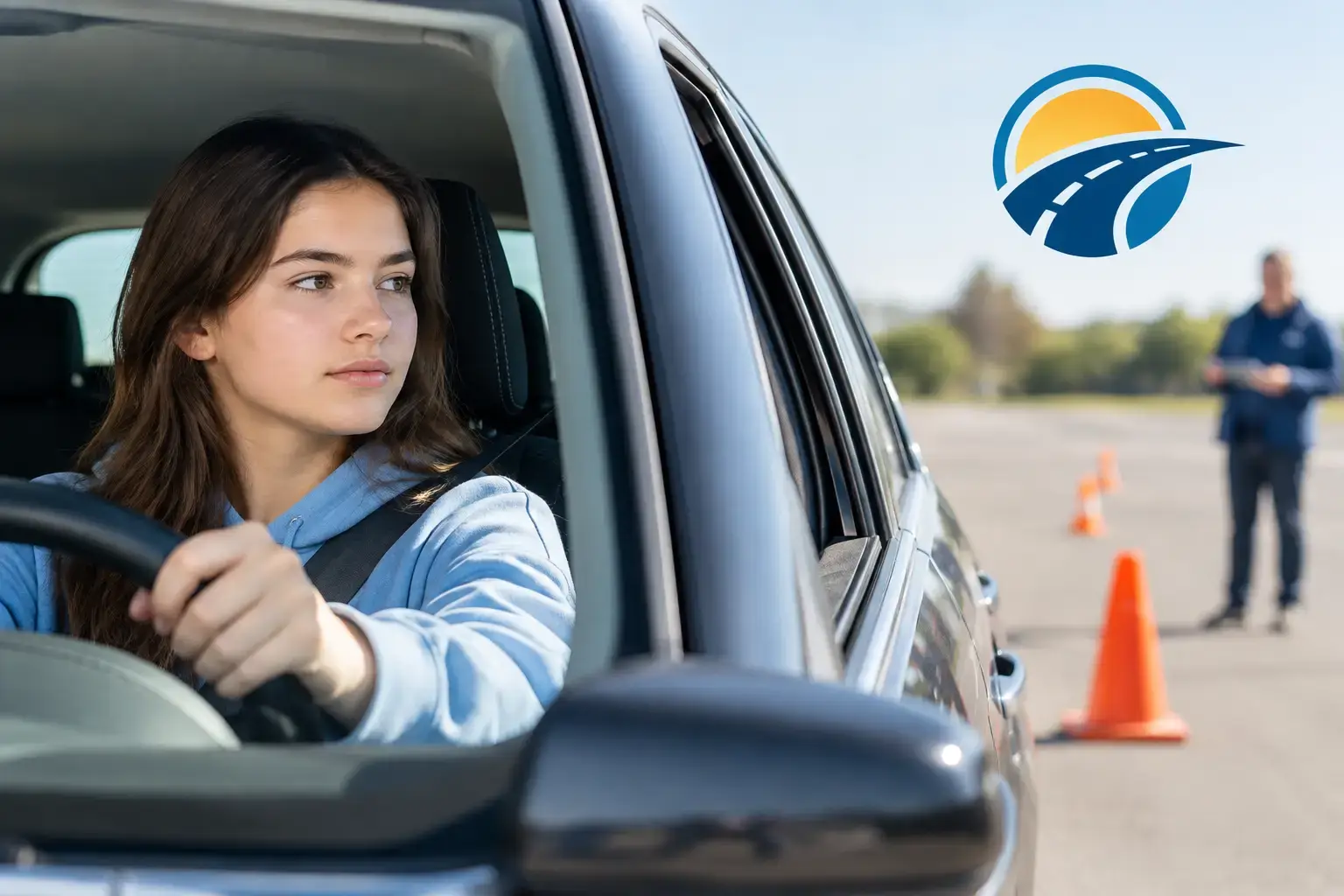
Teen Hazard Recognition Training Example
A new driver can know the speed limit, signal correctly, and still miss the pedestrian stepping out from behind a parked SUV. That is why a teen hazard recognition training example should teach more than vehicle control. It should show students how to scan ahead, recognize what could change, and make a calm decision before a close call develops.
For teens, this skill is especially valuable during the first months of independent driving. Experience helps drivers notice patterns quickly, but beginners need a clear process to build that awareness. The goal is not to make a teen fearful behind the wheel. It is to help them become observant, prepared, and confident.
What Hazard Recognition Means for Teen Drivers
A hazard is anything that could affect a driver’s path, speed, or space. Some hazards are obvious, such as a red light, a stopped school bus, or a car backing out of a driveway. Others are developing hazards: a child standing near the curb, a vehicle drifting within its lane, brake lights appearing several cars ahead, or a driver waiting to turn left across traffic.
Hazard recognition means seeing those clues early enough to respond smoothly. A teen who notices a ball rolling into the street should immediately expect that a child may follow. A teen who sees a delivery van blocking part of a lane should anticipate a pedestrian walking around its front. The safest response often begins before anyone else has made a mistake.
This is different from reacting at the last second. Braking hard after a pedestrian enters the roadway may prevent a collision, but recognizing the risk early allows the driver to reduce speed gradually, check mirrors, and create more space.
Teen Hazard Recognition Training Example: A Busy Intersection
Picture a teen driver traveling at 35 mph on a multi-lane street in Orange County. The traffic light ahead is green. A pickup truck in the left-turn lane is waiting to turn across the teen’s path. On the right, a large SUV is stopped near a crosswalk, partly blocking the driver’s view of the sidewalk. A car ahead begins slowing, and the light has been green for some time.
Nothing has gone wrong yet, but several hazards are present. An instructor may ask the student to describe what they see before telling them what to do. This keeps the student actively thinking rather than waiting for a correction.
The student should identify that the light could change, the pickup may turn unexpectedly, the SUV may be yielding to a pedestrian, and the slowing vehicle ahead reduces available following distance. Each clue calls for the same basic response: reduce speed early, maintain a safe following distance, cover the brake when appropriate, and keep scanning rather than staring only at the signal.
If a pedestrian appears from in front of the SUV, the driver has time to stop smoothly because they anticipated the possibility. If the pickup begins turning, the teen is already prepared to brake. If the light changes, the student can make a controlled decision instead of rushing through an intersection.
The lesson is not that every vehicle or pedestrian will create a problem. It is that a responsible driver treats uncertain situations with caution until they have enough information to proceed safely.
The Four Questions an Instructor Can Use
A useful training method is to have the student answer four questions aloud while driving:
- What do I see?
- What could happen next?
- What is my safest option?
- What will I do if conditions change?
For the intersection scenario, the student might say, “I see a stopped SUV near the crosswalk and a pickup waiting to turn. A pedestrian could be hidden by the SUV, and the pickup could turn across my lane. I will ease off the accelerator, check my mirrors, and be ready to brake.”
Speaking through the process may feel awkward at first, but it helps instructors understand how the teen is thinking. Once the habit is established, drivers do not need to say the words aloud. The scan, prediction, and response become more natural.
How to Practice Hazard Recognition Without Overwhelming a Teen
Practice should begin in lower-pressure environments. A quiet residential street offers opportunities to identify driveways, parked cars, pets near the curb, cyclists, and children playing nearby. The speed is lower, so the teen has more time to observe and explain what they see.
As the student’s confidence grows, practice can move to busier roads, commercial areas, freeway entrances, and complex intersections. Each setting introduces different hazards. Parking lots require attention to people walking between vehicles and cars reversing without a clear view. Freeway driving requires monitoring traffic flow, blind spots, merging vehicles, and sudden slowdowns. Night driving adds reduced visibility and glare.
It depends on the teen’s current ability. A student who is still working on steering control and smooth braking may need shorter, simpler hazard-recognition exercises. A student preparing for a DMV behind-the-wheel test can handle more detailed discussion of right-of-way, crosswalks, lane changes, and traffic patterns.
A parent or instructor should avoid constantly calling out every possible danger. Too many warnings can cause a new driver to fixate on one issue or become anxious. Instead, allow the teen to scan and identify hazards, then ask a focused question when something important is missed: “What might be hidden behind that truck?” or “Why do you think that car is slowing?”
Common Hazards Teens Often Miss
New drivers often focus their vision too close to the front of the vehicle. This makes it harder to notice developing traffic conditions and leaves less time to react. Encourage teens to look well ahead, then bring their attention back to nearby vehicles, mirrors, signs, and side streets.
They may also underestimate how quickly a situation changes around parked vehicles. A vehicle with its brake lights on may pull out. An open car door may swing into the lane. A person standing between cars may be preparing to cross. These are not reasons to drive overly slowly or hesitate unnecessarily. They are reasons to adjust speed and position when visibility is limited.
Distraction is another concern. A teen does not need to be holding a phone to be distracted. Loud passengers, music, fatigue, emotional stress, and pressure to keep up with faster traffic can all reduce hazard awareness. California’s passenger and cellphone restrictions for provisional drivers support a simple safety principle: fewer distractions give new drivers more attention for the road.
Turn Every Drive Into a Short Training Exercise
A hazard-recognition lesson does not need to take an entire drive. Choose one skill before leaving, such as identifying stale green lights, spotting pedestrians near crosswalks, or predicting which vehicles may merge. At the end of the drive, ask the teen which situation required the most attention and what they would do differently next time.
For a more advanced exercise, ask the teen to name the “escape space” around the vehicle. If traffic stops suddenly, is there enough following distance? If a vehicle crowds their lane, is there room to move safely? If the right lane is blocked, have they checked whether a lane change is possible? This teaches students to protect space without making abrupt or aggressive moves.
Professional behind-the-wheel instruction can be especially helpful when a teen needs objective feedback. An experienced instructor can choose routes that match the student’s ability, correct scanning habits in real time, and gradually introduce complex traffic situations without pushing the student beyond a safe learning pace.
At Newport Driving School, the focus is not simply on helping students pass a test. Strong hazard recognition gives teens a skill they can use long after they receive a license, whether they are driving to school, work, practice, or home.
The best time to recognize a hazard is before it becomes an emergency. With patient practice, thoughtful coaching, and consistent scanning, teen drivers can learn to see more, predict more accurately, and make safer choices with every mile.

Related Posts


Comments (0)