Do instructors offer pickup service? Learn how lesson pickup works, what to confirm, and why it makes driving training easier for busy learners locally.
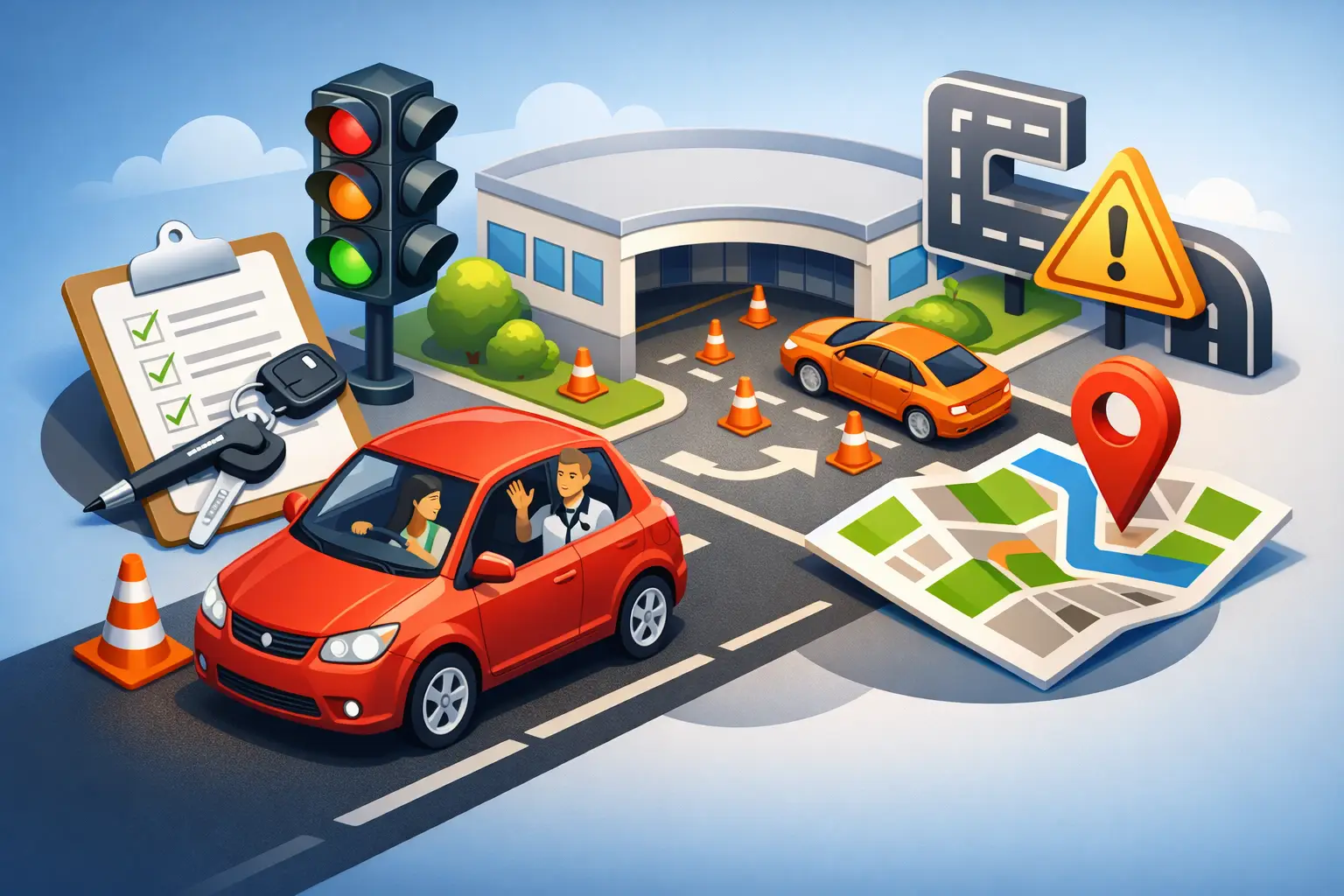
DMV Road Test Preparation That Works
The pressure of a DMV test usually hits at the same moment – when the examiner opens the passenger door, clipboard in hand, and suddenly every turn signal feels like a final exam. Good dmv road test preparation is not about memorizing a script. It is about building habits that hold up under stress, in real traffic, with a stranger evaluating every decision.
For some students, the challenge is lack of practice. For others, it is nerves, a previous failed test, or uncertainty about what California examiners actually expect. The right preparation closes those gaps. It turns a vague goal like “drive better” into focused training on the skills that affect your result most.
What DMV road test preparation should actually do
A lot of people assume the road test is mainly about avoiding major mistakes. That matters, of course, but passing usually comes down to something more consistent. Examiners are watching whether you drive with control, awareness, and good judgment from start to finish.
That means your preparation should cover more than parallel parking or a few right turns around the neighborhood. In California, a strong test-ready driver needs to show smooth steering, complete stops, safe lane changes, proper speed control, mirror checks, scanning at intersections, and calm decision-making. If one area is weak, pressure tends to expose it.
This is why generic practice is often less effective than targeted coaching. Driving for an hour with a parent or friend may help you get comfortable in a car, but it does not always identify the habits that cost points on a DMV exam. Small issues add up – rolling stops, late blind spot checks, drifting too wide on turns, braking too hard, or missing speed changes in school and residential zones.
The most common reasons drivers struggle on test day
The road test is short, but it asks you to perform several skills correctly without reminders. That creates a different kind of stress than ordinary practice. Even drivers who do reasonably well day to day can struggle when every move is being watched.
One common problem is inconsistent observation. Many learners think they are checking mirrors and scanning, but the checks are too quick, too subtle, or happen too late. Examiners need to see that you are actively aware of traffic conditions.
Another issue is speed management. Some students drive too fast because they are nervous and want to “keep up.” Others drive too slowly and create hesitation that can be just as concerning. Safe driving is not simply cautious driving. It is controlled, appropriate driving for the road, traffic, and conditions.
Turning is another area where students lose confidence. Wide turns, cutting corners, poor lane positioning, and late signaling are all common. These may seem minor in practice, but on a test they suggest weak vehicle control or incomplete attention.
Then there is anxiety. Anxiety does not always look dramatic. Sometimes it shows up as overthinking, delayed decisions, forgetting basic routines, or freezing after one small mistake. That is why test preparation has to train both skill and composure.
How to practice for the DMV road test efficiently
The best preparation starts with honesty. If you know you are weak in lane changes, residential scanning, left turns, or backing up in a straight line, that is where your time should go. Repeating the skills you already do well may feel productive, but it does not move your pass chances much.
Start by practicing the exact routines the examiner will notice. Come to complete stops without creeping. Check mirrors before slowing, turning, or changing lanes. Use your turn signal early. Keep both hands ready and your steering smooth. When you back up, look over your shoulder and maintain control without rushing.
It also helps to practice in the kind of environment used during the test. Quiet parking lots have their place, especially for beginners, but road test preparation needs real streets with intersections, lane markings, pedestrians, speed changes, and normal traffic flow. If you only practice in low-pressure areas, the test may feel much harder than expected.
A mock test can be especially useful here. It gives you a realistic sense of timing, routes, examiner expectations, and the mental transition from lesson mode to performance mode. More importantly, it shows where your errors appear when you are under pressure rather than when you are relaxed.
DMV road test preparation for nervous drivers
If you get anxious before driving tests, you are not alone. Teens, adult first-time drivers, international drivers, and even experienced drivers retesting after a long gap often deal with the same thing. The answer is not “just relax.” The answer is preparation that makes the test feel familiar.
That usually means repeating core maneuvers until they become automatic. When basic actions require less mental effort, you have more attention available for traffic and examiner instructions. Confidence does not come from positive thinking alone. It comes from competence you can feel behind the wheel.
It also helps to reduce uncertainty. Know what documents you need. Know how to adjust mirrors and seat position quickly. Know how the vehicle controls work. Know how to start strong in the first two minutes, because that is when many anxious students make preventable mistakes.
Breathing and pacing matter too. A rushed driver tends to brake late, turn late, and observe poorly. A prepared driver gives themselves an extra second before each action. That small margin often makes the difference between looking reactive and looking in control.
Why personalized instruction matters
Not every student struggles for the same reason. A teen with limited practice needs something different from an adult learner who feels embarrassed starting late. An international driver may have solid vehicle control but need help adapting to California test expectations. A student who failed once may need focused correction in only two or three areas.
That is where personalized instruction has real value. Instead of using a one-size-fits-all lesson, a qualified instructor can identify the exact habits standing between you and a passing score. Sometimes the issue is technical. Sometimes it is behavioral, like hesitation or inconsistent scanning. Sometimes it is simply that no one has explained the test clearly in a way that matches your learning style.
Newport Driving School has worked with a wide range of California drivers since 1997, and that experience matters when preparation needs to be efficient, calm, and specific. The goal is not just to give students more time in the car. It is to help them use that time where it counts.
What a strong final week of preparation looks like
The last week before your test should not be a cram session. It should be structured and deliberate. Focus on consistency, not intensity. Shorter, well-planned practice sessions often work better than one long drive that leaves you mentally drained.
In those final days, make sure you can reliably do the basics without reminders. That includes full stops, lane positioning, turns into the correct lane, mirror use, blind spot checks, smooth acceleration and braking, reversing, and following speed limits. If one skill still feels shaky, address it directly rather than hoping it will improve on test day.
You should also practice recovery. If you make a small mistake, keep driving safely and calmly. Many students mentally give up too early. A minor error does not always mean failure, but losing focus after the error can create bigger problems.
The day before the test, keep practice light. Confirm your appointment details, required documents, and vehicle readiness. If the car has warning lights, broken signals, or other issues, that can create avoidable stress before the test even starts.
What examiners want to see
Examiners are not looking for perfection. They are looking for a driver who can operate safely without coaching. That means you should aim to appear steady, observant, and predictable.
They want to see that you notice traffic signs, understand right-of-way, respond appropriately to pedestrians and other vehicles, and make decisions without panic. They also want to see that your actions match your awareness. Looking is not enough if you still change lanes unsafely. Signaling is not enough if your speed and positioning are off.
This is why polished fundamentals matter more than flashy confidence. A calm, attentive driver with good habits usually tests better than someone who feels bold but drives inconsistently.
The real goal is bigger than passing
Passing the DMV test matters. It saves time, reduces stress, and moves your life forward. But the bigger goal of dmv road test preparation is to help you become a driver who is safe when no examiner is there.
That is especially important for parents choosing training for a teen, adults learning later in life, and drivers rebuilding confidence after setbacks. A rushed approach might get someone through the appointment. A proper one builds judgment that lasts beyond it.
If you prepare the right way, test day stops feeling like a gamble. It becomes a chance to show skills you have practiced, corrected, and repeated until they feel natural. And that is the kind of confidence worth bringing into every mile after you pass.

Related Posts



Comments (0)