Freeway driving practice builds confidence with guided merging, lane changes, and safe exits. Learn how structured lessons help new drivers prepare safely.
Do Teens Need Practice Logs for a License?
The first few months after a teen receives a learner’s permit can feel deceptively simple: find time to practice, drive around the neighborhood, and wait for the road test date. In reality, those months are where safe driving habits are built. So, do teens need practice logs? For California families, a clear practice record is one of the most useful tools for meeting licensing requirements and making sure a teen is genuinely ready to drive independently.
A practice log does more than track time behind the wheel. It helps parents see whether practice has included the conditions new drivers actually need to handle: busy intersections, parking lots, freeway entrances, nighttime visibility, rain, and unfamiliar routes. Hours matter, but the experiences within those hours matter just as much.
Do Teens Need Practice Logs in California?
California requires teens to complete at least 50 hours of supervised driving practice before taking the behind-the-wheel DMV test. At least 10 of those hours must be completed at night. A parent or guardian must certify that the required practice was completed as part of the teen’s licensing application.
The DMV does not require every family to use one particular daily log format. However, keeping a written or digital practice log is the simplest way to support an accurate certification. Relying on memory after six months of short drives, school pickups, errands, and weekend practice sessions is rarely a good system.
A log also protects the purpose behind the requirement. The 50-hour rule is not intended to create paperwork. It gives new drivers time to encounter ordinary driving decisions repeatedly, with a qualified adult present to coach them before those decisions carry higher consequences.
Teens must also complete the required professional driver training before licensing. In California, the minimum six hours of behind-the-wheel instruction with a licensed driving school is separate from regular supervised family practice. Professional lessons provide structured coaching and objective feedback, while at-home practice gives the teen repetition across real-life routes and conditions.
Why a Practice Log Helps More Than the DMV Requirement
A teen can technically spend 50 hours driving and still have major gaps in experience. For example, a student who drives the same quiet route to school every afternoon may become comfortable with steering and braking but remain uneasy merging onto a freeway, judging left turns in traffic, or parking near a crowded shopping center.
A detailed practice log makes those gaps visible. Instead of writing only “one hour driving,” note the conditions and skills practiced: residential streets, lane changes, parallel parking, nighttime driving, freeway merging, or driving in light rain. This gives the parent, teen, and instructor a more useful picture of progress.
It can also lower tension in the car. Many parent-teen practice sessions become frustrating when feedback feels random or repetitive. A log creates a simple plan: today’s drive can focus on scanning intersections, smooth stops, or keeping a safe following distance. The teen knows what they are working on, and the supervising adult has a clear reason for the coaching.
For anxious teens, seeing completed practice sessions can be encouraging. Driving confidence should come from demonstrated ability, not pressure to “just get used to it.” A record of successful drives helps a student recognize that they have already handled difficult situations safely.
What to Record After Each Drive
A practice log does not need to be complicated. The best one is the one a family will use consistently. After each session, record the date, total time, daytime or nighttime hours, general route or area, weather or traffic conditions, and the skills practiced.
It is also helpful to add one short observation. This could be a strength, such as “checked mirrors before every lane change,” or a skill to revisit, such as “needs more practice judging the speed of oncoming traffic before left turns.” Keep the notes specific and constructive. “Bad driver” is not useful feedback. “Braked late approaching stop signs” gives the teen a clear skill to improve.
Parents do not need to turn every drive into a test. Some practice sessions should be focused and instructional, while others can simply build routine through safe errands and familiar trips. The log helps ensure that relaxed drives do not become the only kind of practice.
Quality Matters More Than Filling Hours
The goal is not to rush through 50 hours as quickly as possible. A student who practices several times each week in varied settings generally develops stronger judgment than one who completes long, infrequent drives with little feedback.
Start with low-pressure environments, then increase complexity as the teen improves. Empty parking lots and quiet residential streets are appropriate for early steering, braking, turns, and parking control. Later practice should include multi-lane roads, heavier traffic, highway driving, navigation, and nighttime conditions.
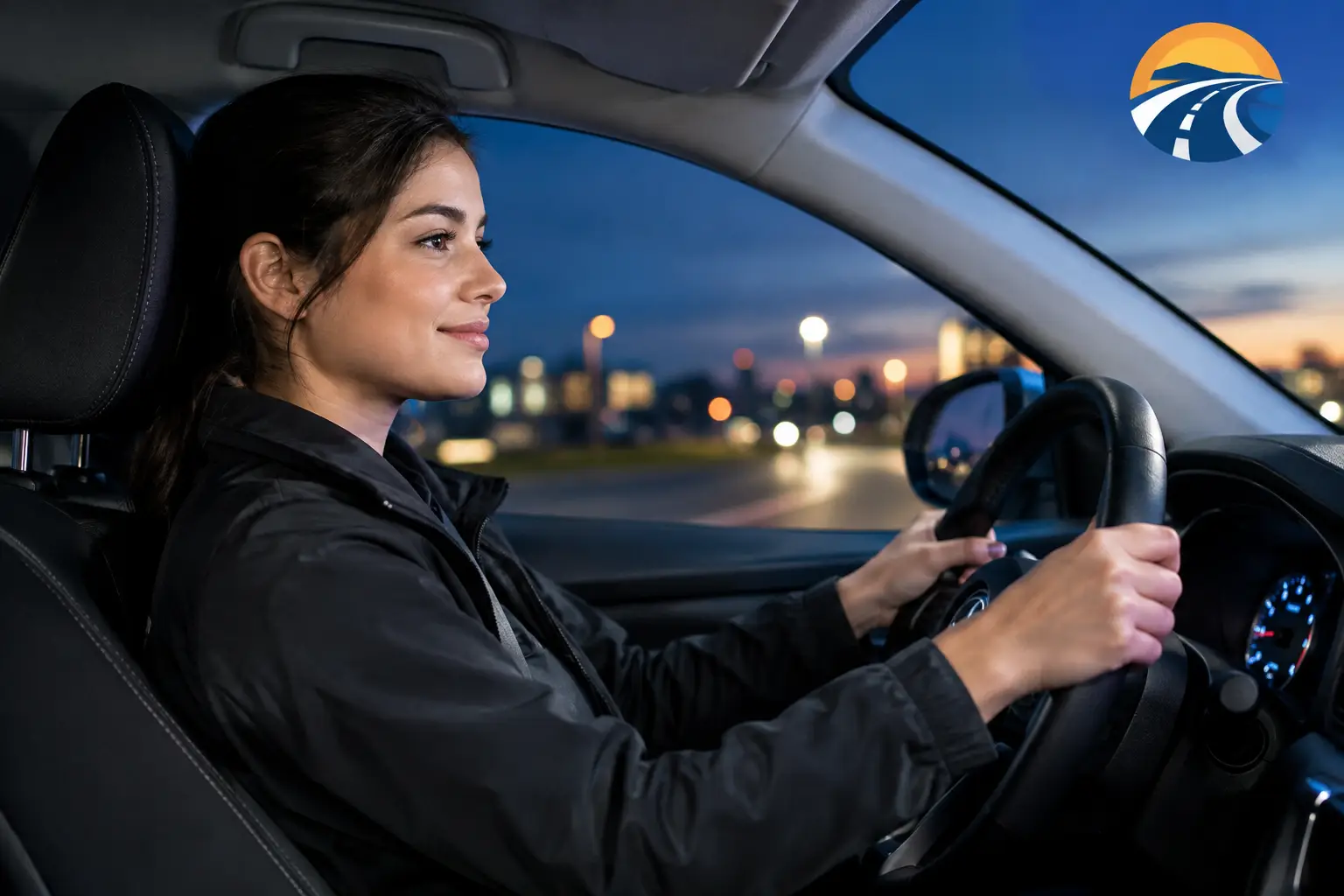
Night driving deserves special attention because it is a required part of the California practice total and because it presents different risks. Reduced visibility, glare from headlights, fatigue, pedestrians, and less predictable behavior from other drivers all require stronger scanning habits. A teen who has only driven during daylight may be surprised by how different familiar streets feel after dark.
Weather is another area where families need good judgment. Light rain can be useful for learning how wet pavement affects stopping distance and visibility. Severe weather, flooding, or conditions that make a parent uncomfortable are not appropriate for a beginner. Safe practice means challenging the student gradually, not exposing them to unnecessary risk.
When Professional Lessons Add Value
Some families have plenty of time for practice but want help teaching the harder skills correctly. Others have limited availability, a nervous teen, or a parent who does not feel confident coaching freeway driving or parking maneuvers. That is where professional instruction can be especially valuable.
A qualified instructor can identify habits a parent may not notice, such as inconsistent mirror checks, late braking, poor lane position, or hesitation at uncontrolled intersections. Instructors also teach the standards expected on the DMV road test while keeping the larger goal in view: safe, independent driving after the test is over.
Professional lessons are not a substitute for regular supervised practice. They work best together. A lesson can introduce a skill with clear instruction, and family practice can reinforce it over multiple drives. Newport Driving School uses personalized instruction to help students build on what they are practicing at home, especially when they need extra support with confidence, test preparation, or specific driving environments.
Common Practice Log Mistakes to Avoid
One common mistake is logging time without distinguishing between day and night hours. If a family waits until the final weeks before the test to count nighttime practice, they may find they are short of the required 10 hours.
Another is treating every hour as equal. Time spent sitting in heavy traffic may count toward supervised driving, but it should not replace practice with parking, turns, lane changes, and speed control. A balanced log should reflect a balanced learning experience.
Families should also avoid signing off on hours that were not actually completed. The parent or guardian certification is a serious statement about the teen’s readiness process. Accurate records support honesty and give everyone greater confidence that the student has received the practice California expects.
Finally, do not schedule the DMV road test solely because the minimum hours are complete. A teen may need more practice if they still struggle with observation, speed control, right-of-way decisions, or nerves under pressure. More time is not a failure. It is often the safest choice.
A Log Is a Record of Readiness
A practice log cannot guarantee that a teen will pass the DMV test, and it cannot replace attentive supervision. What it can do is turn vague practice into a visible training plan. Parents can see what has been covered, teens can track real improvement, and instructors can focus lessons where they are needed most.
Before signing the final certification, look beyond the total hours. Ask whether the teen has driven in the conditions they will face after receiving a license, whether they make safe decisions without constant reminders, and whether they know when to slow down, wait, or ask for help. The next log entry may be just another drive, but it is also one more opportunity to build the judgment that protects a new driver long after the permit is put away.

Related Posts
Comments (0)