Learn how to relearn driving skills with a safe, structured plan to rebuild confidence, update habits, and prepare for California roads and DMV tests.
How to Drive Stick Without Stalling Every Start
A manual-transmission car gives you direct control over the engine, but the first few starts can feel humbling. The engine revs, the car lurches, or it stalls at a quiet intersection while everyone behind you seems impatient. Learning how to drive stick is not about having perfect coordination on day one. It is about understanding what the clutch does, practicing the same sequence calmly, and choosing safe places to make mistakes.
Manual transmission training can be especially useful for adult learners, international drivers, and anyone who needs to drive a specific vehicle for work, travel, or family. With patient, structured practice, most learners begin to recognize the car’s signals quickly.
Know the Three Pedals Before You Move
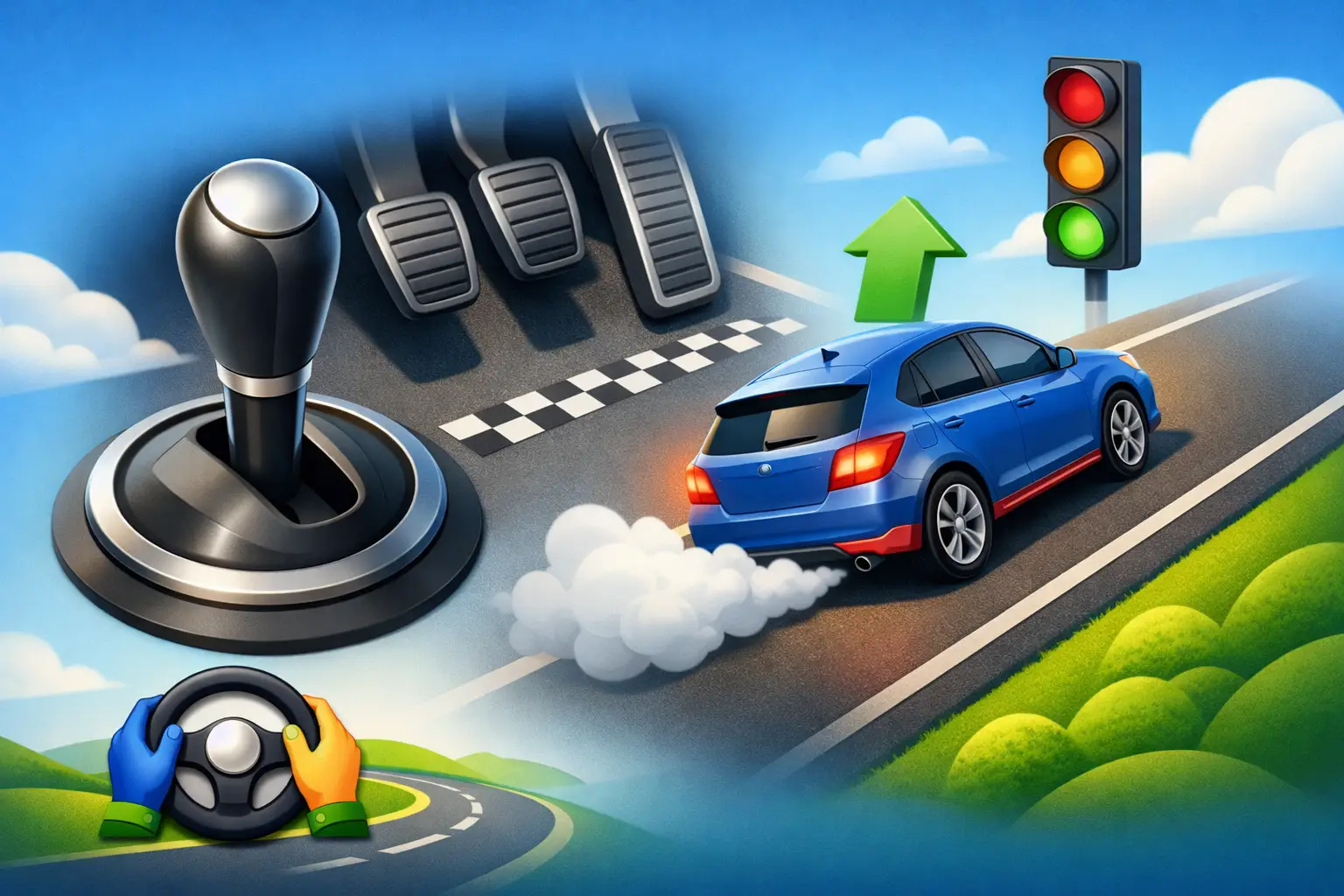
A manual vehicle has three pedals. From left to right, they are the clutch, brake, and accelerator. Your left foot operates only the clutch. Your right foot moves between the brake and accelerator. Keeping those jobs separate prevents one of the most common beginner errors: using the clutch as though it were a resting place for your left foot.
The clutch temporarily disconnects the engine from the wheels. When the clutch pedal is fully pressed, you can select a gear without the engine forcing the wheels to turn. As you gradually release it, engine power reconnects to the transmission. That transition is where a car begins moving and where many stalls happen.
Before starting the engine, sit correctly. Adjust the seat so you can press the clutch all the way to the floor without locking your knee or stretching forward. Set your mirrors, fasten your seat belt, and make sure the parking brake is engaged. Start in neutral, which is the center position where the shifter moves side to side freely.
How to Drive Stick From a Complete Stop
Start with an empty, level parking lot or a quiet private area where you are permitted to practice. Avoid busy streets, steep hills, tight parking lots, and areas with pedestrians until the basic movement feels predictable.
With the engine running, press the clutch fully to the floor and shift into first gear. Keep your right foot on the brake at first. Check mirrors and surroundings, then release the parking brake when you are ready to move.
Now comes the key skill: finding the bite point, sometimes called the friction point. Slowly lift your left foot from the clutch until you feel the front of the vehicle rise slightly, the engine sound change, or the car begin to pull forward. Hold your foot steady there for a moment. This is the point where the clutch starts transferring power to the wheels.
On a flat surface, many cars can begin rolling with little or no accelerator. Once the car starts moving, add gentle, steady pressure to the gas pedal while continuing to release the clutch smoothly. Do not rush the final release. When the clutch pedal is completely up, remove your left foot from it and place it on the footrest.
If the engine stalls, press the brake, shift to neutral, apply the parking brake if needed, and restart calmly. A stall does not damage the car when handled properly. It simply means the clutch came up too quickly, the engine did not have enough throttle, or both.
Practice the Bite Point First
A productive first exercise is to practice moving a few feet, stopping, and repeating. Do not worry about shifting through every gear immediately. Get comfortable locating the bite point ten or fifteen times. Your feet need repetition more than they need a long drive.
To stop, take your right foot off the accelerator, press the clutch fully, and apply the brake smoothly. Pressing the clutch before the engine speed gets too low prevents a stall. Shift to neutral if you will remain stopped for more than a brief moment, then keep your foot on the brake.
Shift Up Without Looking at the Shifter
Once you are moving steadily in first gear, you will hear the engine rev higher and feel that the car is ready for the next gear. The exact timing varies by vehicle, speed, road grade, and traffic conditions. Rather than fixating on a single RPM number, learn to listen to the engine and use your speedometer as a reference.
For a typical upshift, ease off the accelerator, press the clutch fully, move the shifter from first to second, then release the clutch smoothly as you return gently to the accelerator. The sequence is quick but not rushed: gas off, clutch in, shift, clutch out, gas on.
Keep your eyes on the road. Beginners often look down to confirm the gear position, which creates an unnecessary safety risk. Practice the shift pattern while parked with the engine off so your hand learns where each gear is. Most manual vehicles use an H-pattern shown on the top of the shifter, but reverse placement can differ.
As your speed increases, repeat the same process for higher gears. First gear is mainly for getting the car moving. Second and third gears handle slower city speeds, while higher gears are used as road speed rises. Shift early enough that the engine is not straining or excessively loud, but do not shift so early that the vehicle bogs down and lacks power.
Downshift When the Car Needs More Power
Downshifting means selecting a lower gear as you slow down or when you need more engine power, such as approaching a hill. For a new driver, the safest approach is simple: brake to an appropriate speed, press the clutch, select the lower gear, and release the clutch gradually.
If the car jerks hard after a downshift, you likely selected too low a gear for your speed or released the clutch too quickly. Press the clutch again, stabilize the car, and choose a more suitable gear. Smooth downshifts take practice because the engine needs to spin faster in a lower gear.
Avoid coasting downhill in neutral. You have less control over speed and less ability to use engine braking. Stay in a gear that lets the vehicle descend at a controlled pace, using the brakes as needed. On a long grade, this reduces brake wear and helps prevent overheating.
Hill Starts Require a Different Plan
Starting on an uphill grade can be intimidating because the car may roll backward before the clutch engages. Give yourself room, avoid practicing with another vehicle close behind, and use the parking brake method until you are confident.
With the parking brake engaged, press the clutch and select first gear. Bring the clutch to the bite point and add a little accelerator until you feel the vehicle wanting to move forward. Then release the parking brake while continuing the same controlled clutch-and-gas motion. The car should move uphill without rolling back significantly.
Do not hold the vehicle on a hill by slipping the clutch for several seconds. This creates heat and wears the clutch prematurely. Use the brake or parking brake while waiting, then make one deliberate start when traffic moves.
Avoid Habits That Wear Out the Clutch
Manual driving becomes easier when you understand what not to do. Resting your foot on the clutch pedal, known as riding the clutch, can keep it partially engaged and cause unnecessary wear. Holding the car in gear with the clutch pressed at every long red light can also tire your leg and add wear. Shift to neutral, release the clutch, and keep the brake applied when you are waiting.
Do not use the clutch to control your speed in normal driving. Select the appropriate gear, use the accelerator for power, and use the brake for slowing. Also, avoid forcing the shifter. If it resists, the clutch may not be fully depressed, or the selected gear may not match the vehicle’s speed.
Manual cars vary. Some have a high bite point, a sensitive accelerator, a heavy clutch, or a hill-assist feature. A skill that feels natural in one car may require adjustment in another. That is why learning the principles matters more than memorizing one exact pedal position.
Build Confidence Before You Add Traffic
A sensible progression starts with starts and stops on level ground, then adds first-to-second shifts, turns, higher gears, parking, and hill starts. Only after those actions feel consistent should you practice in moderate traffic. Plan practice sessions when you are rested, wear secure flat shoes, and keep distractions out of the vehicle.
If anxiety, repeated stalling, or family practice tensions are slowing your progress, professional manual transmission instruction can provide a calmer environment and immediate feedback. Newport Driving School instructors can tailor practice to the learner, whether the goal is operating a family vehicle, preparing for a job requirement, or becoming more comfortable behind the wheel.
The moment manual driving starts to feel natural is usually not dramatic. One day, you will pull away from a stop, shift smoothly, and realize your attention stayed on traffic instead of your feet. Keep practicing that safe, repeatable routine, and the coordination will follow.

Related Posts

Comments (0)