Choosing automatic versus manual driving lessons affects your license, confidence, practice options, and DMV goals. Learn which fit is right for you today.
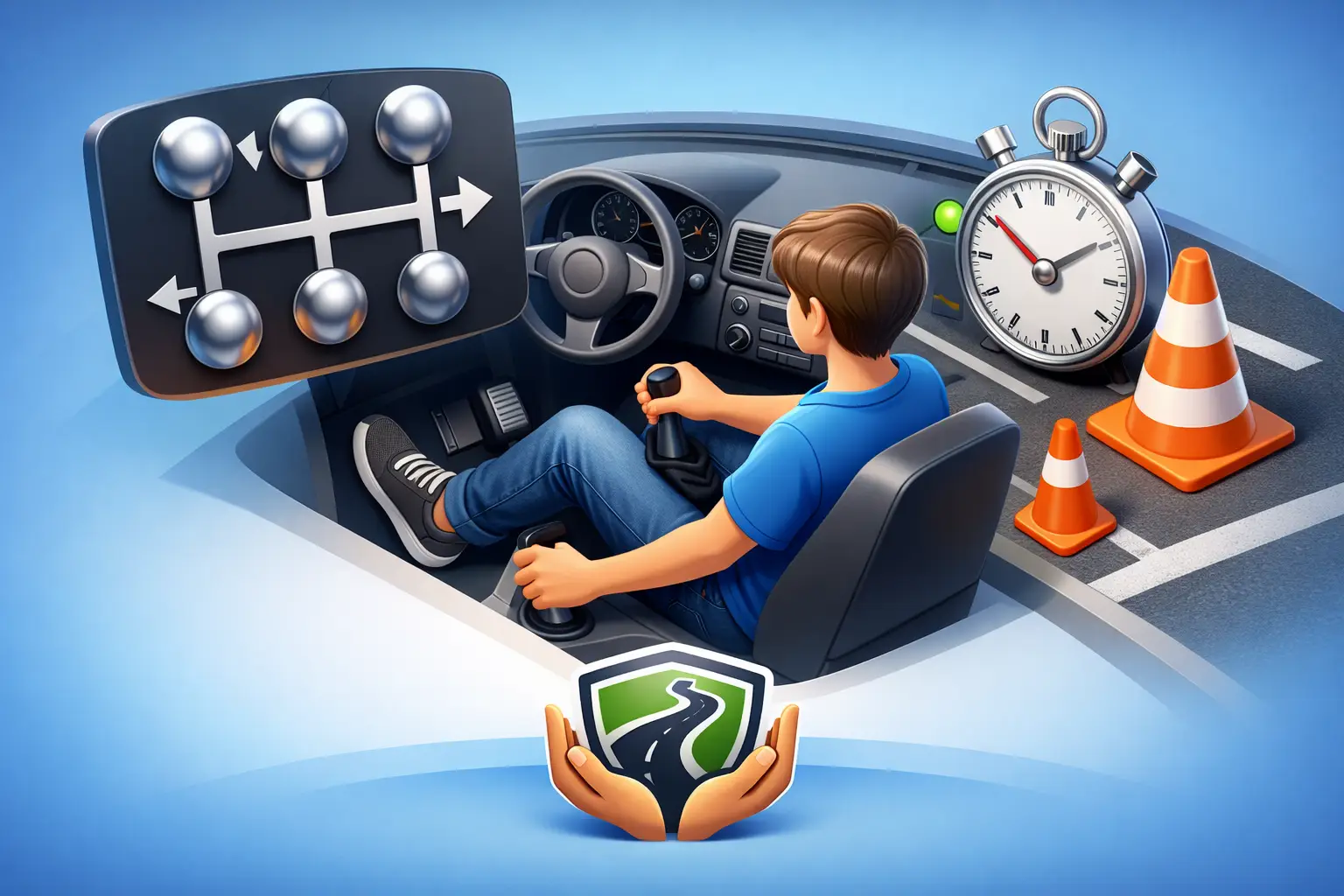
How to Learn Stick Shift Safely and Fast
The first time a manual car stalls in traffic, most people think the same thing: maybe this just is not for me. In reality, learning how to learn stick shift is less about talent and more about using the right sequence, the right practice area, and the right instruction. When students struggle, it usually comes down to timing, nerves, or trying to do too much at once.
A manual transmission asks you to coordinate your feet, hands, ears, and attention at the same time. That can feel overwhelming at first, especially if you already feel anxious behind the wheel. The good news is that stick shift follows a pattern. Once you understand that pattern and practice it in a controlled way, progress tends to come quickly.
How to learn stick shift without feeling overwhelmed
The biggest mistake beginners make is treating manual driving like a mystery skill. It is not. You are simply learning how the clutch, shifter, gas pedal, and engine work together.
Start with the clutch. The clutch connects and disconnects power from the engine to the wheels. When you press it down fully, you can change gears or keep the engine from stalling while stopped. When you release it, power starts transferring back to the wheels. The point where the car begins to move is called the bite point, and finding that point consistently is the foundation of everything else.
If you skip that foundation and rush into traffic, hills, or busy intersections, your stress level rises and your coordination usually gets worse. A calm, structured approach works better. That is why professional manual transmission training often starts in a flat, empty lot before moving to real-road conditions.
Start in the right car and the right place
Not every manual car is equally beginner-friendly. Some clutches are forgiving and easy to feel. Others engage abruptly, which can make smooth starts harder for new drivers. Smaller cars with lighter clutches are often easier to learn in than high-performance vehicles or older cars with worn components.
Your practice location matters just as much. Choose a wide, empty, flat area with very little pressure from other drivers. Empty business parks, large parking lots, or quiet side streets can work well if they are legal and safe. Early sessions should focus on control, not destination driving.
If you are learning with a family member or friend, make sure that person is calm, clear, and patient. A knowledgeable driver is not always a good teacher. Many learners do better with a trained instructor because the feedback is specific, consistent, and focused on safety rather than emotion.
Learn the bite point before you add gas
This is the step that changes everything. Before worrying about quick starts or perfect shifts, learn to move the car using the clutch slowly and deliberately.
With the car on flat ground, press the clutch fully, shift into first gear, and release the parking brake if appropriate. Then bring the clutch up very slowly until you feel the front of the car rise slightly and the vehicle begin to roll. That is the bite point. Hold it there for a moment, then press the clutch back down. Repeat this several times.
This drill teaches your left foot what the clutch feels like. Once that movement becomes familiar, add a small amount of gas while lifting through the bite point. Most beginners use too much gas or release the clutch too quickly. Smooth manual driving is usually quieter and gentler than people expect.
A stall does not mean you failed. It usually means the clutch came up too fast, the gas was too light, or both. That is normal in the beginning. What matters is identifying why it happened and repeating the motion correctly.
How to learn stick shift step by step
After you can start moving reliably in first gear, build your skills in stages. Resist the urge to practice everything at once.
Step 1: Smooth starts from a stop
Practice starting, rolling a short distance, and stopping again. The goal is consistency. If you can start smoothly ten times in a row on flat ground, you are building the muscle memory you need for city driving.
Step 2: Upshifting into second and third
Once the car is moving and engine speed rises, press the clutch, shift to the next gear, and release the clutch smoothly while easing back onto the gas. Beginners often rush this transition. A smooth shift is usually better than a fast one.
Step 3: Downshifting and slowing down
Downshifting is often harder than upshifting because it requires better timing. Early on, it is fine to keep things simple. As you slow down, press the clutch, brake as needed, and shift to a lower gear only when appropriate. You do not need advanced techniques right away.
Step 4: Stop signs and traffic lights
This is where pressure starts to build because other drivers may be behind you. Practice controlled stops, restarting calmly, and keeping enough space in front of you so you do not feel rushed.
Step 5: Hills and parking
Hill starts require stronger clutch control and good brake coordination. Parking introduces low-speed precision. These skills should come after you are comfortable on flat ground.
Common problems and what they usually mean
If the car jerks hard when starting, you are probably releasing the clutch too quickly or adding gas unevenly. If the engine revs loudly but the car does not move smoothly, you may be using too much gas while holding the clutch too long. If you stall often at stops, your timing likely changes when you feel pressure.
That last point matters. Many students can handle a manual car in an empty lot but struggle once they know other cars are waiting. This is not a technical failure. It is a pressure response. The answer is more structured repetition, not self-criticism.
Another common issue is looking down at the shifter. Try to keep your eyes up and learn the shift pattern by touch. Good manual driving still depends on scanning the road, checking mirrors, and staying aware of hazards. Gear changes should support your control, not distract from it.
How long does it take to learn?
It depends on your starting point, the car, and how you practice. Some learners can get the basics in one or two focused sessions. Others need several lessons before starts, stops, and gear changes feel natural. Confidence in traffic usually takes longer than basic vehicle movement.
Adults who already know how to drive an automatic often learn the mechanics of manual driving fairly quickly because they already understand road positioning, mirrors, speed control, and traffic rules. Brand-new drivers may need more time because they are learning general driving skills and stick shift technique at the same time.
If your goal is simply to move a manual car without stalling, that can happen fast. If your goal is to drive smoothly in traffic, on hills, and in unfamiliar areas, expect a longer learning curve. That is normal and safer than rushing.
When professional instruction makes sense
Some people can learn from a relative in a weekend. Others benefit from formal training right away. If you are nervous, do not have access to a suitable practice vehicle, or need efficient progress, professional instruction is often the better path.
A trained instructor can break the process into manageable steps, correct habits before they stick, and choose practice routes that match your skill level. That matters for teens, adult beginners, international drivers adapting to US roads, and anyone who feels intimidated by manual transmission. At Newport Driving School, this kind of personalized approach is especially useful because different learners need different pacing.
Professional lessons can also reduce wear on a friend or family member’s vehicle. New drivers often worry about damaging the clutch. While occasional stalls are part of learning, repeated poor technique can add unnecessary strain. A structured lesson plan helps you learn efficiently and more mechanically sound.
Safety habits that matter from day one
Manual driving should never pull attention away from basic safe-driving habits. Keep both hands ready, look well ahead, leave room around your vehicle, and avoid practicing in heavy traffic too soon. If you feel flustered, reset. Put the car in neutral, apply the brake, and start again calmly.
It also helps to accept that smoothness comes before speed. New drivers often think they need to launch quickly to avoid holding people up. In reality, a controlled start is safer than a rushed one. Most of the time, a slight delay is less of a problem than a stall caused by panic.
One more practical point: shoes matter. Bulky soles can make clutch control harder because you lose feel. Wear comfortable shoes with good pedal sensitivity while learning.
Learning a manual car is one of those skills that feels awkward right before it starts to click. Stay patient with the process, practice in the right order, and give yourself room to improve one repeat at a time.

Related Posts


Comments (0)