California intersection safety rules explained for new and experienced drivers, with clear steps for stops, turns, pedestrians, signals, and right-of-way.
7 Distracted Driving Prevention Methods That Work
A driver can be looking straight ahead and still miss what matters. A buzzing phone, a rushed conversation, a confusing navigation prompt, or the thought of an upcoming appointment can pull attention away just long enough to miss a brake light or a pedestrian entering a crosswalk. Effective distracted driving prevention methods are not about relying on willpower in the moment. They are routines that make focused driving the default before the vehicle starts moving.
For new drivers, these routines build confidence because they reduce the number of decisions competing for attention. For experienced drivers, they can correct habits that have become too familiar to notice. The goal is simple: keep your eyes, hands, and mind available for the driving task.
Why distraction is more than a phone problem
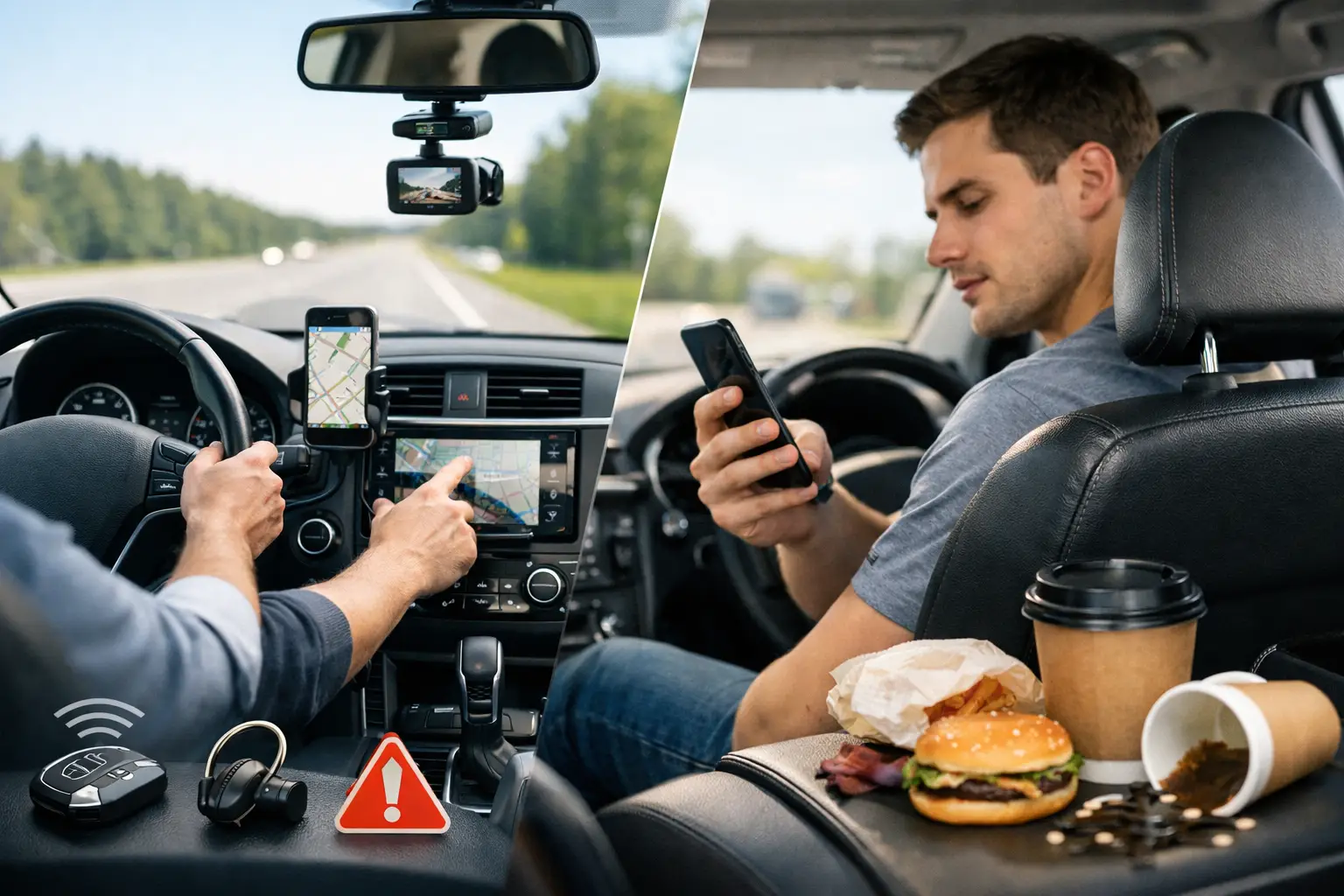
Cell phones deserve attention because they combine visual, manual, and mental distraction. Looking down at a screen removes a driver’s eyes from the road. Reaching for it removes at least one hand from the wheel. Reading or answering a message shifts the mind away from traffic conditions, even when the phone is held out of sight.
But a phone is not the only source of risk. Adjusting mirrors after pulling away, searching for an item in a bag, eating a meal, turning around to speak to passengers, or arguing with someone can all interfere with driving. Navigation systems can also become distracting when a route is entered late, a mount is poorly placed, or the driver keeps checking the map instead of listening to directions.
The right solution depends on the distraction. A teen driving with friends may need clear passenger rules. A busy adult may need a better routine for calls and navigation. A parent transporting children may need to prepare snacks, toys, and seating arrangements before leaving the driveway. Identifying the pattern is the first step toward changing it.
1. Set up the car before shifting into drive
The safest time to make adjustments is while parked. Before every trip, take a brief setup pause: fasten the seat belt, adjust the seat and mirrors, select music, set the temperature, and enter the destination. Put loose items where they cannot slide under the pedals or require attention during a turn.
This may sound basic, but it prevents the common habit of making “quick” adjustments after the car is moving. On a short drive, drivers may be tempted to skip preparation because the destination feels close. Short trips still include intersections, driveway exits, backing maneuvers, and other moments that require full attention.
If navigation is needed, use a safe mount and choose audio guidance when possible. The screen should never block the road or force the driver to look far away from the roadway. If directions become confusing, continue safely until there is a legal place to pull over and check the route.
2. Make your phone unreachable, not merely silent
Silencing a phone helps, but it may not be enough. A visible phone can still draw the eye every time it lights up. For many drivers, especially those who feel pressure to respond immediately, the better choice is to place it in a bag, glove compartment, center console, or another location that cannot be reached while driving.
Use a driving-focus setting or activate “Do Not Disturb” before departure. Let regular contacts know that calls and messages will be returned after arriving. If a call is genuinely urgent, pull into a safe, legal parking area before responding. Hands-free calling can reduce manual distraction, but it does not remove cognitive distraction. A difficult conversation can still take attention away from changing traffic conditions.
Parents can model this behavior powerfully. Young drivers notice whether adults answer messages at red lights, hold phones in their laps, or treat a notification as more urgent than the road. Consistent adult habits make passenger rules more credible.
3. Use a passenger plan, especially for teen drivers
Passengers can be helpful, but they can also raise the level of distraction quickly. A calm passenger who gives directions early and avoids unnecessary conversation can support a learner. A car full of friends, loud music, and constant conversation creates a very different environment.
Newly licensed drivers should begin with limited passenger exposure until their vehicle-control and scanning habits are reliable. California law also places restrictions on young provisional drivers, but safety should remain the priority even after those restrictions no longer apply. A driver who feels pressured to entertain passengers is less likely to notice hazards developing ahead.
Set expectations before the trip. Passengers should keep noise manageable, avoid startling or teasing the driver, and allow the driver to focus through complex areas such as freeway entrances, parking lots, school zones, and unfamiliar intersections. The driver should feel comfortable saying, “I need quiet for a minute.” That is not impolite. It is responsible.
4. Keep food, grooming, and personal items for parked time
Eating behind the wheel can seem efficient, especially during a busy workday or between school and activities. Yet wrappers, spills, hot drinks, and dropped food create sudden distractions. The same applies to grooming, applying makeup, changing clothes, or digging through a backpack for something needed later.
Plan a few extra minutes to eat before leaving or after parking. Secure drinks in cup holders, and keep only what is necessary within reach. If something falls, spills, or rolls away while driving, leave it alone until the vehicle is safely parked. A dropped item is not worth a sudden swerve, a hand off the wheel, or attention diverted from traffic.
This is one area where honesty matters. If a driver regularly eats in the car because their schedule is overloaded, the answer may be to plan a short stop rather than pretending the task can be managed safely in motion.
5. Practice active scanning to keep your mind engaged
Mental distraction is often harder to recognize because the driver may appear to be doing everything correctly. Their hands are on the wheel, their eyes are forward, but their thoughts are somewhere else. Active scanning gives the mind a job that supports safe driving.
Check well ahead in the lane of travel, then scan mirrors regularly and look for vehicles preparing to merge, pedestrians near crosswalks, cyclists, traffic lights, and changes in speed. Leave enough following distance to respond without panic. When traffic is heavy, reduce nonessential conversation and avoid trying to solve personal problems from the driver’s seat.
A useful habit is to narrate hazards quietly during practice: “Car waiting to turn,” “crosswalk ahead,” “brake lights,” or “vehicle entering from the right.” This is particularly helpful for anxious learners and drivers adapting to unfamiliar California traffic patterns. It trains the brain to anticipate rather than react late.
6. Treat stressful emotions as a driving condition
Anger, grief, exhaustion, and intense worry can impair judgment even when no device is involved. A driver who is upset may speed, follow too closely, miss exits, or make aggressive decisions. A tired driver may experience delayed reactions and brief lapses in attention.
Before driving, ask a direct question: “Am I calm and alert enough to make safe decisions?” If the answer is no, delay the trip, ask someone else to drive, use another form of transportation, or take time to reset. A few minutes of breathing, water, and quiet can help after a stressful event, but it is not a substitute for rest when fatigue is significant.
Drivers should also avoid continuing an emotionally charged phone call from the car. End the call before moving, or pull over if emotions begin to take over. Arriving later is always better than arriving shaken or not arriving at all.
7. Build distraction control into every driving lesson
Good habits become dependable through repetition. During behind-the-wheel practice, learners should rehearse the complete pre-drive setup, identify potential distractions, and practice responding safely when something unexpected happens. An instructor can help a student recognize when their attention narrows and teach them how to regain a proper visual scan.
At Newport Driving School, personalized instruction can be especially valuable for students who are anxious, new to U.S. road rules, returning to driving after a long break, or preparing for a DMV road test. The purpose is not simply to pass a test. It is to develop decision-making habits that remain useful when no instructor is in the passenger seat.
Families can reinforce lessons by keeping practice drives focused. Start with a clear goal, such as smooth turns, lane changes, or parking. Avoid introducing unnecessary passengers, complicated errands, or high-pressure conversations until the driver is ready. As skills improve, gradually add realistic conditions while maintaining the same expectation: driving receives full attention.
A focused drive is built before the key turns and protected one choice at a time. Put the phone away, prepare the route, give yourself enough time, and let everyone in the vehicle know that safe attention comes first.

Related Posts

Comments (0)