DMV test anxiety can make a prepared driver freeze. Use practical rehearsal, breathing, and a smart test-day plan to drive calmly and safely at the DMV.
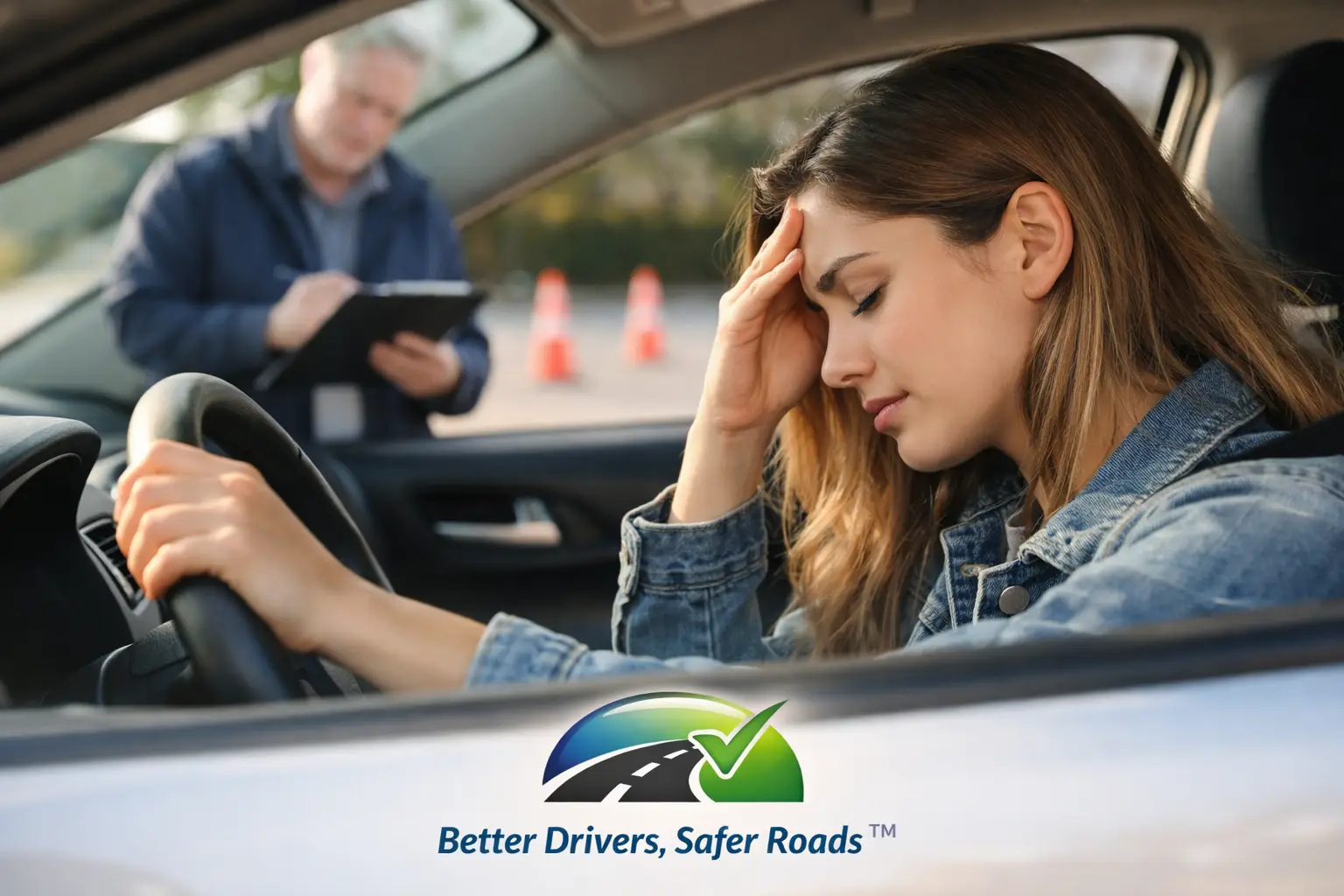
DMV Test Anxiety Can Be Managed Before Test Day
Your hands are steady during practice, but the moment an examiner sits in the passenger seat, every stop sign feels like a trick question. DMV test anxiety is common, even for students who have developed safe driving habits and understand the rules of the road. The goal is not to feel zero nerves. It is to keep nerves from taking over decisions you already know how to make.
A driving test carries real pressure. Teens may feel they are letting down a parent, adult learners may need a license for work or family responsibilities, and international drivers may be adapting to unfamiliar California road rules. That pressure can make a routine turn, lane change, or stop feel much bigger than it is. With the right preparation, anxiety becomes manageable rather than controlling.
Why DMV Test Anxiety Feels So Intense
Anxiety is your body’s response to perceived risk. Before a road test, your body may increase your heart rate, tighten your shoulders, dry your mouth, or make your thoughts race. Those reactions are uncomfortable, but they do not mean you are incapable of driving safely.
The problem begins when a nervous driver tries to rush. They may pull away before checking mirrors, brake abruptly because they are watching the examiner’s face, or forget a signal because they are replaying a previous mistake in their mind. Anxiety takes attention away from the road and puts it on the outcome.
A better focus is the next safe action. Instead of thinking, “I have to pass,” think, “I will check my mirror, signal, and make a smooth lane change when it is safe.” One clear task at a time gives your mind something useful to do.
Separate a Skills Gap From Test-Day Nerves
Not all nervousness has the same cause. Some students have solid vehicle control and simply need more experience being observed. Others feel anxious because they know certain skills are still inconsistent. These situations need different solutions.
If you can consistently make complete stops, maintain appropriate speed, scan intersections, use mirrors, and follow directions during regular practice, your main need may be test-condition rehearsal. Practice with an instructor or experienced licensed driver who gives directions calmly and limits feedback until the end of a short route. This helps you become comfortable driving without constant coaching.
If parallel parking, backing, right turns, lane changes, or residential-area scanning still feel uncertain, do not rely on positive thinking alone. Ask for focused instruction and repeat the skill until the sequence feels familiar. Confidence is strongest when it is built on evidence: you have practiced the skill correctly many times.
For many learners, a professional DMV road test preparation lesson is useful because it combines both needs. You can identify technical weaknesses, practice common test situations, and learn how to recover calmly when a maneuver does not feel perfect.
Practice the Test, Not Just Driving
A long practice drive can be valuable, but it does not always prepare you for the specific pressure of a DMV evaluation. Add short mock tests to your preparation. Start in a familiar area, then gradually practice in busier or less familiar conditions if you are ready.
During a mock test, ask the person riding with you to act like an examiner. They should give simple directions such as “turn right at the next street” or “change lanes when safe.” You should drive independently, without asking whether you are doing well after every move. Save the feedback for when the route is complete.
This approach reveals habits that normal lessons can hide. For example, you may know to check mirrors but forget to make your head movement visible enough for an examiner to see. You may make safe turns but approach them too quickly when you feel watched. Small observations like these are exactly what practice is for.
It also helps to practice recovery. Make a safe minor error on purpose in a low-risk setting, such as taking a wrong turn after receiving a direction. Then calmly continue driving and wait for the next instruction. A missed turn is not automatically a failed test. Unsafe reactions, such as sudden braking or last-second swerving, are far more serious.
Build a Calm Routine Before You Start the Car
Test-day calm is easier when you have a routine. Do not invent a new one in the DMV parking lot. Use the same short reset before practice sessions in the week leading up to your appointment.
Begin with slow breathing. Inhale gently through your nose, then make your exhale a little longer than your inhale. Repeat for about a minute. This is not a magic trick, but it can reduce the urge to rush and help your attention return to the present.
Next, set your driving position. Adjust the seat, mirrors, steering wheel position if needed, and climate controls before you begin. A comfortable, familiar setup supports better control and removes avoidable distractions.
Then use one realistic cue, such as: “Safe and smooth is my job.” Avoid telling yourself that you must be perfect. Perfection is not the standard. The examiner is looking for safe judgment, observation, control, and compliance with traffic laws.
A simple pre-drive checklist can prevent last-minute stress:
- Bring the documents and corrective lenses required for your appointment.
- Confirm that the vehicle has current registration, insurance, and working lights, signals, brakes, horn, and seat belts.
- Arrive early enough to handle check-in without rushing.
- Avoid over-caffeinating, especially if caffeine tends to make your hands shake or your thoughts race.
The right routine depends on the person. Some students feel better after a short warm-up drive; others prefer quiet time before checking in. Choose what makes you alert and steady, not what makes you more wound up.
During the Test, Drive the Road You Are On
The examiner may be quiet, write notes, or give directions in a neutral tone. Do not interpret those behaviors as good or bad news. Their job is to observe and evaluate, not to reassure you after each decision.
Keep your attention moving outward. Scan ahead, check mirrors regularly, watch for pedestrians and cyclists, and look through the turn rather than staring at the curb. When you approach an intersection, use the same process you practiced: ease off the accelerator, observe, stop fully when required, and proceed only when it is safe.
If you do not hear a direction, ask politely for it to be repeated. Guessing is not a good strategy. If you need to make a turn and are uncertain which way the examiner meant, clarify before acting when possible.
Try not to score your performance while you are driving. A slightly wide turn, a delayed response, or a moment of nervousness does not tell you the final result. Continuing with safe, controlled driving is the best response. Many test outcomes are affected by the overall pattern of driving, not one moment you wish had gone differently.
What Parents and Supporters Can Do
Parents and other supporters often want to help, but repeated reminders can unintentionally increase DMV test anxiety. Statements like “Do not mess this up” or “You have to pass today” add pressure without improving skill.
A more helpful approach is specific and calm. Before practice, agree on one or two skills to work on. Afterward, identify what went well before discussing one improvement for the next session. This keeps practice productive and helps the learner see progress.
If family practice has become tense, bringing in a patient, DMV-certified instructor can change the dynamic. A neutral instructor can tailor lessons to the student’s learning style, provide direct feedback, and create a structured plan without the emotional pressure that sometimes comes with practicing with family.
When Anxiety Needs Extra Support
Some nervousness is expected. But if panic symptoms regularly make it impossible to practice, if fear leads you to avoid driving altogether, or if past collisions or trauma are affecting your ability to focus, consider discussing the situation with a qualified health professional. Driving instruction can build skills and confidence, while mental health support can address anxiety that reaches beyond the test itself.
For students with learning differences, medical concerns, or a long gap in driving, a slower and more personalized training plan may be the right choice. There is no advantage to forcing a rushed timeline. Safe progress is still progress.
Before test day, give yourself credit for the work behind the appointment. A license test is one drive, not a measure of your worth or future independence. Prepare carefully, slow your breathing, and let the safe habits you have practiced do their job.

Related Posts


Comments (0)