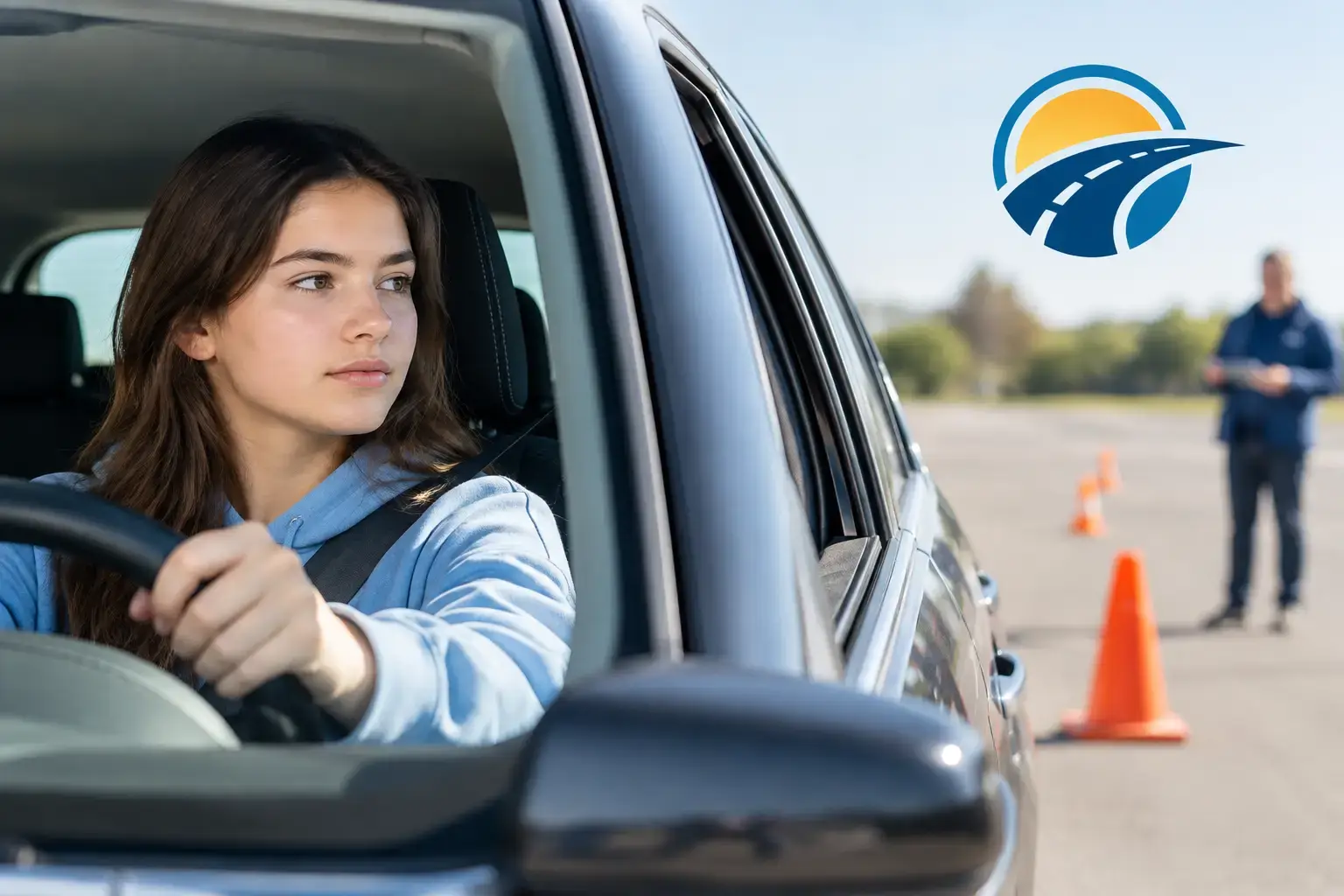
Use this teen hazard recognition training example to help new drivers spot risk early, make safer decisions, and build confidence before the road test.

10 Best Driving School Qualities to Look For
A driving lesson can feel very different depending on who is in the passenger seat. The right instructor helps a nervous teen make safe decisions at a busy intersection. The wrong fit can leave a capable adult learner more anxious than when they started. That is why the best driving school qualities go far beyond a convenient schedule or a low advertised price.
For parents, new drivers, international residents, and adults returning to the road, a driving school should provide more than enough practice to pass a test. It should build judgment, awareness, and habits that continue long after a California license is issued.
1. Professional, patient instructors
A qualified instructor is the foundation of a good driver education experience. Students need someone who can explain traffic laws accurately, demonstrate safe techniques clearly, and stay calm when a mistake happens. Raising a voice or giving rushed directions does not help a student learn. It can make driving anxiety worse.
Patience is especially important for first-time drivers, students who have failed a DMV road test, and adults learning later in life. A professional instructor corrects errors without embarrassment, then gives the student another opportunity to practice the right response. They should also adjust their teaching style. Some learners benefit from detailed verbal coaching, while others need a simple demonstration followed by repetition.
Ask how instructors are selected, trained, and evaluated. Experience matters, but so does the ability to communicate with respect.
2. A safety-first teaching approach
Passing the DMV test is an important goal, but it is not the full measure of driver readiness. A strong program teaches students how to scan ahead, manage following distance, identify hazards, yield appropriately, and make decisions before a situation becomes urgent.
This approach should be visible in every lesson. Instead of teaching a student to memorize a route, an instructor should explain why a lane change is unsafe, why speed must match conditions, or how a proper visual search reduces risk at an intersection. Students develop confidence when they understand the reasoning behind each action.
A safety-first school also addresses real situations learners will face: freeway entrances, heavy traffic, night driving, parking lots, residential streets, and changing weather. The order and pace depend on the student’s readiness. A beginner may need more time on low-speed streets before entering faster traffic, while an experienced driver may need focused work on specific weak areas.
3. Safe, well-maintained training vehicles
The condition of a school vehicle says a great deal about its standards. Training cars should be clean, dependable, and properly maintained. They should also be equipped for instruction, including an instructor brake when required or appropriate for the program.
Students should be able to focus on steering, braking, mirrors, and traffic conditions without worrying whether the vehicle is reliable. Parents should feel comfortable knowing their teen is learning in a vehicle designed for supervised practice.
Vehicle type matters as well. Automatic-transmission instruction is suitable for many learners, but a school that offers manual transmission training can be valuable for drivers with a specific personal, work, or travel need. The best option depends on the vehicle a student expects to drive after licensing.
4. Clear lesson plans with personalized instruction
Every student begins at a different point. A teen may understand basic vehicle controls but have limited traffic experience. An adult learner may be highly motivated yet anxious behind the wheel. An international driver may have years of experience but need to understand California laws, signs, and local driving expectations.
A quality driving school assesses the student’s current ability and builds a plan from there. Lessons should have a clear purpose, whether that is smooth braking, right turns at controlled intersections, parallel parking, freeway merging, or DMV test preparation. At the end of a lesson, the student should understand what went well and what to practice next.
Personalization does not mean avoiding challenging skills. It means introducing those skills at an appropriate time and giving the student enough guided practice to improve. Schools that use the same lesson sequence for every learner may be efficient, but they are not always effective.
5. Accurate California DMV preparation
Students often come to driving school with one urgent question: “Will this help me pass my test?” The answer should be grounded in meaningful preparation, not vague promises.
Effective DMV preparation covers the skills examiners commonly evaluate, including observation, control of the vehicle, legal turns, lane changes, safe stops, backing, parking, and overall decision-making. It should also reinforce the habits that students can lose under pressure, such as complete stops, checking blind spots, and maintaining an appropriate speed.
A reputable school will explain the difference between test readiness and long-term driving ability. Practice for the road test is helpful, but it should not become a script. DMV routes and conditions can vary. Drivers who understand the rules and can adapt safely are better prepared than drivers who only memorize maneuvers.
6. Flexible scheduling and practical support
Convenience should support quality instruction, not replace it. Teens balance school and activities. Working adults may need evening or weekend lessons. Families may need advance scheduling to coordinate transportation. A school with accessible booking options, clear cancellation policies, and reasonable lesson availability respects the realities of its students.
Pickup and drop-off service, where available, can make professional training more accessible, especially when a family member cannot provide transportation. Online driver education can also be useful for students who need flexibility with the classroom portion of their training. Still, online learning should be paired with thoughtful behind-the-wheel practice. Watching material is not the same as making safe decisions in traffic.
Before enrolling, ask how lessons are scheduled, whether packages have expiration dates, and what happens if a student needs more practice than expected. Clear answers are a sign of good customer service.
7. Transparent pricing and honest recommendations
The least expensive package is not always the best value, and the largest package is not always necessary. A trustworthy school explains what each service includes, how long the instruction lasts, and whether fees apply for pickup, DMV test services, late changes, or other add-ons.
Honest recommendations matter. A student who needs a few targeted lessons after a failed test should not be pressured into a program designed for a complete beginner. Likewise, a brand-new driver may need more than the minimum required hours to feel prepared for independent driving. The right amount of training depends on practice opportunities, comfort level, learning pace, and driving goals.
Families should be able to compare options without feeling rushed. Good schools make their policies understandable before payment, not after.
8. Strong communication with students and families
Driving instruction involves safety, progress, and often a major milestone for a family. Communication should be timely, professional, and easy to understand. Students need clear directions before each lesson. Parents may need to know what documents are required, how required training hours work, and how to support safe practice at home.
After a lesson, useful feedback is specific. “Needs more practice” is not enough. A better update identifies the skill, such as judging gaps when turning left or checking mirrors before braking, and suggests how to reinforce it safely.
For adult and international learners, communication may include explaining licensing steps, road-test expectations, and local rules in plain language. Multilingual instruction options can be especially helpful when they allow a student to fully understand safety concepts rather than merely follow directions.
9. Credibility built over time
A driving school earns trust through consistent service, proper licensing, professional standards, and a record of serving students well. Years in business alone do not guarantee a good experience, but established experience can indicate that a school has learned how to meet changing student needs and maintain reliable operations.
Look for signs of accountability, such as clear business information, ethical practices, qualified staff, and policies that put student safety first. Reviews can provide useful perspective when they describe specific experiences, including instructor patience, scheduling, test preparation, and the way the school handled concerns.
Newport Driving School has served California learners since 1997 with instruction designed around individual experience levels, driving goals, and safety needs. That kind of long-term commitment is valuable when choosing a program for a new driver or a family member who needs extra support.
10. Training that builds independence, not dependence
The final quality is easy to overlook: a good school prepares students to think for themselves. Instructors cannot sit in the passenger seat forever. Students need to learn how to notice changing conditions, stay composed after a mistake, and choose the safest response without waiting for a prompt.
That independence grows through guided repetition. An instructor may initially remind a student to scan an intersection, check a blind spot, or begin braking earlier. Over time, the student should perform those actions naturally. Confidence comes from competence, not from being told that everything will be fine.
The right driving school should leave a student better prepared for everyday trips, unfamiliar roads, and unexpected situations. Choose a program that treats your license as the beginning of responsible driving, not the finish line.

Related Posts


Comments (0)