Choosing automatic versus manual driving lessons affects your license, confidence, practice options, and DMV goals. Learn which fit is right for you today.
Do Instructors Offer Pickup Service for Driving?
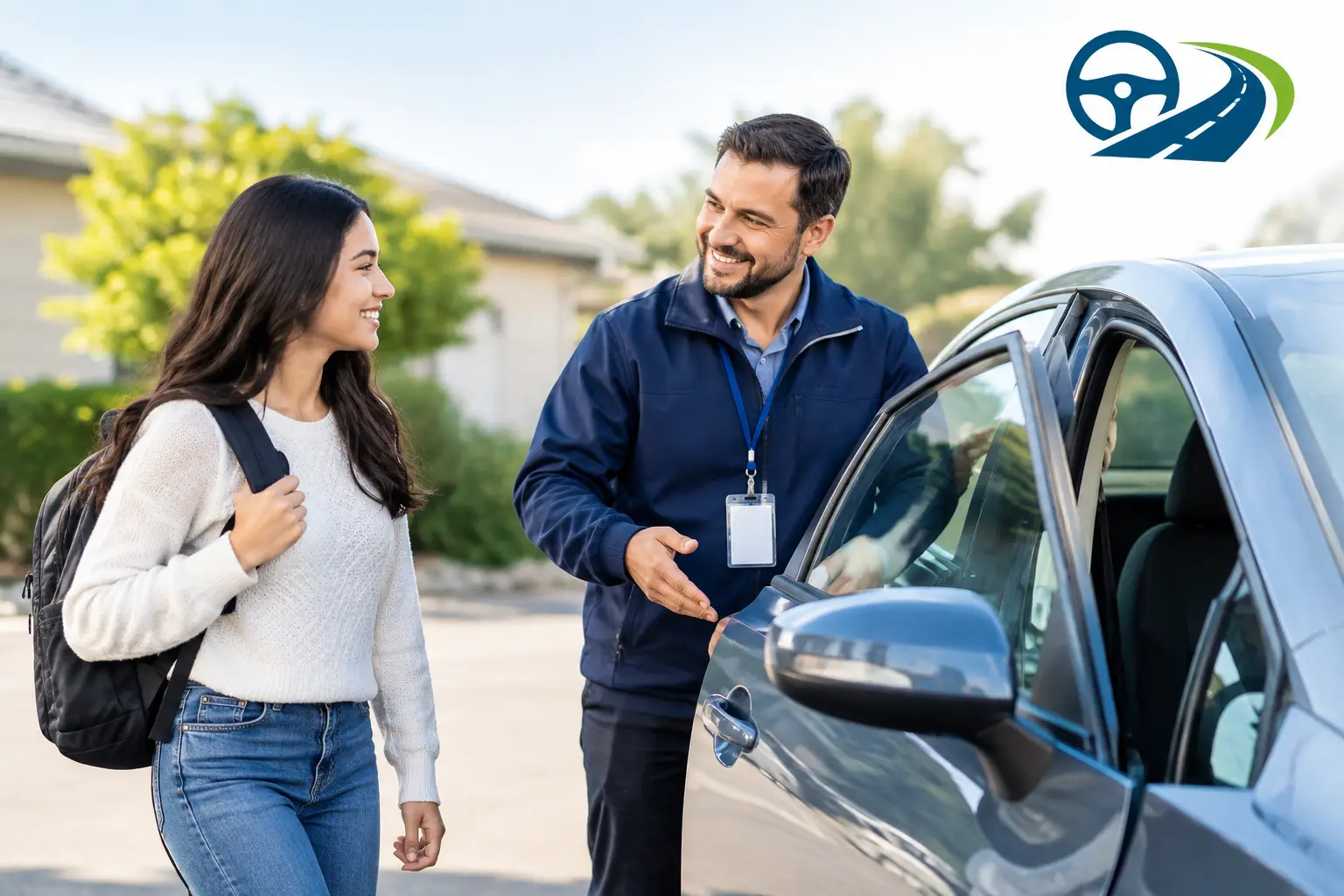
A driving lesson should begin with learning, not with arranging a complicated ride across town. So, do instructors offer pickup service? Many driving schools do, particularly for behind-the-wheel lessons, but the details matter. Pickup availability can depend on your address, the instructor’s schedule, the lesson type, and the service area.
For teens without access to a family car, adults balancing work, and new California residents still finding their way around, pickup and drop-off can remove a major barrier to consistent practice. It also gives the instructor a chance to use lesson time where it counts: building safe habits in real traffic.
Do Instructors Offer Pickup Service for Every Lesson?
Not always. Pickup service is common, but it is not automatically included with every driving program or in every neighborhood. A school may offer pickup for standard behind-the-wheel sessions while handling DMV road test appointments, short refresher lessons, classroom courses, or online driver education differently.
The practical question is not simply whether pickup exists. It is whether the school can pick you up at your preferred location, at the time you need, with an instructor and training vehicle assigned to your lesson. A home, school, workplace, college campus, or agreed public location may be possible when it falls within the school’s active service area.
At Newport Driving School, local pickup and drop-off convenience is part of making professional instruction more accessible. Still, students should confirm the address and scheduling details before booking. Clear expectations prevent last-minute confusion and help the instructor plan an effective route for the lesson.
Why Pickup Service Matters for New Drivers
A pickup option is more than a convenience feature. For a beginner, getting to and from lessons can determine whether training happens consistently enough to build confidence. If a parent must leave work early for every appointment, or an adult learner has to coordinate rides each week, missed lessons can quickly interrupt progress.
Pickup also lets the lesson start in a real-world environment. An instructor can assess how a student handles neighborhood streets, residential intersections, school zones, busier commercial roads, and route changes. That variety is valuable because the DMV road test is only one part of becoming a safe, capable driver.
For parents, the benefit is often peace of mind. A qualified, DMV-certified instructor arrives in a vehicle designed for instruction and can take responsibility for the training session from pickup through drop-off. Parents remain informed without having to turn every lesson into a transportation project.
What to Confirm Before You Schedule
A quick conversation before enrollment can make pickup service simple. Ask whether your address is inside the service area and whether there is an added fee or minimum lesson length. Some locations are farther from an instructor’s normal route, so availability may be more limited even when the school serves the broader city.
Also ask where the instructor can safely stop. A busy school entrance, a gated community, an apartment complex with restricted access, or a workplace loading zone may require a nearby meeting point. The best location is legal, visible, and easy for both the student and instructor to find.
If you are a teen, make sure a parent or guardian understands the planned pickup and drop-off arrangement. If you are an adult, share any schedule constraints early, such as a work shift, class ending time, or a required return time. Good driving schools can often accommodate practical needs, but they need accurate information to do so.
The training vehicle question
Pickup service usually means the instructor arrives in the school’s training vehicle. This is especially helpful for new drivers who do not have access to a car or who are not yet comfortable practicing in a family vehicle. Professional training cars typically include an instructor brake and mirrors that allow the instructor to monitor traffic and student performance.
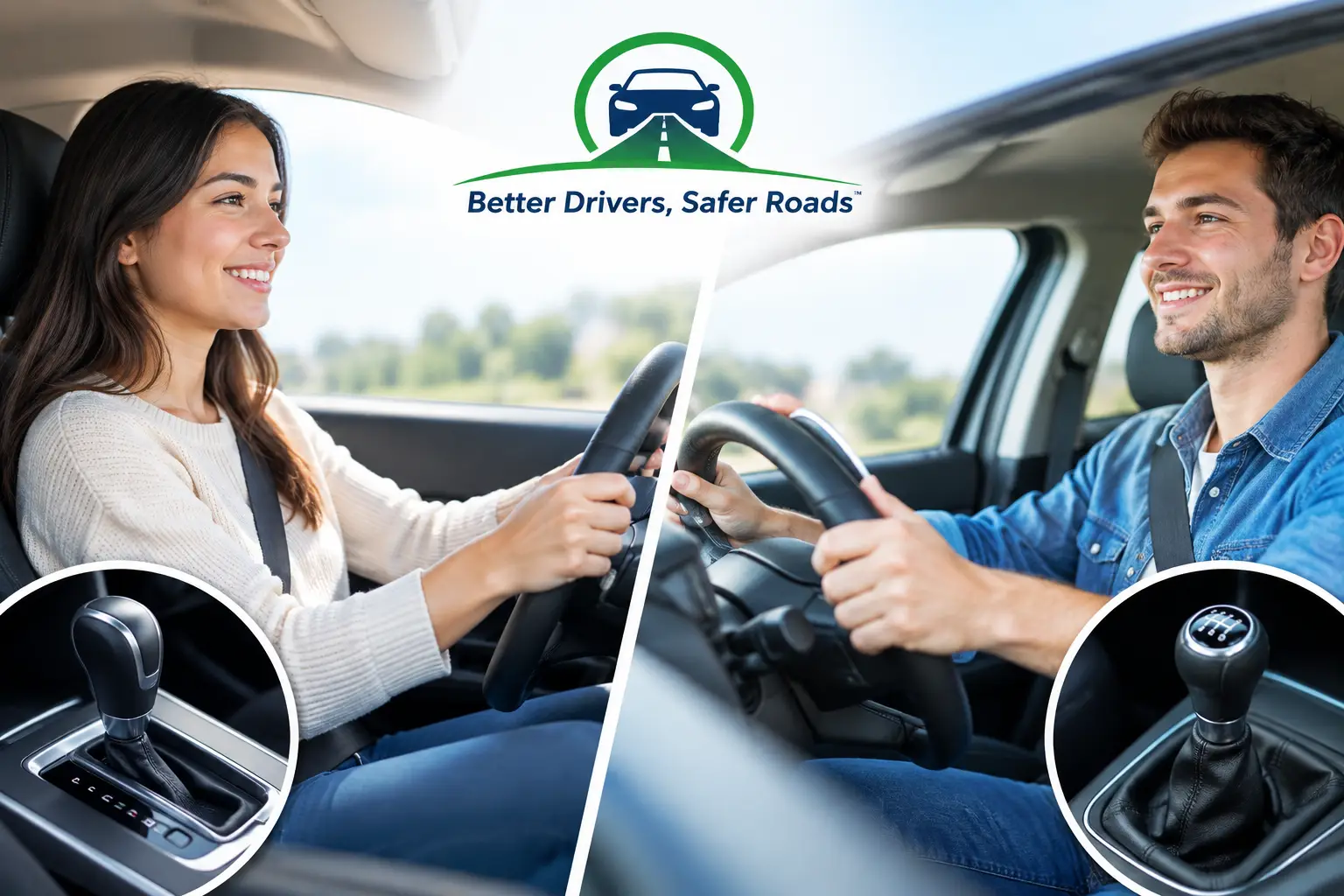
Ask whether the vehicle is automatic or manual if transmission type matters to your goals. Most first-time California drivers train in automatic vehicles, while manual transmission training is a separate need that should be arranged in advance.
License and permit requirements
A pickup does not replace the legal requirements for driving. Students must have the appropriate California instruction permit or license for the lesson they are taking, and they should bring it to every session. Teen learners should also complete any required driver education steps before beginning behind-the-wheel training.
International drivers and adults returning to driving may have different circumstances. An experienced instructor can help clarify the training path, but students should be honest about their license status, prior experience, and comfort level. That information helps the school assign the right lesson type and instructor.
Pickup and Drop-Off Can Support Better Lessons
Where a lesson begins can shape what the student practices. A learner picked up near home may spend part of the session working on controlled turns, scanning intersections, right-of-way decisions, and residential-speed management. A student picked up near a workplace may need more practice with lane changes, parking structures, traffic signals, and heavier traffic flow.
This flexibility can be particularly helpful for anxious drivers. Rather than starting in an unfamiliar parking lot every time, the student can gradually build skills from familiar streets into more demanding environments. Progress should be paced carefully. Pushing too quickly can reinforce anxiety, while staying only on quiet streets for too long can leave a learner unprepared for everyday driving.
Pickup service is also useful for DMV test preparation, although students should verify the plan for test day. Some programs may include use of a training vehicle and transportation to the DMV, while others may require a separate road test service reservation. Do not assume that a normal lesson pickup automatically includes DMV appointment transportation.
When Pickup Service May Not Be the Best Fit
Convenience is valuable, but it is not the only factor. A student who lives outside the instructor’s service area may get more scheduling choices by meeting at a central location. Someone who needs an early-morning or late-evening lesson may find that pickup options are narrower than daytime availability.
There are also cases where meeting near a specific practice area makes more sense. A learner preparing for freeway driving, parallel parking, or a DMV road test may benefit from beginning near the appropriate route rather than spending a large part of the appointment traveling there. The right choice depends on the student’s goals and the time available.
For families with access to a safe practice vehicle, a hybrid approach can work well. Use professional lessons for skill evaluation, new maneuvers, and correction of unsafe habits, then practice the instructor’s recommendations between lessons. Pickup makes the professional portion easier to schedule, but regular supervised practice remains essential for most new drivers.
How to Make Pickup Appointments Run Smoothly
Be ready a few minutes before the scheduled arrival time with your permit or license, glasses or contacts if required for driving, and comfortable shoes. Avoid trying to eat, finish homework, or handle a stressful phone call as the lesson begins. Attention is a safety tool.
If your pickup location changes, notify the school as early as possible. Last-minute address changes can affect the instructor’s route and the next student’s appointment. The same goes for cancellations. A professional school may have policies for late cancellations because instructor time and vehicle scheduling are reserved specifically for you.
During the first lesson, tell the instructor what feels difficult. Maybe you have never driven, struggle with turns, feel nervous in traffic, need help understanding California road rules, or have failed a road test before. Personalized instruction is most effective when the instructor knows what you need to improve.
A dependable pickup arrangement should make driver training feel more manageable, not more complicated. Confirm the details, arrive prepared, and use each session to practice one step beyond your current comfort zone. With patient instruction and consistent time behind the wheel, the trip from your front door to confident driving can become a practical part of your progress.

Related Posts


Comments (0)