Choosing automatic versus manual driving lessons affects your license, confidence, practice options, and DMV goals. Learn which fit is right for you today.
How to Relearn Driving Skills With Confidence
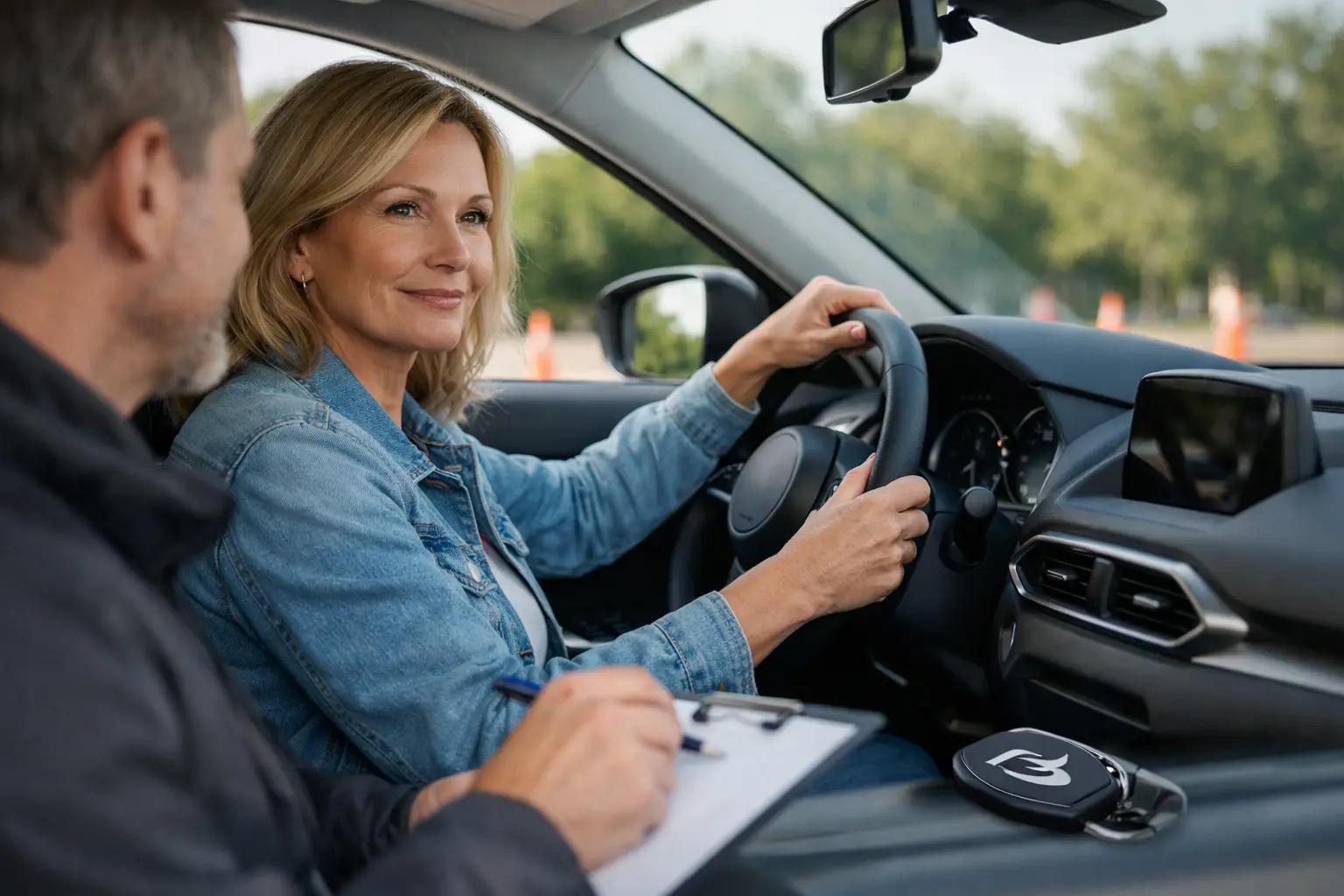
The first time you return to the driver’s seat after months or years away, the car can feel surprisingly unfamiliar. You may remember the rules but hesitate at busy intersections, feel tense when changing lanes, or second-guess every decision in a parking lot. Learning how to relearn driving skills is not about starting from zero. It is about rebuilding safe habits in the right order, with enough practice to make good decisions feel natural again.
A long break from driving can happen for many reasons: moving to a new area, recovering from an illness or injury, relying on public transportation, raising a family, living abroad, or simply losing confidence after a difficult experience. Whatever caused the break, the goal is the same: return to the road calmly, safely, and at a pace that matches your needs.
Start by Identifying What Feels Difficult
Before scheduling practice, be honest about the situations you avoid. Some returning drivers are comfortable on quiet neighborhood streets but nervous on freeways. Others can drive in traffic but struggle with parking, left turns, merging, or navigating unfamiliar routes.
This matters because relearning is more effective when practice has a clear purpose. Driving around without a plan may help you get comfortable with the vehicle, but it may not address the specific moments that cause anxiety or create risk.
Write down the situations that feel challenging, then rank them from least stressful to most stressful. For example, you might begin with residential streets, move to wider local roads, then practice lane changes, parking lots, busy intersections, and eventually freeway driving. You do not need to conquer every concern in one lesson.
Refresh the Rules Before You Drive in Traffic
Traffic laws and road conditions change, especially if you have been away from California for several years or learned to drive in another country. A quick review of current signs, right-of-way rules, speed laws, school-zone procedures, and cell phone restrictions can prevent old assumptions from becoming mistakes.
Pay special attention to rules that often affect returning drivers: yielding to pedestrians, making right turns at red lights, using bike lanes correctly, entering roundabouts, responding to emergency vehicles, and understanding modern road markings. California roads also require stronger awareness of cyclists, e-bikes, scooters, and pedestrians than many drivers remember.
A written rule review is useful, but it should support behind-the-wheel practice rather than replace it. Knowing the correct answer on paper is different from recognizing a safe gap in traffic or reacting appropriately when several road users are moving at once.
Relearn Driving Skills in Low-Pressure Settings
The best place to restart is usually a quiet, familiar area during daylight and good weather. Choose a vehicle you understand and can operate comfortably. Before moving, adjust the seat, mirrors, steering wheel, head restraint, and climate controls. Take a moment to locate the turn signals, wipers, headlights, defroster, parking brake, and hazard lights.
Your first practice sessions should focus on vehicle control. Work on smooth acceleration, steady braking, controlled turns, checking mirrors, signaling early, and maintaining appropriate lane position. These basics may sound simple, but they are the foundation for everything that comes next.
Avoid treating a quiet street as a place to rush. The purpose is to restore your visual scanning and decision-making routine. Look well ahead, check mirrors regularly, scan crosswalks and side streets, and keep a safe following distance. When these habits return, more complex traffic situations become easier to manage.
Build Difficulty Gradually, Not All at Once
Confidence grows when drivers complete manageable challenges repeatedly. It can shrink when someone jumps from a few neighborhood drives directly onto a crowded freeway at rush hour. A gradual progression is safer and usually faster in the long run.
After you feel steady on local streets, add moderate traffic and common errands. Practice entering and exiting parking lots, navigating four-way stops, making unprotected left turns, changing lanes on multi-lane roads, and parking between other vehicles. Then work up to higher-speed roads and freeway ramps.
For freeway practice, begin at a lower-traffic time with an experienced instructor or qualified supervising driver. Focus first on entering at an appropriate speed, checking mirrors and blind spots, merging decisively when safe, maintaining space around your vehicle, and planning exits early. Freeway driving is less about bravery than preparation and timing.
If one skill continues to feel difficult, stay with it. A driver who needs several sessions to become comfortable merging is not failing. They are practicing a complex skill until it becomes dependable.
Replace Old Habits With Defensive Driving Habits
Returning drivers sometimes rely on habits that once felt normal but are no longer safe. Following too closely, braking late, driving with one hand while distracted, or assuming other drivers will yield can quickly create problems in modern traffic.
Defensive driving means giving yourself time and space to respond. Keep your eyes moving, leave enough following distance, look ahead for brake lights and traffic changes, and avoid driving in another vehicle’s blind spot when possible. Use turn signals consistently, even when you think no one is nearby.
It also means managing distractions before the vehicle moves. Set navigation, secure your phone, choose music, and make sure any passengers understand that you need to focus. If you miss a turn, keep driving safely and reroute. A missed exit is inconvenient; a sudden lane change is dangerous.
Practice Parking Until It Stops Feeling Like a Test
Parking creates more stress than many returning drivers expect because it requires slow-speed control, spatial awareness, and patience. Fortunately, it is one of the easiest skills to improve with focused practice.
Start in an empty lot using parking-space lines as reference points. Practice pulling forward into a space, backing straight, reversing into a space, and leaving the space while checking carefully for pedestrians and cross-traffic. Once those movements feel predictable, practice with nearby vehicles and tighter spaces.
Parallel parking may be necessary for a road test or city driving, but it does not have to be the first skill you tackle. Learn the reference points for the vehicle you are using, practice the sequence slowly, and prioritize observation over speed. A controlled correction is better than forcing a poor approach.
Know When Professional Instruction Makes Sense
Practicing with a patient family member or friend can be helpful, but it is not always the best fit. They may have different driving habits, limited availability, or trouble explaining what to do in a stressful moment. Some returning drivers also feel more pressure with someone they know.
A DMV-certified instructor can assess your current skills objectively and create a lesson plan around your actual needs. That may include freeway merging, parking, defensive driving, California DMV road test preparation, manual transmission practice, or adapting to U.S. driving expectations after living abroad.
Professional instruction is especially valuable after a collision, a long period without driving, repeated road test failures, or a major change in health or mobility. If medication, vision changes, cognitive changes, or physical limitations may affect driving, speak with a qualified medical professional first. A specialized driving assessment may be appropriate before returning to independent driving.
Newport Driving School works with returning drivers throughout Orange County and surrounding Southern California communities, using personalized instruction to help students rebuild skills without intimidation.
Measure Progress by Consistency, Not Nerves Alone
Feeling nervous does not automatically mean you are not ready to drive. Many drivers feel some tension when returning to a busy road or unfamiliar route. What matters is whether you can follow safe procedures despite that feeling.
Look for practical signs of improvement: you check mirrors without being reminded, maintain a safe speed, identify hazards earlier, make smoother stops, and recover calmly from small mistakes. These are stronger indicators than waiting for anxiety to disappear completely.
Set a simple practice schedule rather than relying on occasional long drives. Two or three focused sessions each week often build skill more effectively than a single stressful outing every few weeks. Keep sessions short enough that you can stay alert and end on a constructive note.
Returning to driving is a process, not a pass-or-fail moment. Give yourself permission to practice deliberately, ask for qualified help when needed, and take the next road challenge one safe decision at a time.

Related Posts

Comments (0)