
Choosing automatic versus manual driving lessons affects your license, confidence, practice options, and DMV goals. Learn which fit is right for you today.
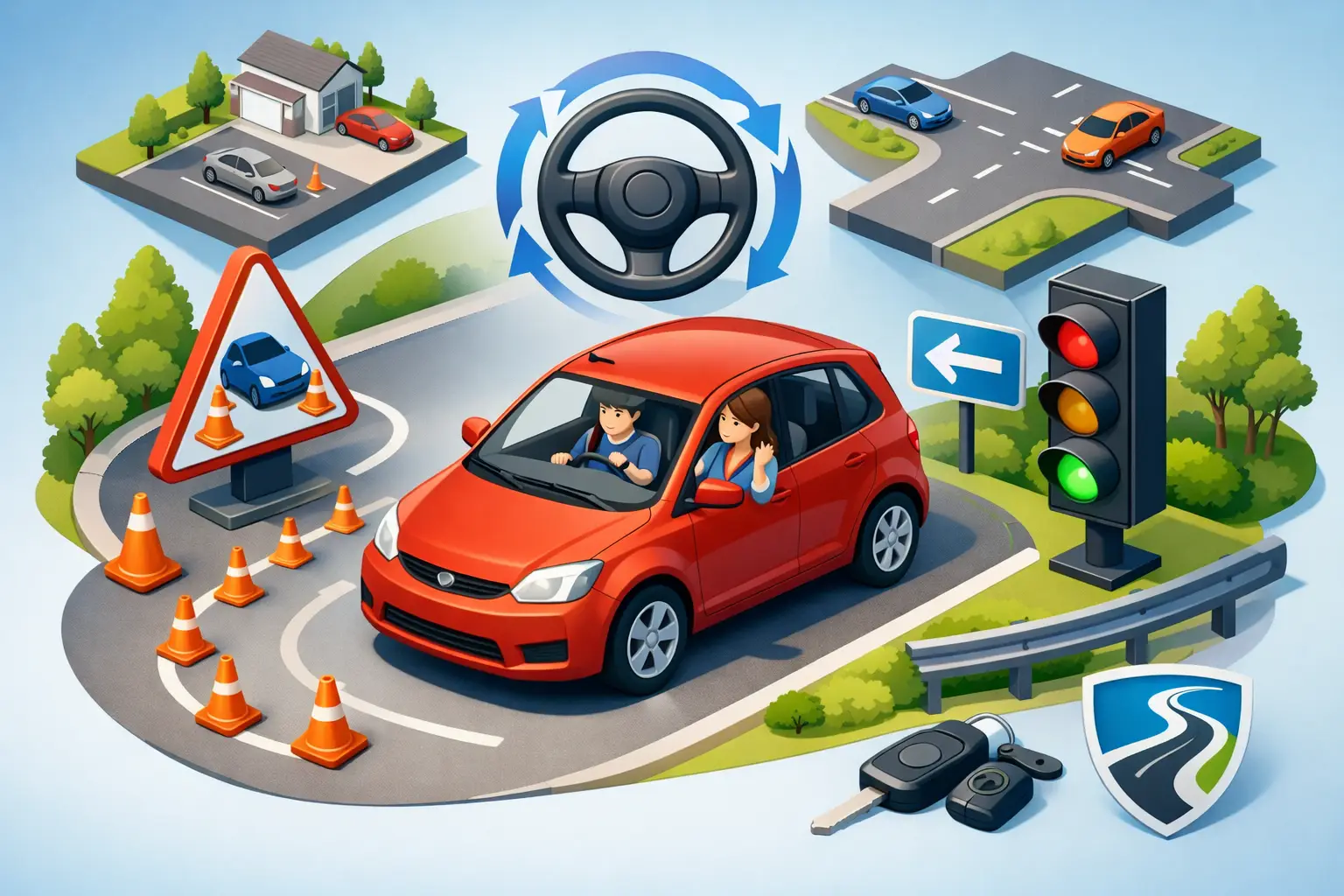
How to Teach Teen Driving the Right Way
The first few practice drives usually tell parents everything they need to know. One teen grips the wheel too tightly and forgets to breathe. Another feels overconfident after one smooth turn around the block. If you are wondering how to teach teen driving in a way that builds real skill, not just seat time, the answer is structure, patience, and clear expectations.
Teaching a teenager to drive is not just about showing them how to move a car. It is about helping them recognize risk, stay calm under pressure, and make safe choices when no one is sitting in the passenger seat. That takes more than miles. It takes a plan.
How to Teach Teen Driving With a Clear Progression
The biggest mistake many families make is treating practice like random errands. A short drive to the grocery store can help, but it should not be the whole program. Teens learn faster when each lesson has a narrow focus and a level of difficulty that matches their current ability.
Start in a quiet, low-pressure area such as an empty parking lot or a calm residential neighborhood. Early sessions should cover the basics without traffic pressure. That means seating position, mirror adjustment, smooth braking, gentle acceleration, steering control, scanning ahead, and understanding how much space the car takes up.
Once those fundamentals look consistent, move to neighborhood driving with stop signs, right turns, left turns, and lane positioning. After that, introduce busier roads, lane changes, traffic timing, and speed management. Freeways, nighttime driving, rain, and high-density traffic should come later, not sooner.
This progression matters because confidence without judgment is risky. A teen who feels comfortable turning the wheel may still struggle to read traffic patterns or anticipate what another driver might do. Skill should expand in layers.
Set Rules Before the Car Moves
Teen driving lessons go better when expectations are settled before anyone puts the car in gear. Parents often focus on technique but forget that emotional tone shapes learning too.
Before each drive, agree on a few simple rules. The teen should know that your job is to coach, not criticize, and your role as the supervising driver is to stay calm, specific, and alert. At the same time, the teen needs to accept direction quickly and avoid arguing during active driving situations.
It also helps to establish the language you will use. Instead of saying, “Watch out,” say, “Brake gently,” or “Check your right mirror.” Specific coaching reduces panic. It also teaches the teen what action solves the problem.
If a drive starts going badly, end it early. That is not failure. A shorter lesson with a clear takeaway is usually more productive than forcing another 30 tense minutes.
Keep lessons short enough to be useful
Most beginners do better with 30 to 60 minutes of focused practice than with long sessions that create fatigue. Mental overload shows up quickly in new drivers. When that happens, mistakes multiply and learning drops off.
Two or three consistent sessions a week often work better than one long weekend drive. Repetition builds familiarity, and familiarity reduces anxiety.
Focus on Observation, Not Just Vehicle Control
A teen can learn how to steer and brake fairly quickly. The harder part is learning how to notice what matters early enough to respond safely.
That means you should coach vision habits from the first lesson. Encourage your teen to look far ahead, check mirrors regularly, scan intersections before entering, and identify possible hazards before they become emergencies. Ask questions while parked or during calm stretches of road: What is the car ahead doing? Where is the pedestrian looking? If that light changes, what is your plan?
This kind of coaching builds defensive driving habits. It teaches teens that driving is a decision-making task, not just a mechanical one.
Narrate risk without creating fear
There is a balance here. Teens need to understand that driving carries real responsibility, but too much fear-based coaching can make them freeze up. The better approach is calm awareness.
For example, instead of saying, “That car could hit you,” try, “Notice that car edging forward. Cover the brake and be ready.” That keeps the focus on observation and response.
Practice the Situations Teens Actually Struggle With
Some parts of teen driving are naturally harder than others. Left turns across traffic, judging gaps, lane changes in moderate traffic, parking, backing up, and merging onto faster roads often take more time than parents expect.
Do not assume a teen has mastered a skill because they did it correctly once or twice. Consistency matters more than isolated success. A useful question is not, “Can they do it?” It is, “Can they do it calmly, repeatedly, and safely in different conditions?”
Parking is a good example. Many new drivers can park when the lot is empty and there is no pressure. That does not mean they are ready to park between two cars with people waiting behind them. Build from easy conditions to realistic ones.
The same is true for freeway driving. Entering a freeway requires speed control, mirror checks, shoulder checks, lane judgment, and confidence all at once. It is often better to introduce freeway practice after the teen is already comfortable with lane changes and faster arterial roads.
How to Teach Teen Driving Without Constant Conflict
Many parents are qualified to supervise practice, but not every parent-teen pair is a natural fit in the car. That is normal. Driving combines stress, safety, and authority, which can turn even calm families into frustrated ones.
If every lesson becomes an argument, take that seriously. Conflict makes learning harder and can make the teen more reactive behind the wheel. In some cases, the issue is not effort. It is communication style.
Try giving one instruction at a time and saving larger feedback for after the car is parked. Avoid stacking commands such as “Slow down, move over, check your mirror, use your signal.” A new driver may not process that fast enough. Prioritize the most urgent instruction first.
It also helps to praise specifics. “Good job” is fine, but “Good mirror check before the lane change” is better. Specific feedback shows the teen exactly what to repeat.
Know when professional instruction helps
There are times when family practice should be supplemented with professional training. That might be because the teen is anxious, overly casual, hard to coach, or simply needs more structured instruction. A trained instructor can introduce techniques in a neutral, systematic way and catch habits parents may miss.
That is one reason many families combine home practice with formal behind-the-wheel lessons. At Newport Driving School, we see that mix work especially well for teens who need confidence, consistency, and a clear path toward DMV readiness.
Build Good Habits Early, Because They Stick
Teens do not just learn maneuvers. They learn routines. If those routines are careless at the beginning, they become much harder to fix later.
From the start, insist on complete stops, steady following distance, signal use, mirror checks, shoulder checks, and both hands ready for control. Do not let convenience replace safety just because a route feels familiar. Most risky habits begin in low-pressure moments when people assume nothing will happen.
Phone use deserves special attention. The rule should be simple: no texting, no scrolling, no handling notifications while driving or stopped in active traffic. If navigation is needed, set it before the trip begins.
Passengers matter too. Teens are often more distracted when driving friends than when driving alone with a parent. Even if your teen seems capable, extra passengers can change judgment and attention. It is smart to keep that risk in mind as experience grows.
Use a Simple Debrief After Every Drive
The best learning often happens in the two minutes after the engine turns off. That is the time to review what improved, what still needs work, and what the next lesson should target.
Keep this debrief short and practical. Ask your teen what felt easier than last time and what felt stressful. Then add one or two coaching points, not ten. Too much feedback sounds like criticism and is harder to retain.
A written practice log can help. Track hours, road types, weather, and skills practiced. This creates a more complete learning picture and helps families notice gaps. A teen with plenty of daytime neighborhood driving may still need more nighttime practice, more parking repetition, or more freeway exposure.
Safety and readiness are not the same as age
Some teens progress quickly. Others need more time before they are ready for independent driving. That does not always reflect maturity in a broader sense. Driving readiness is specific. It depends on attention, judgment, emotional control, and consistency under pressure.
If your teen is still making repeated scanning errors, braking late, missing signs, or reacting emotionally to normal traffic situations, more practice is the right answer. Rushing to the DMV before a teen is truly ready can create a much bigger setback than waiting a few more weeks.
Parents often ask when they should step back and trust the process. Usually, the answer is when the teen starts to show steady habits without constant reminders. Safe driving is quieter than many people expect. It looks calm, attentive, and uneventful.
Teaching a teen to drive is one of the most demanding jobs many parents take on, but it can also be one of the most worthwhile. When you keep the process structured, patient, and safety-focused, you are not just preparing your teen to pass a test. You are helping them build judgment that can protect them for years to come.

Related Posts


Comments (0)