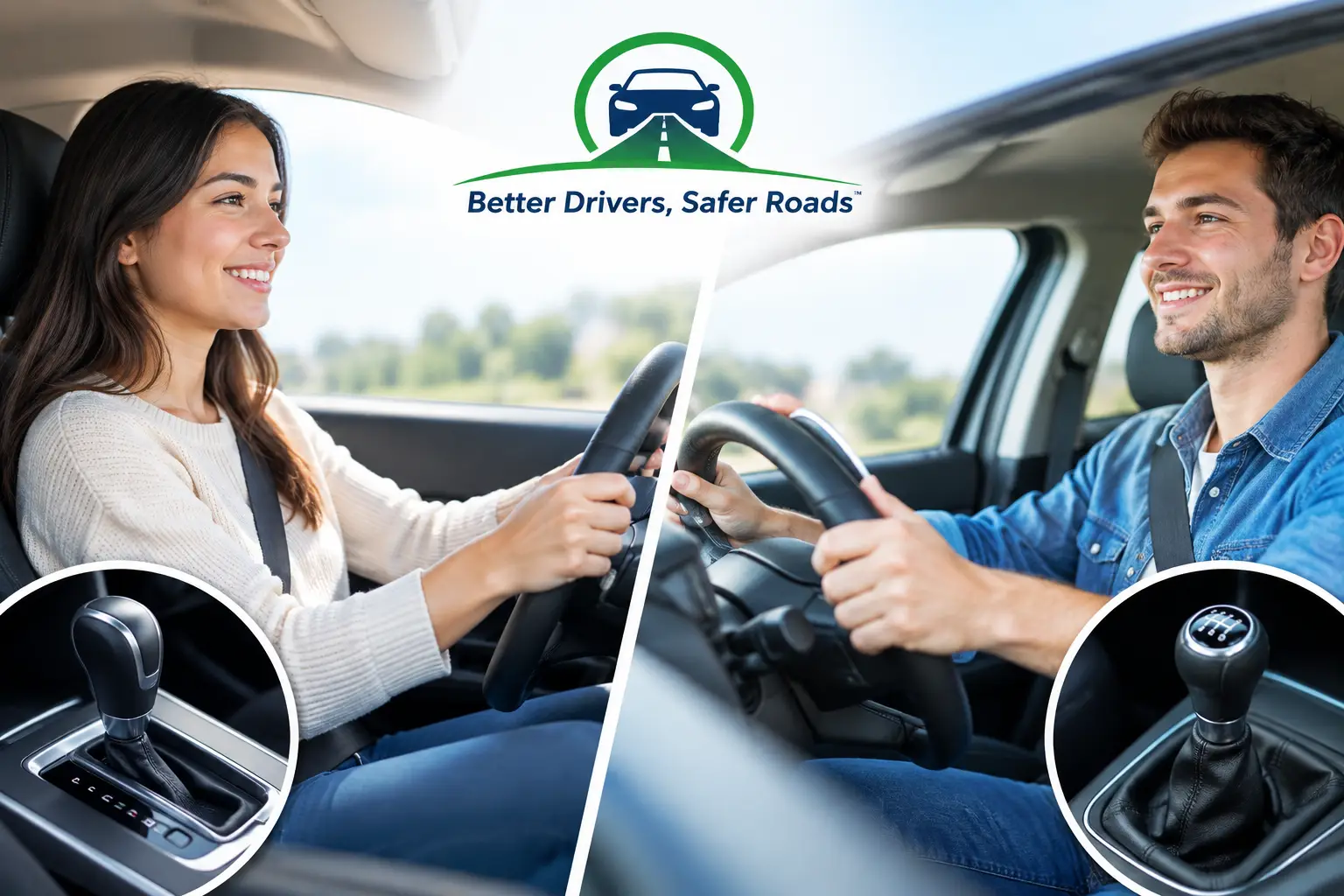
Choosing automatic versus manual driving lessons affects your license, confidence, practice options, and DMV goals. Learn which fit is right for you today.
Manual Transmission Driving Lessons That Work
The car stalls at the light, the driver behind you gets impatient, and suddenly learning to drive stick feels harder than it looked. That is exactly why manual transmission driving lessons matter. With the right instructor, what feels awkward in the first session starts to make sense quickly – not because manual is easy, but because good training breaks it into manageable skills.
For many students, learning a manual transmission is not just about operating a different kind of car. It is about confidence, timing, coordination, and staying calm under pressure. Some want the skill for work. Some are buying a stick-shift vehicle. Others simply want to be more versatile drivers. Whatever the reason, the learning process goes much better when it is structured, patient, and focused on safety.
Why manual transmission driving lessons are different
Automatic driving lessons and stick-shift training are not the same experience. In an automatic, a beginner can focus more quickly on steering, scanning, braking, lane position, and traffic decisions. In a manual, the driver is managing all of that while also learning clutch control, gear selection, hill starts, engine braking, and how to recover smoothly from mistakes.
That added complexity is exactly why many learners benefit from professional instruction. A qualified instructor does more than explain when to shift. They help students understand what the car is telling them through sound, vibration, and feel. That kind of coaching is difficult to get from a friend or family member, especially if that person is experienced enough to forget what a beginner actually struggles with.
Professional lessons also reduce one common problem – bad habits learned early. Riding the clutch, looking down at the gear lever, over-revving, and panicking at stop signs can all become patterns if nobody corrects them right away. A trained instructor can spot those habits before they stick.
Who should consider learning to drive manual
Manual transmission training is not only for teenagers or car enthusiasts. Adult learners often pursue it because they are changing jobs, moving from another country, or planning to travel where manual vehicles are more common. Some students already have a license and years of driving experience in automatic cars, but need a focused transition into stick shift.
It can also be a smart choice for drivers who want stronger overall vehicle awareness. Learning manual often sharpens attention to speed, road grade, and vehicle control. That does not automatically make someone a safer driver, but it can create a more engaged driving style when taught properly.
At the same time, manual is not the right fit for every driver. If a student is still building basic road confidence, it may make sense to first strengthen core driving skills in an automatic. The best training approach depends on the student, their goals, and how much pressure they are under to learn quickly.
What happens in manual transmission driving lessons
A good first lesson usually starts away from dense traffic. Students need space to learn clutch engagement, smooth starts, and low-speed shifting without the added stress of busy intersections. The early goal is simple: get the car moving, stop smoothly, and begin to understand the clutch bite point.
From there, lessons typically build in stages. Students practice starting from a stop, shifting into higher gears, slowing down, downshifting when appropriate, and coordinating clutch and brake use. Once those basics improve, instruction often moves into more realistic situations like traffic lights, stop-and-go driving, turns, parking lots, and moderate-speed roads.
Hill starts deserve special attention. They are one of the biggest sources of anxiety for new stick-shift drivers, and for good reason. Rolling backward, stalling, and feeling rushed can all happen at once. A patient instructor helps students learn the sequence and timing until it becomes repeatable.
Later sessions may cover more advanced habits, such as smoother downshifts, better gear choice on hills, and how to avoid unnecessary wear on the clutch. The point is not to drive like a race car driver. The point is to drive smoothly, safely, and with control.
What makes a lesson effective
The best manual lessons are calm, specific, and personalized. Some students learn by hearing a clear sequence of steps. Others need repetition and feel. Some are confident in traffic but struggle with coordination. Others can handle the clutch but freeze when another car pulls up behind them.
That is where individualized instruction matters. An experienced school does not teach every student the same way or at the same pace. A teenager learning their first vehicle skills needs a different approach than an adult driver who already understands traffic flow. An international driver may know manual well in another country but still need help adapting to California driving patterns, intersections, and testing expectations.
Results improve when the instructor can adjust quickly instead of forcing a rigid lesson plan. Patience matters, but so does accuracy. Reassurance is helpful only when it is paired with real correction and progress.
Common mistakes beginners make
Most manual driving errors are normal. Stalling is normal. Releasing the clutch too fast is normal. Shifting into the wrong gear, especially under stress, is normal too. The issue is not whether mistakes happen. The issue is whether the student understands why they happened and how to correct them.
One frequent mistake is trying to rush the clutch release before the car is ready to move. Another is giving too much gas to compensate for uncertainty. Some learners focus so much on the pedals that they stop scanning the road properly. Others become tense and grip the wheel too hard, which makes every action less smooth.
This is why structured practice beats random practice. Repeating the wrong motion twenty times does not build skill. It builds inconsistency. Lessons should create a sequence where fundamentals become automatic enough that the driver can return attention to traffic, mirrors, signs, and hazards.
Is learning manual worth it today?
For some drivers, yes. For others, maybe not. That is the honest answer.
If you expect to drive a manual regularly, the value is obvious. If your job, travel plans, family vehicle, or personal preference makes stick shift relevant, then proper training can save time, reduce stress, and protect the vehicle from avoidable wear. It can also make you more adaptable as a driver.
If you have no realistic reason to use a manual vehicle, the benefit becomes more personal than practical. Some people still want the skill because it expands their confidence and driving range. That is valid. But if your main goal is passing a DMV test as efficiently as possible, automatic training may be the more direct path.
A trustworthy driving school will be clear about that rather than pushing a service that does not fit the student.
Choosing the right school for manual training
Not every school that offers behind-the-wheel instruction is equally prepared to teach stick shift. Manual lessons require instructors who are comfortable teaching clutch timing step by step, not just demonstrating it. They also require a safe teaching process, a suitable training vehicle, and enough patience to work through repeated starts, stalls, and resets without creating more anxiety.
Look for a school that emphasizes personalized instruction, safety standards, and experience working with different types of learners. That matters for teens, adults, nervous beginners, and licensed drivers returning for a new skill. In a large, varied market like Orange County and surrounding Southern California communities, students often need scheduling flexibility and practical support, not a one-size-fits-all program.
Newport Driving School has built its training approach around that kind of student-centered instruction. For manual learners especially, that means meeting students where they are, correcting mistakes early, and building real competence instead of rushing through a checklist.
How many lessons does it take?
That depends on the student and the goal. Someone who already drives confidently in an automatic may learn the basics of stick shift in a relatively short time. A brand-new driver needs more time, because they are learning vehicle control and road judgment together.
The desired outcome matters too. If the goal is basic comfort moving through local streets, that timeline is different from wanting to handle hills, traffic, parking, and daily driving without hesitation. Most students improve quickly once the clutch starts to make sense, but smooth consistency takes practice.
That is normal. Manual driving is a coordination skill. It gets easier when instruction is clear, practice is intentional, and the student is not being pushed faster than they can absorb.
Learning stick shift can feel frustrating for a few hours and satisfying for years. The turning point usually comes when the car stops feeling unpredictable and starts feeling understandable. With patient, professional coaching, that shift happens sooner than most students expect.

Related Posts

Comments (0)