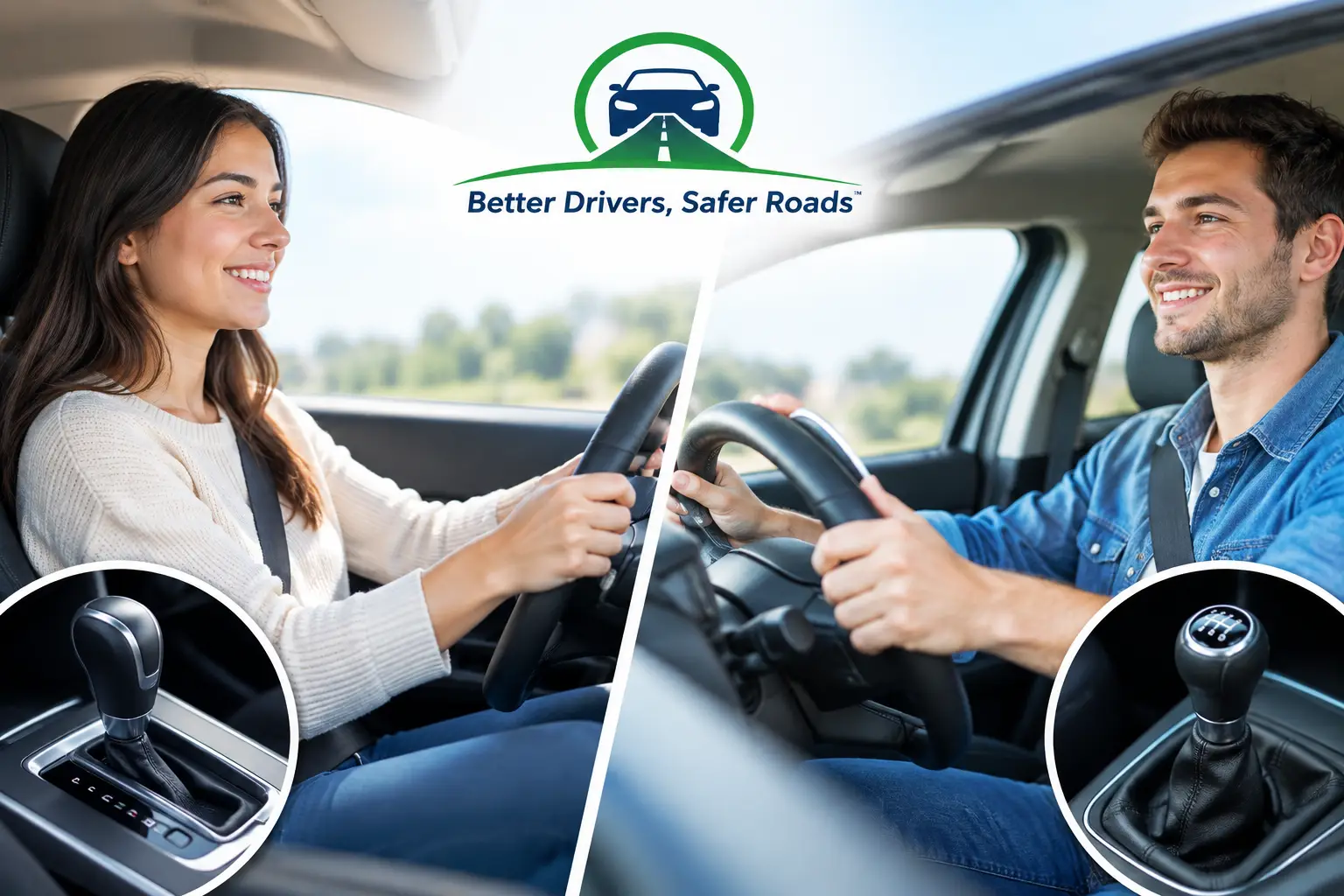
Choosing automatic versus manual driving lessons affects your license, confidence, practice options, and DMV goals. Learn which fit is right for you today.
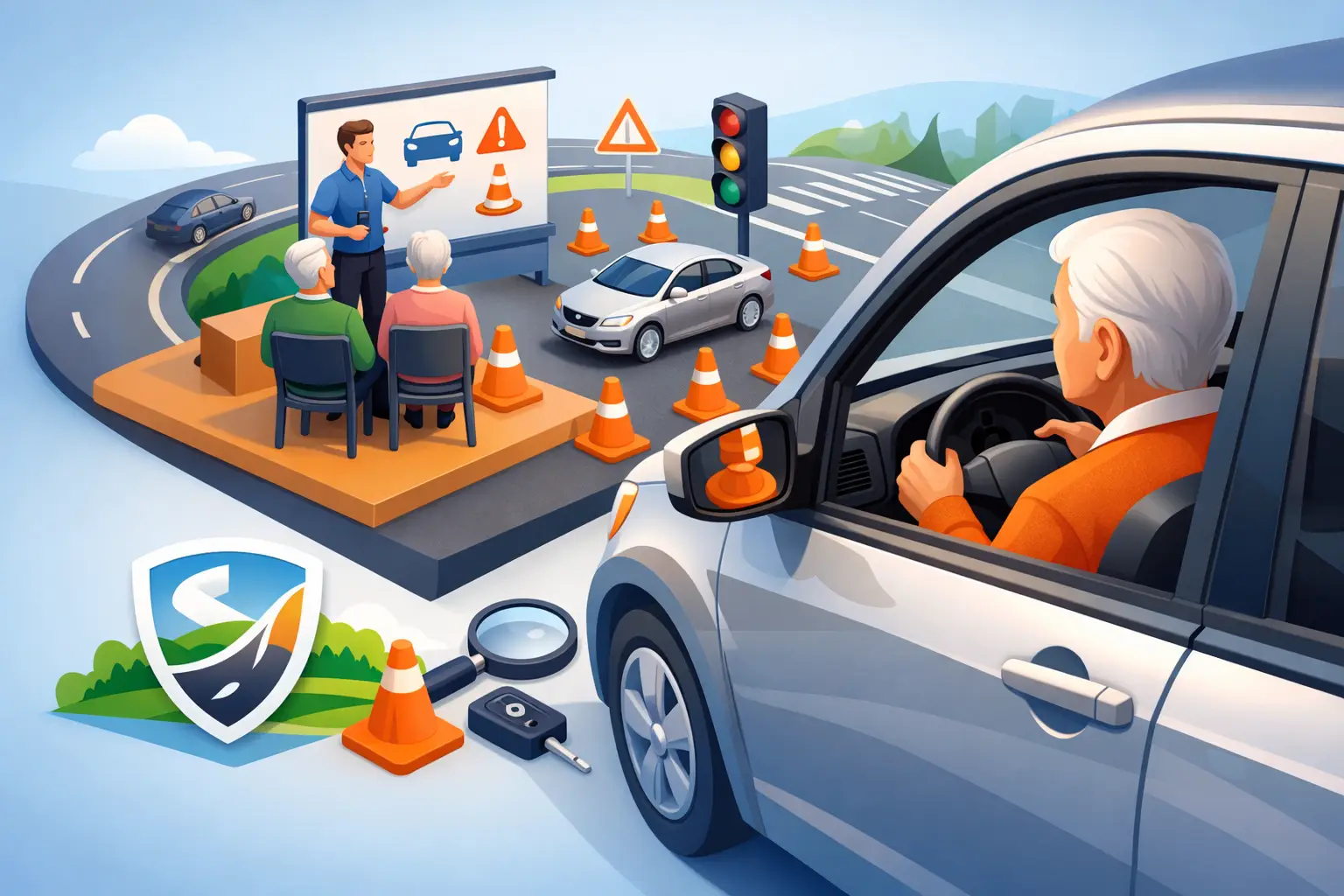
Senior Driver Safety Course: What to Expect
A left turn across busy traffic can feel different at 72 than it did at 42. Not because safe driving suddenly disappears with age, but because vision, reaction time, flexibility, and comfort under pressure can change gradually. A senior driver safety course is designed for exactly that reality – not to question independence, but to support it with current skills, better awareness, and practical coaching.
For many older drivers, the biggest value of a course is not learning to drive from scratch. It is relearning the parts of driving that become easier to overlook over time. Road rules change. Traffic patterns become faster and denser. New vehicle technology adds convenience, but it can also add distraction and confusion if no one explains how to use it properly.
Who benefits from a senior driver safety course
A senior driver safety course can help a wide range of drivers, not just people who have already had a scare on the road. It is a smart option for drivers returning after a medical event, adults who now avoid freeways or night driving, and families who want an objective way to assess current abilities without turning every car ride into an argument.
It also helps drivers who have not had a ticket or collision but simply feel less confident than they used to. That matters. Confidence is not the same as overconfidence. The right amount of confidence supports better scanning, calmer decisions, and smoother control. Too little confidence can lead to hesitation, missed gaps, abrupt braking, or unsafe lane changes.
In our experience, many older adults do very well once they receive focused instruction that respects their strengths. A patient instructor can identify whether the issue is physical limitation, outdated habits, anxiety, or just lack of recent practice in more demanding traffic situations.
What a senior driver safety course usually covers
The best programs focus on real driving behavior, not lectures that feel disconnected from daily life. A quality course often reviews current traffic laws, common crash risks for older drivers, defensive driving habits, and ways to compensate for changes in vision, mobility, or processing speed.
Just as important, it should address the situations seniors actually talk about. That includes left turns at large intersections, merging onto faster roads, backing out of crowded parking lots, judging distance in heavy traffic, and handling glare, rain, or night visibility. These are not minor details. They are the moments where a driver either feels prepared or overwhelmed.
If the course includes behind-the-wheel instruction, that is often where the biggest improvements happen. Classroom or online learning can refresh knowledge, but in-car coaching shows how that knowledge holds up under real conditions. An instructor can observe mirror checks, lane position, speed control, following distance, and turning judgment in a way that no written quiz can capture.
Skills refreshers that matter most
Some driving skills hold up well for decades. Others need periodic review. A senior-focused course often pays special attention to scanning intersections early, reducing blind spot risk, maintaining consistent speed, and planning lane changes sooner. These habits reduce last-second decisions, which become harder as traffic gets busier.
Vehicle familiarity also matters more than people think. Many older drivers are now using cars with touchscreens, backup cameras, lane alerts, and collision warnings. These features can improve safety, but only if the driver understands what they do and what they do not do. A warning system is support, not a substitute for full attention.
How instructors should approach older drivers
This is where course quality varies. A senior driver safety course should never feel condescending. Older drivers bring years of road experience, pattern recognition, and judgment that younger drivers often do not have. Good instruction builds on that experience while correcting habits that no longer serve the driver well.
The tone should be calm, specific, and solutions-focused. Instead of saying a driver is “bad at left turns,” a skilled instructor explains what is happening – perhaps delayed scanning, poor wheel positioning, or uncertainty about oncoming speed – and then offers a method to improve it. That kind of teaching creates progress without embarrassment.
Signs it may be time to enroll
Some families wait too long because they assume the conversation has to be all or nothing. It does not. Enrolling in a course is often a practical middle step between doing nothing and giving up driving entirely.
A refresher may be worth considering if a driver has started avoiding familiar routes, collects minor scrapes in parking lots, becomes unsettled by freeway driving, or relies heavily on passengers for navigation and traffic judgment. Other signs include difficulty turning to check surroundings, slower responses to unexpected events, or trouble keeping up with current road rules.
There is also a less obvious sign – stress. If driving leaves someone tense before the trip even starts, a course can help identify whether the stress comes from a correctable skill gap or from a broader safety concern. That distinction matters for both the driver and the family.
Online course or in-car training?
It depends on the goal. An online or classroom-based senior driver safety course can be useful for reviewing laws, discussing risk factors, and understanding age-related changes that affect driving. It is convenient and often less intimidating as a first step.
But when the concern involves real-world performance, behind-the-wheel instruction is usually more useful. A driver may know the rule for yielding, for example, yet still misjudge speed at a busy intersection. Practice with a trained instructor is the best way to correct that.
For some drivers, the strongest approach is a combination of both. Start with education, then move into practical coaching. That sequence works well because it gives context first and application second.
How families can bring it up without creating conflict
This conversation goes better when it focuses on support, not control. Most seniors do not respond well to being told they are unsafe based on one stressful drive. A more productive approach is to frame a senior driver safety course as a tune-up, similar to preventive care or a vision exam.
It helps to be specific. Mention a few observable issues rather than broad criticism. For example, say that merging has looked more stressful lately or that backing out of parking spaces seems harder than before. Then connect the concern to a constructive next step.
An outside instructor can also lower the emotional temperature. Family members often have good intentions, but years of history can make coaching feel personal. A neutral professional can assess skills more clearly and provide feedback the driver is more willing to accept.
What to look for in a course provider
Not every program is equally useful. Look for a school that offers patient, DMV-informed instruction and understands how to teach experienced adults, not just first-time teen drivers. That distinction matters because seniors usually need targeted adjustment, not basic repetition.
Ask whether the course includes practical evaluation, individualized feedback, and instruction tailored to medical, physical, or confidence-related concerns. A one-size-fits-all format may check a box, but it will not always solve the real problem.
Experience also counts. A provider that has worked with anxious drivers, returning drivers, and medically affected drivers is more likely to spot the difference between a manageable skill issue and a situation that requires a broader conversation. Newport Driving School has built its programs around that kind of personalized instruction, which is often what older drivers need most.
A course can protect independence, not just safety
This point is easy to miss. People often hear “driver safety course” and assume the goal is to find reasons someone should stop driving. In a well-run program, the goal is broader than that. It is to help drivers continue safely where possible, make smart adjustments where needed, and get clear guidance based on actual performance rather than fear.
Sometimes the outcome is a full confidence boost. Sometimes it is a recommendation to limit night driving, freeway driving, or unfamiliar routes. Sometimes the course reveals that more evaluation is needed. Those are different outcomes, but all of them are better than guessing.
The best time to take a senior driver safety course is usually before a serious incident forces the issue. A small skills refresh now can prevent a much bigger problem later, and it can give both drivers and families something they value just as much as safety – peace of mind.
If driving still matters to daily life, the right support can make that independence safer, steadier, and far less stressful.

Related Posts


Comments (0)