Learn how to relearn driving skills with a safe, structured plan to rebuild confidence, update habits, and prepare for California roads and DMV tests.
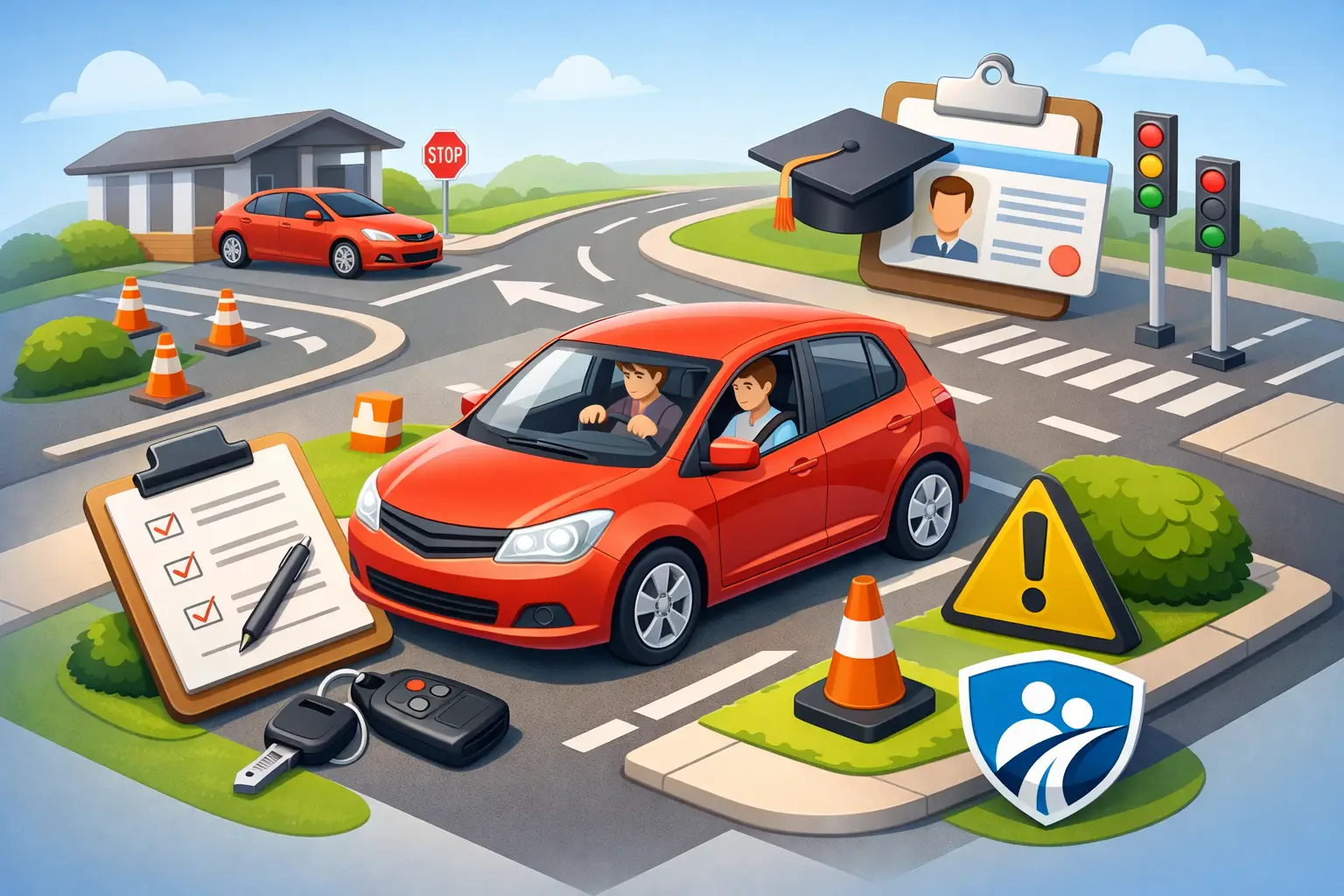
Teen Driver Training Requirements Guide
A lot of families do not realize how easy it is to get off track with California licensing timelines until a teen is ready to schedule lessons and finds out something is missing. This teen driver training requirements guide is designed to make that process clearer, so parents and students know what must be completed, what can be done in parallel, and where delays usually happen.
For most California teens, the path to a license is not complicated, but it is structured. That structure matters because the state is trying to build safe habits before a new driver is fully on their own. When families understand the sequence early, they can avoid rushed decisions, missed practice time, and unnecessary stress around the DMV test.
What California requires before a teen can get licensed
California uses a graduated licensing system for minors. That means teens have to complete several steps before earning full driving privileges. The exact timeline depends on age, but for most first-time teen drivers, the process begins with driver education, then a permit, then professional behind-the-wheel training and supervised practice.
A teen under 18 must complete a state-approved driver education course before taking the knowledge test for a permit. After passing the knowledge test and vision screening, the teen receives an instruction permit. That permit allows supervised driving, but it does not replace formal training requirements.
The next major step is professional behind-the-wheel instruction with a licensed driving school. California requires six hours of professional in-car training for minors. That is usually divided into three two-hour lessons, although scheduling can vary depending on the school and the student’s needs.
Beyond those professional lessons, the state also requires supervised practice with a parent, guardian, spouse, or other qualified adult age 25 or older. Teens must complete 50 hours of supervised driving practice, including 10 hours at night. This part often takes longer than families expect, especially when school, sports, work, and weather all compete for time.
A teen must also hold the permit for at least six months before taking the DMV driving test. Even if a student learns quickly, that waiting period still applies.
A practical teen driver training requirements guide for families
The biggest source of confusion is that many parents assume lessons alone satisfy the state requirement. They do not. Professional training is mandatory, but it is only one part of a larger preparation process.
Think of it this way: driver education teaches the rules, professional lessons teach technique and safety habits, and supervised practice builds consistency. A teen who completes only the minimum professional hours may still need a great deal of real-world repetition before being ready for the road test.
The order also matters. A student must first complete driver education to become eligible for the permit test. After the permit is issued, behind-the-wheel instruction and supervised practice can begin. Some families try to compress everything into a short window near a birthday, but that usually creates more pressure than progress.
It is also worth understanding that “ready for the test” and “legally eligible for the test” are not always the same thing. A teen might satisfy the formal requirements yet still need more coaching on lane control, scanning, turns, speed management, or decision-making in traffic.
Driver education comes first
For teens under 18, driver education is the starting point. This is the classroom or online portion that covers traffic laws, signs, right-of-way rules, substance impairment risks, defensive driving principles, and basic driving responsibility.
Many families choose online driver education because it gives students flexibility. That can work well for busy schedules, but self-paced learning requires follow-through. If a teen rushes through the material without retaining it, the permit test and early driving lessons often become harder than they need to be.
A stronger approach is to treat driver education as the foundation, not just a box to check. Students who understand the rules before they enter the car usually feel calmer, ask better questions, and make faster progress once in motion.
What happens after the permit
Once the teen has a permit, actual driving can begin, but only under the right supervision. During this stage, the quality of instruction matters as much as the number of hours.
California’s six-hour professional requirement gives students structured exposure to core skills. These lessons typically cover starting and stopping smoothly, steering control, lane positioning, intersections, residential and city driving, lane changes, backing, parking, and hazard awareness. Depending on the student, instructors may also introduce more advanced situations like heavier traffic, multi-lane roads, or test-route style practice.
This is where personalization makes a real difference. Some teens are cautious and need help building confidence. Others are overconfident and need stronger coaching on judgment, scanning, and risk. Good instruction adjusts to the student instead of forcing every learner into the same pace.
Why the 50 practice hours matter so much
The state minimum is 50 supervised hours, but the real value is not the number itself. It is the variety of driving experience those hours can provide.
A teen who practices only on quiet local streets may technically log enough time but still feel overwhelmed in faster traffic or complex intersections. On the other hand, a student who gradually practices in neighborhoods, business districts, larger roads, nighttime conditions, and different traffic patterns tends to become more adaptable.
Parents often ask how to make those practice hours more effective. The answer is to be intentional. Short, focused sessions usually work better than infrequent marathon drives. One week might focus on right turns and stop sign judgment. Another might focus on lane changes, parking, or managing left turns in traffic. Progress is more reliable when practice has a purpose.
Night driving should also not be left for the end. Because California requires 10 night hours, it helps to build them in gradually. Driving at dusk and after dark changes visibility, depth perception, and hazard detection. Teens need time to adjust, not just enough time to satisfy a rule.
Common mistakes that slow the licensing process
One common issue is waiting too long to schedule behind-the-wheel lessons. Families often assume they can book when the teen feels ready, but lesson availability may tighten during school breaks, holidays, and summer months.
Another mistake is underestimating permit-holding time. The six-month period can seem long at first, then suddenly short when a birthday or desired test date approaches. Starting practice early gives teens time to improve naturally instead of cramming near the end.
Some parents also sign the practice log too casually. That is risky. The supervised hours should reflect real, meaningful driving time. If a teen reaches the DMV road test without enough practice, the weak spots usually show up quickly.
An equally important mistake is focusing only on passing the test. The DMV exam is important, but safe independent driving matters more. A student who can pass a test route yet struggles with judgment in unfamiliar situations still needs more development.
When a teen may need more than the minimum
Minimum requirements are exactly that – minimums. They are not a promise that every student will be equally prepared after the same number of hours.
Some teens learn quickly and become steady, alert drivers with relatively little extra support. Others need additional lessons because of anxiety, attention issues, slow processing, limited access to family practice, or a simple lack of confidence. That is normal.
Extra lessons can be especially useful before the DMV road test if a student still has trouble with mirror checks, lane changes, unprotected left turns, parking, or overall composure. For many families, a few additional hours with a professional instructor save time, frustration, and the cost of a retest.
This is one reason many parents in Orange County and across Southern California prefer a school that offers both foundational teen training and road test preparation. Continuity helps. When the same provider can adapt instruction from permit stage through test readiness, students often get more focused support.
How parents can support the process without adding pressure
Parents play a major role in teen driver development, but that role can be tricky. A teen may listen differently to a professional instructor than to a parent in the passenger seat. That does not mean parent practice is less valuable. It just means each part serves a different purpose.
The best approach is calm, consistent supervision. Give one correction at a time. Keep expectations realistic. If a session starts going badly, it is often better to reset and try again later than to turn the drive into an argument.
It also helps to ask the instructor what the teen should practice between lessons. That creates continuity and helps families reinforce the same habits. At Newport Driving School, that student-centered approach is often what helps families feel more confident in the process.
A license should feel earned, not rushed. If families treat the requirements as a roadmap instead of a hurdle, teens usually become safer, calmer, and more capable drivers. The goal is not just getting to test day. It is building habits that still hold up six months after the paper license arrives.

Related Posts


Comments (0)