Emergency braking practice builds the calm, controlled response drivers need when traffic changes fast. Learn how to train safely and effectively today.
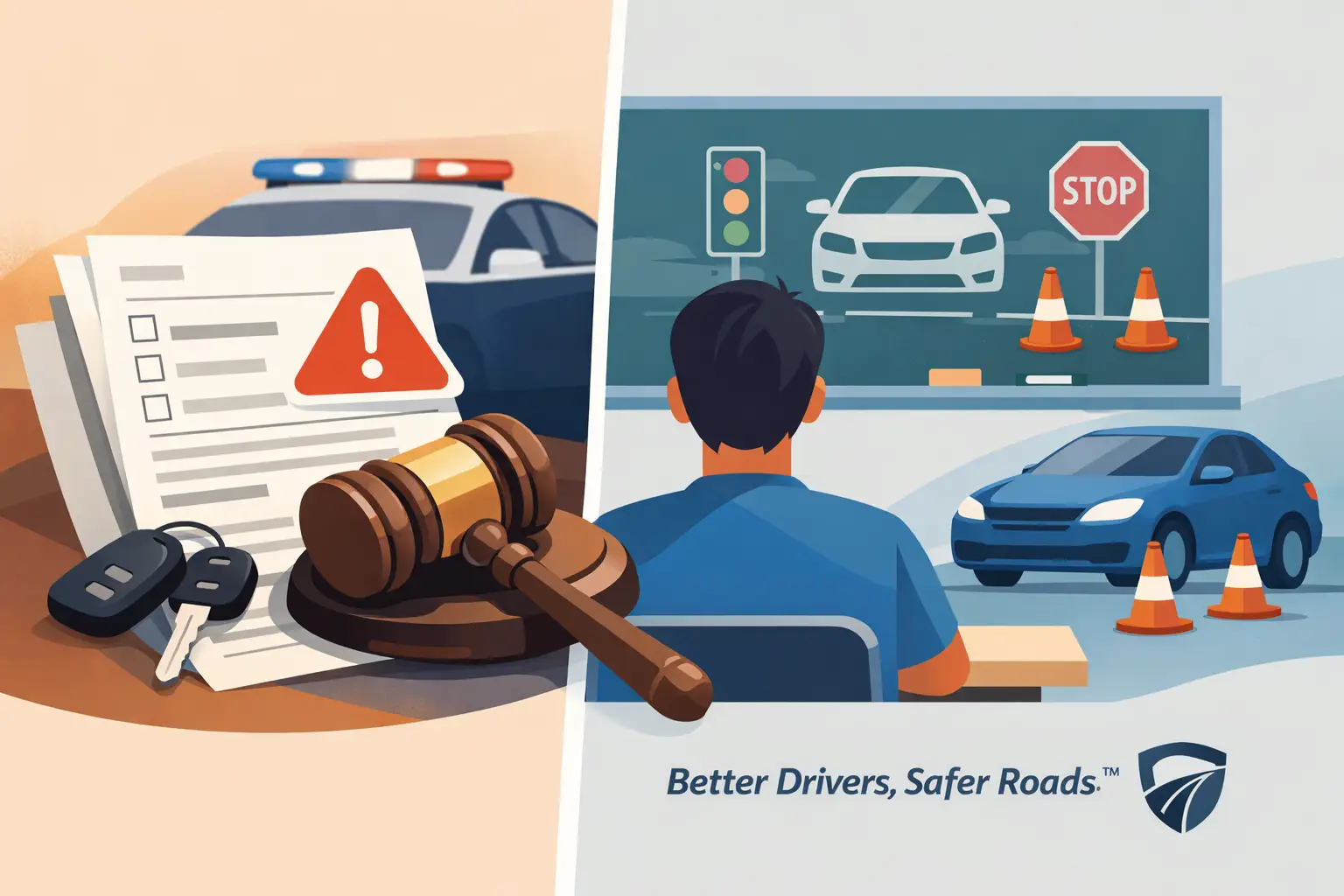
Is Traffic School Worth It After a Ticket?
A traffic ticket can feel like a one-time inconvenience until you consider the fine, a possible DMV point, and the chance of higher insurance premiums. So, is traffic school worth it? For many eligible California drivers, the answer is yes – especially when completing the course keeps a qualifying point from appearing on the public version of their driving record.
The decision is not automatic, though. Traffic school costs money, takes time, and does not erase the fine or make every violation eligible. The right choice depends on your court notice, your recent driving history, your license type, and whether you are willing to use the course as more than a box to check.
What Traffic School Can Do in California
When a driver is eligible and completes an approved traffic school on time, the court can report the qualifying conviction as confidential. In practical terms, the point associated with that ticket is generally not shown on the public driving record that insurers commonly review. That can protect a driver from the financial ripple effect a single moving violation may create.
Traffic school does not mean the citation disappears. You are still responsible for the court fine and any administrative fees, along with the price of the course. Law enforcement, courts, and the DMV can still access the confidential record when authorized. But for an eligible driver concerned about insurance and record consequences, that distinction can be meaningful.
It can also be a useful reset. Many tickets result from habits that gradually become normal: rolling through a stop, following too closely in traffic, checking a phone at a red light, or underestimating speed on familiar roads. A well-designed course reinforces the laws and judgment skills that help prevent a repeat violation.
Is Traffic School Worth It Financially?
Start with the full cost, not just the course price. A California traffic ticket can include a base fine, assessments, and court fees. If the court permits traffic school, you may also pay a separate administrative fee plus the tuition for an approved provider. That means traffic school is an added expense in the short term.
Still, compare that expense with the potential cost of a visible point. Insurance impacts vary widely by driver, insurer, coverage level, location, and prior claims or violations. A driver with a clean record may see a different result than someone who already has tickets or an at-fault collision. There is no honest way to promise that traffic school will prevent every rate increase.
For many drivers, however, a modest course fee is easier to absorb than the possibility of increased premiums over several renewal periods. It may also help preserve a cleaner record when applying for certain jobs, seeking an employer driving role, or simply trying to maintain a strong driving history.
The financial case is usually strongest when you have been driving without recent violations and want to avoid adding a public point to that record. It may be less compelling if your insurance rate is unaffected, your violation does not carry a point, or you are not eligible to attend.
Check Eligibility Before You Enroll
Do not assume that every California ticket qualifies for traffic school. Your courtesy notice or the court handling the case is the source for your specific eligibility and deadline. Courts generally allow traffic school for qualifying infraction-level moving violations, but important restrictions apply.
California drivers are commonly limited to traffic school once within an 18-month period, measured from the date of the violation to the date of the next violation. You generally must have a valid noncommercial driver license and must not have been driving a commercial vehicle when the violation occurred. Serious offenses, certain equipment violations, and violations that require a mandatory court appearance may not qualify.
If you were cited while holding or using a commercial license, the rules can be more complicated. Do not enroll based on an assumption or a general rule you found online. Confirm the court’s instructions first. Enrolling in a course that the court will not accept wastes time and money, particularly when a completion deadline is approaching.
You should also decide whether you intend to contest the ticket. Paying the fine or choosing traffic school can be treated as resolving the matter, depending on the court process. If you believe the citation was issued in error or have a valid legal defense, review the options listed by the court before making a final choice.
Time Commitment: Easier Than It Used to Be
For busy adults, traffic school often sounds like an entire weekend spent in a classroom. In many cases, it is far more flexible. California-approved online courses allow eligible students to work through the material on their own schedule, making it easier to fit the requirement around work, family responsibilities, or school.
Flexibility does not mean waiting until the final night. Court deadlines matter. Give yourself enough time to register, complete the course, pass any required final assessment, and make sure completion is reported correctly. Save your confirmation and completion documentation until you know the court has processed the record.
The course itself is generally designed to be manageable, but it requires attention. You will review traffic laws, collision prevention, signs and signals, sharing the road, distracted driving, alcohol and drug impairment, and defensive driving decisions. The material is familiar to some experienced drivers, yet familiarity is not the same as current knowledge. California rules and roadway risks change, and even longtime drivers benefit from a focused refresher.
When Traffic School Is Most Worth It
Traffic school tends to make sense when three conditions line up: you are eligible, you can complete it before the deadline, and keeping the point off your public record has real value to you. That is often true for a driver with an otherwise clean record who received a qualifying speeding, stop-sign, or moving violation ticket.
It is also a practical choice for a parent helping a teen driver respond responsibly to a first citation. The goal should not be to make the ticket feel consequence-free. The fine, time, and course requirement are consequences. But the course can turn an unpleasant experience into a structured conversation about scanning ahead, space management, speed choices, and the responsibility that comes with a license.
For a newer driver, international driver adapting to California roads, or someone who feels rusty after a long period without instruction, the educational value can matter as much as the record benefit. A ticket often points to a specific gap in knowledge or decision-making. Addressing that gap early is far less costly than repeating the same mistake.
When It May Not Be the Best Option
Traffic school is not automatically the best path. It may not be available for your offense, license status, or driving history. If your deadline has passed, you may need to contact the court rather than assuming a course completion will solve the problem.
It may also be the wrong choice if you plan to challenge the citation. Before paying a fine or enrolling, understand whether those actions affect your ability to contest the case. Drivers facing more serious allegations, repeated violations, or commercial-license issues may need more individualized legal or licensing guidance than a standard traffic school course provides.
Finally, do not treat traffic school as a substitute for hands-on improvement when the issue is confidence or skill. A course can explain safe following distance and right-of-way rules, but it cannot observe your lane changes, braking habits, mirror use, or decision-making in real traffic. If a ticket revealed that you need practical support, a defensive driving lesson with a qualified instructor can provide feedback that an online module cannot.
Make the Course Count Beyond the Ticket
The best reason to take traffic school is not simply to protect a record. It is to avoid needing it again. As you move through the course, connect each topic to your own driving routine. Think about the intersections where you feel rushed, the freeway merge that makes you tense, or the phone notifications that pull your attention away from the road.
Choose one or two changes you can practice immediately. Leave earlier so speed is less tempting. Put your phone out of reach before shifting into drive. Build a larger following cushion in heavy Orange County traffic. Pause fully at stop signs rather than treating them as a suggestion. Small, repeatable choices are what create a safer record over time.
For eligible California drivers, traffic school is often worth the cost and effort because it can limit the record impact of a ticket while reinforcing safer habits. Confirm the court’s requirements, finish well before the deadline, and use the experience as a reason to drive with more patience and margin from this point forward.

Related Posts



Comments (0)