Learn how the best senior driving safety tools can improve visibility, comfort, and confidence, plus when a personalized driving refresher adds value.
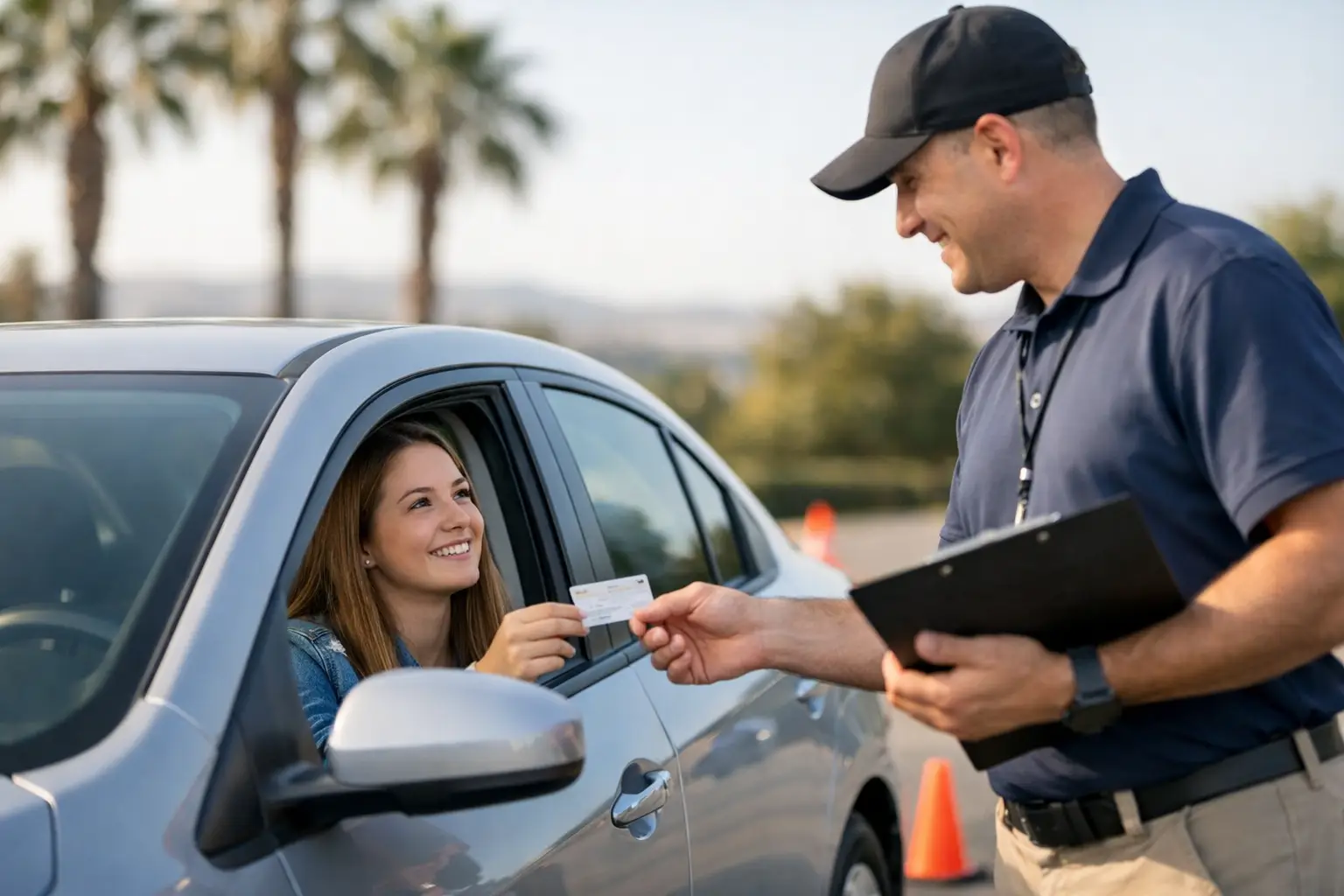
Orange County Permit Process for New Drivers
Getting a learner’s permit is a major step toward independence, but the Orange County permit process can feel stressful when a DMV appointment, paperwork, and a knowledge test are all involved. A clear plan helps students and parents avoid preventable delays, arrive prepared, and focus on the bigger goal: building safe, confident driving habits before the road test.
For Orange County teens, adult beginners, and drivers new to California, the process generally follows the same path. The details can differ based on age, residency, and prior licensing history, so always confirm current requirements with the California DMV before your appointment.
Orange County Permit Process: Start With Eligibility
A California instruction permit is the credential that lets a new driver practice legally under qualified supervision. Teen applicants may generally apply when they are at least 15 1/2 years old and have completed, or are enrolled in, an approved driver education program. Driver education gives younger students the foundation they need before they begin practicing in traffic.
Applicants under 18 will need a parent or legal guardian to sign the driver’s license application. That signature is more than a formality. It acknowledges the family’s role in supervising practice and helping the student meet California’s licensing requirements.
Adults can apply for an instruction permit, too. Many adult learners put the process off because they assume driving school is only for teenagers. In reality, structured lessons can be especially valuable for adults who are nervous, have limited access to a practice vehicle, are adapting to California traffic rules, or simply want a professional plan rather than piecing one together on their own.
International residents should take extra care before scheduling. Foreign driving experience may be useful behind the wheel, but it does not automatically replace California’s permit and licensing requirements. Bring the documents the DMV requests, and allow time to study California-specific signs, right-of-way rules, lane markings, and speed laws.
Gather Documents Before You Book Your DMV Visit
A large share of permit-day problems are paperwork problems. Completing the required application before arriving can save time, but students should still bring the original documents requested by the DMV. Requirements can change, so check the DMV’s current checklist for your age and situation.
In most cases, applicants should be prepared to provide proof of identity, proof of California residency, and their Social Security number or documentation showing legal presence as required. Teens should bring proof of completion or enrollment in driver education when applicable. A parent or guardian should attend when a signature is required.
The DMV visit also typically includes a vision screening, a photograph, a thumbprint, payment of the application fee, and the knowledge test. Do not treat the appointment as a quick errand. Plan for enough time, bring corrective lenses if you use them, and make sure every name and date on your documents is consistent.
If something does not match – for example, a different name on a residency document – address it before the appointment whenever possible. A missing or unacceptable document can mean rescheduling, which is frustrating for students who have been studying and families coordinating busy schedules.
Prepare for the California Knowledge Test
The knowledge test measures whether an applicant understands the rules needed to drive safely, not whether they can memorize answers under pressure. The strongest preparation combines careful study of the current California Driver’s Handbook with realistic practice questions and a basic understanding of why each rule exists.
Focus on areas that frequently cause trouble: right-of-way decisions, school zones, freeway merging, safe following distance, parking rules, distracted driving laws, alcohol and drug impairment, and signs and pavement markings. Students should also understand what to do around pedestrians, bicycles, motorcycles, emergency vehicles, and school buses.
A common mistake is studying only the night before. Cramming may help someone recognize a few answers, but it does not build the judgment needed once the permit is issued. Study in shorter sessions over several days, identify weak areas, and review incorrect practice-test answers until the rule makes sense.
Test anxiety is real, particularly for first-time drivers and adults who have not taken an exam in years. Arriving early, reading every question slowly, and avoiding last-minute information overload can help. If a student has a learning, language, or medical need that may affect testing, it is wise to review available DMV accommodation options well before the appointment.
What a Permit Allows – and What It Does Not
Passing the knowledge test does not mean a new driver is ready to drive alone. An instruction permit allows supervised practice only. The permit holder must follow California’s supervision rules and drive with a properly licensed adult or qualified instructor as required by state law.
For teens, the early goal should not be rushing onto freeways or driving in heavy traffic. Begin in quiet residential areas or large, low-traffic parking environments where allowed, then progress to turns, intersections, lane changes, parking, busier streets, and freeway driving when the student is ready. Confidence should come from demonstrated skill, not from being pushed into situations too soon.
Parents often make excellent practice partners, but family practice works best with a plan. Decide what skill will be practiced before leaving home, choose a route that fits that skill, and give one clear direction at a time. After the drive, discuss what went well and what needs more work. Correcting every small issue during a busy maneuver can overwhelm a new driver.
Professional behind-the-wheel lessons add another layer of consistency. A DMV-certified instructor can identify habits a family member may not notice, teach defensive-driving techniques, and introduce more complex environments at an appropriate pace. Newport Driving School works with students across Orange County who need patient, structured instruction tailored to their confidence level and learning style.
Meet the Practice Requirements Without Rushing
California has specific requirements for applicants under 18 before they can take the driving test. In general, teen drivers must complete at least six hours of professional behind-the-wheel training and document at least 50 hours of supervised driving practice, including 10 hours at night. They must also hold the instruction permit for at least six months before becoming eligible for the road test.
Those hours should represent real learning, not just time spent sitting in the driver’s seat. A well-rounded practice record includes city streets, controlled intersections, parking lots, residential roads, night driving, rainy conditions when safe, and freeway practice after basic vehicle control is reliable. Orange County’s mix of dense commercial streets, school traffic, multilane roads, and freeway entrances gives learners plenty of situations to practice gradually.
Adults are not subject to every teen provisional-license requirement, but that does not mean they should skip practice. An adult who has passed the written test still needs enough supervised seat time to manage turns, lane changes, parking, traffic flow, and unexpected hazards without freezing or overcorrecting.
Plan Ahead for the Road Test
Once a student is eligible, the next step is scheduling the behind-the-wheel driving test. Appointment availability can vary, so avoid waiting until the last week of a teen’s required holding period. Before test day, practice in the area around the testing location when possible and make sure the student understands that safe, legal driving matters more than performing flashy maneuvers.
The vehicle must be safe and legal for the exam. Check that it has current registration and insurance, working brake lights and turn signals, properly functioning doors and windows, and no warning issues that could prevent the test from starting. Students should know where the controls are before arriving, including headlights, windshield wipers, defroster, parking brake, and hazard lights.
A road test can be ended early for a serious safety error, but small mistakes do not automatically mean failure. The best approach is to recover calmly. Check mirrors, signal early, scan intersections, maintain a safe speed, and make deliberate observations. Examiners are looking for a driver who can make safe decisions, not a perfect robot.
Keep the Goal Bigger Than the Permit
The permit is not the finish line. It is the protected learning period that gives a new driver time to make mistakes under supervision, develop sound judgment, and become dependable before driving independently. Start prepared, practice with purpose, and give skill-building the time it deserves.

Related Posts

Comments (0)