Wondering when does traffic school expire in California? Learn court deadlines, DMV eligibility rules, and what to do if your completion is delayed today.
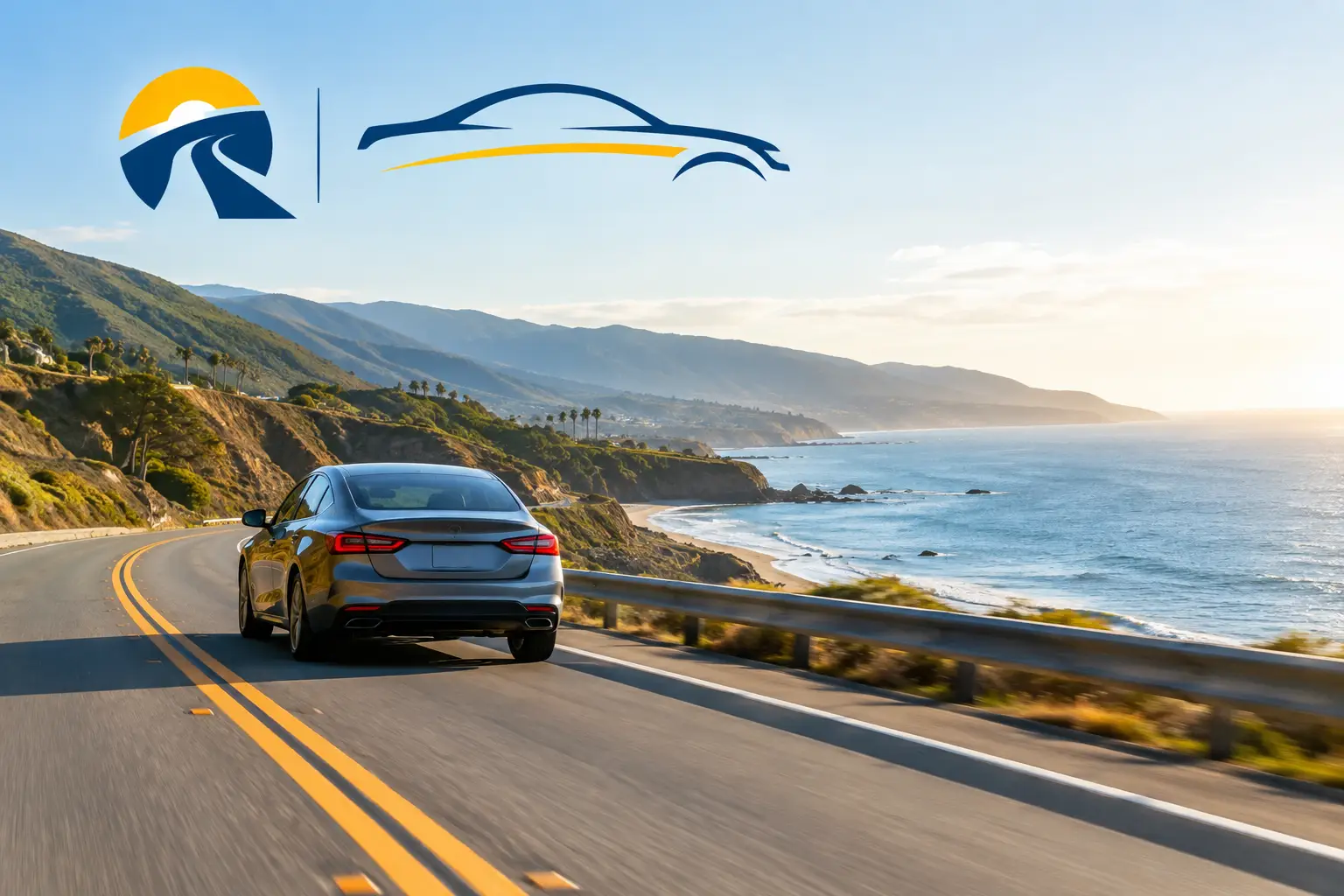
The Best California Driving Practice Routes
The best California driving practice routes are not necessarily the longest, fastest, or busiest. For a new driver, the right route creates repeatable opportunities to practice one skill at a time – smooth turns, lane changes, parking, traffic lights, and safe decision-making – without turning every lesson into an overwhelming test.
California roads can change quickly from calm residential streets to multi-lane arterials, crowded shopping centers, freeway ramps, and coastal traffic. That variety is valuable, but it needs to be introduced in the right order. A thoughtful practice plan helps teens, adult beginners, international drivers, and nervous drivers gain real confidence while developing the habits the DMV expects.
What Makes a Good Practice Route?
A useful practice route has a clear purpose. Before starting the car, decide what the driver will work on during that session. Trying to improve every skill at once usually leads to frustration, especially for a learner still managing steering, braking, mirrors, and traffic awareness.
The best routes offer predictable traffic patterns, legal places to pull over if coaching is needed, and enough repetition to let a skill become more natural. A route should be challenging enough to build judgment, but not so difficult that the learner freezes or starts making rushed choices.
For permit holders, practice must follow California’s supervised driving rules. The supervising driver should be properly licensed, alert, and ready to give calm, timely guidance. Avoid beginning on freeways, in heavy rain, or in unfamiliar congested areas until the driver has already shown consistent control on easier roads.
Best California Driving Practice Routes by Skill
Quiet Residential Streets for Vehicle Control
Residential neighborhoods with low speeds, wide streets, stop signs, and limited through traffic are the best starting point for a first few behind-the-wheel sessions. Look for areas with gentle turns, clear sightlines, and space to safely pull to the curb. Early practice should focus on smooth acceleration, controlled braking, steering through turns, stop-sign procedure, scanning intersections, and maintaining a steady position within the lane.
This is also the right setting for learning how to approach parked cars. New drivers often either drift too far left or pass parked vehicles too closely. A calm neighborhood gives them time to recognize open doors, pedestrians, pets, children, and vehicles backing from driveways.
Do not assume a residential street is risk-free. Many are narrow, have limited visibility, and include children or cyclists. The goal is not to drive casually because the speed limit is low. The goal is to practice attentive, controlled driving at a manageable pace.
Shopping Center Loops for Parking and Pedestrians
Large shopping centers are among the most practical places to work on parking-lot awareness. Choose a time when traffic is lighter, such as a weekday morning, rather than a busy weekend afternoon. Start on the outer rows, where there is more room and fewer pedestrians, then progress to more active areas as skills improve.
Practice pulling into a space, backing out slowly, stopping at marked crosswalks, and yielding to pedestrians. Learners should also get comfortable with the fact that parking lots are full of uncertainty: cars may reverse unexpectedly, shoppers may walk between vehicles, and drivers may ignore right-of-way expectations.
Use the session to rehearse several types of parking, including pull-through spaces, standard forward parking, and backing into a space if appropriate for the learner’s current level. Parking is less about completing the maneuver quickly and more about checking surroundings continuously and correcting without panic.
Main Arterial Roads for Traffic Lights and Lane Changes
Once the driver can handle neighborhood streets reliably, move to a well-marked arterial road with multiple traffic lights, moderate speed limits, and accessible side streets. In Orange County, many major boulevards provide this type of practice, particularly outside rush hour. The best choice depends on local traffic conditions, construction, and the driver’s comfort level.
These roads teach skills that residential routes cannot: judging gaps before turns, responding to changing signal lights, choosing the correct lane early, watching for buses and cyclists, and maintaining speed with surrounding traffic. Learners should practice moving into a turn lane well before the intersection rather than making a last-second lane change.
A simple loop works well. Drive several blocks, make legal left and right turns, pull into a safe parking area, discuss one or two observations, then repeat the route in the other direction. Repetition makes it easier for an instructor or supervising parent to identify patterns, such as braking too late, missing signs, or hesitating at green lights.
Business Districts for Real-World Decision-Making
Commercial areas introduce more visual activity without requiring freeway driving. They are useful for practicing shared lanes, driveways, delivery vehicles, bus stops, pedestrians, and frequent turning traffic. A learner who only practices on quiet streets may feel ready for the DMV road test but still struggle when several things happen at once.
Choose a business district with clear lane markings and a reasonable number of turn options. The driver can practice reading signs early, maintaining space behind the vehicle ahead, and checking mirrors before slowing for a turn. This is an ideal environment for learning that a driver’s eyes should move continuously: far ahead, mirrors, side areas, and back to the road ahead.
The trade-off is that commercial routes can become busy quickly. If the driver starts missing basic controls or becomes visibly anxious, return to a simpler route. Confidence grows from successful repetitions, not from being pushed into more traffic before the foundation is ready.
DMV-Area Practice for Test-Day Familiarity
Practicing near a DMV office can help reduce test-day nerves, but it should never become an attempt to memorize a secret road test route. Road test paths can vary, and the DMV examiner is evaluating safe habits, observation, control, and judgment rather than whether a driver remembers a particular sequence of turns.
Instead, practice the features commonly found near DMV offices: neighborhood streets, intersections, lane changes, right and left turns, curb approaches, and traffic controls. Drive the area at different times to understand traffic flow, but keep the focus on legal, independent driving decisions.
For many students, a professional road test preparation lesson is especially helpful before the exam. A DMV-certified instructor can identify issues a family member may not notice, such as incomplete stops, weak mirror checks, poor lane positioning, or failure to look over the shoulder before changing lanes.
Freeway Routes for the Next Stage
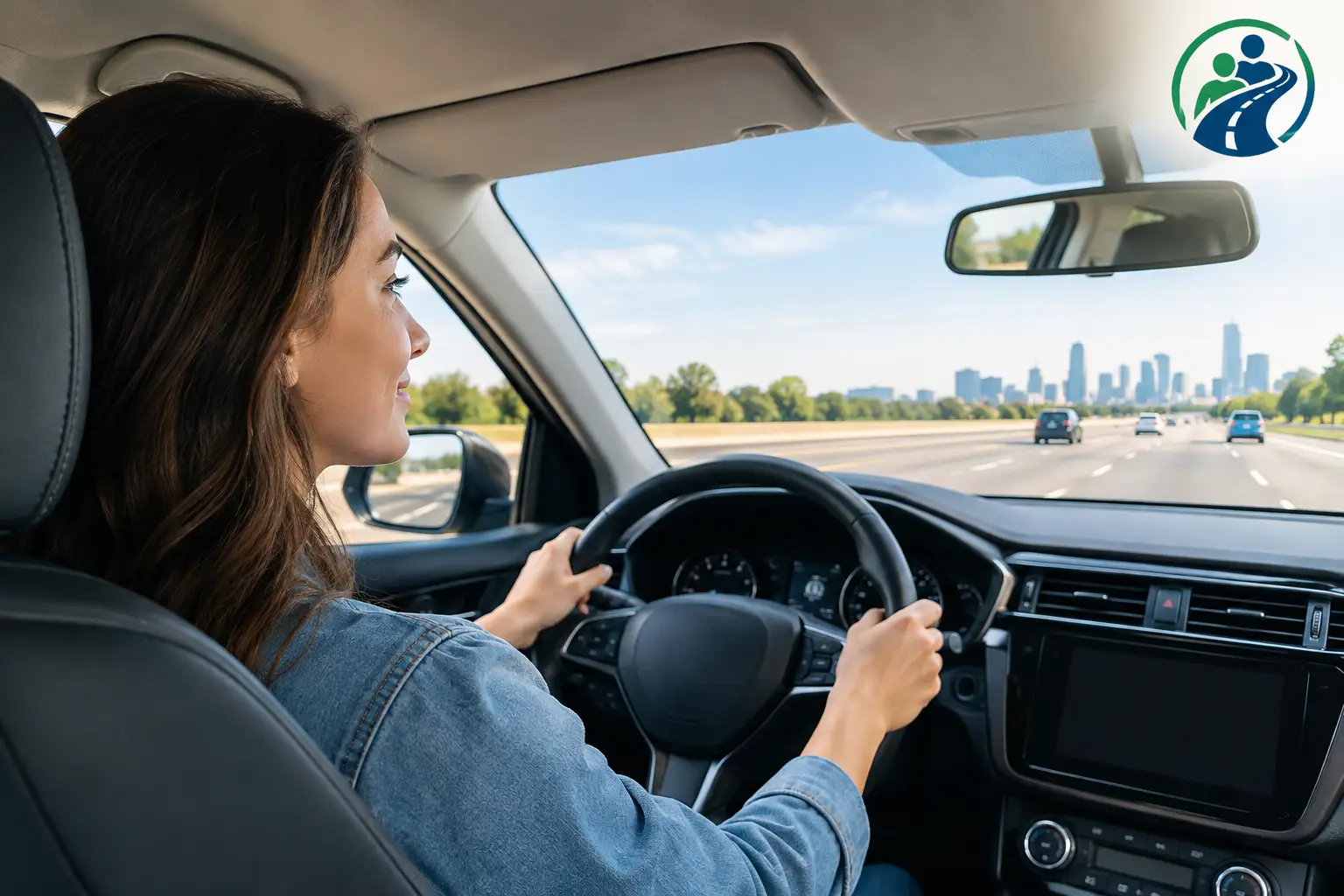
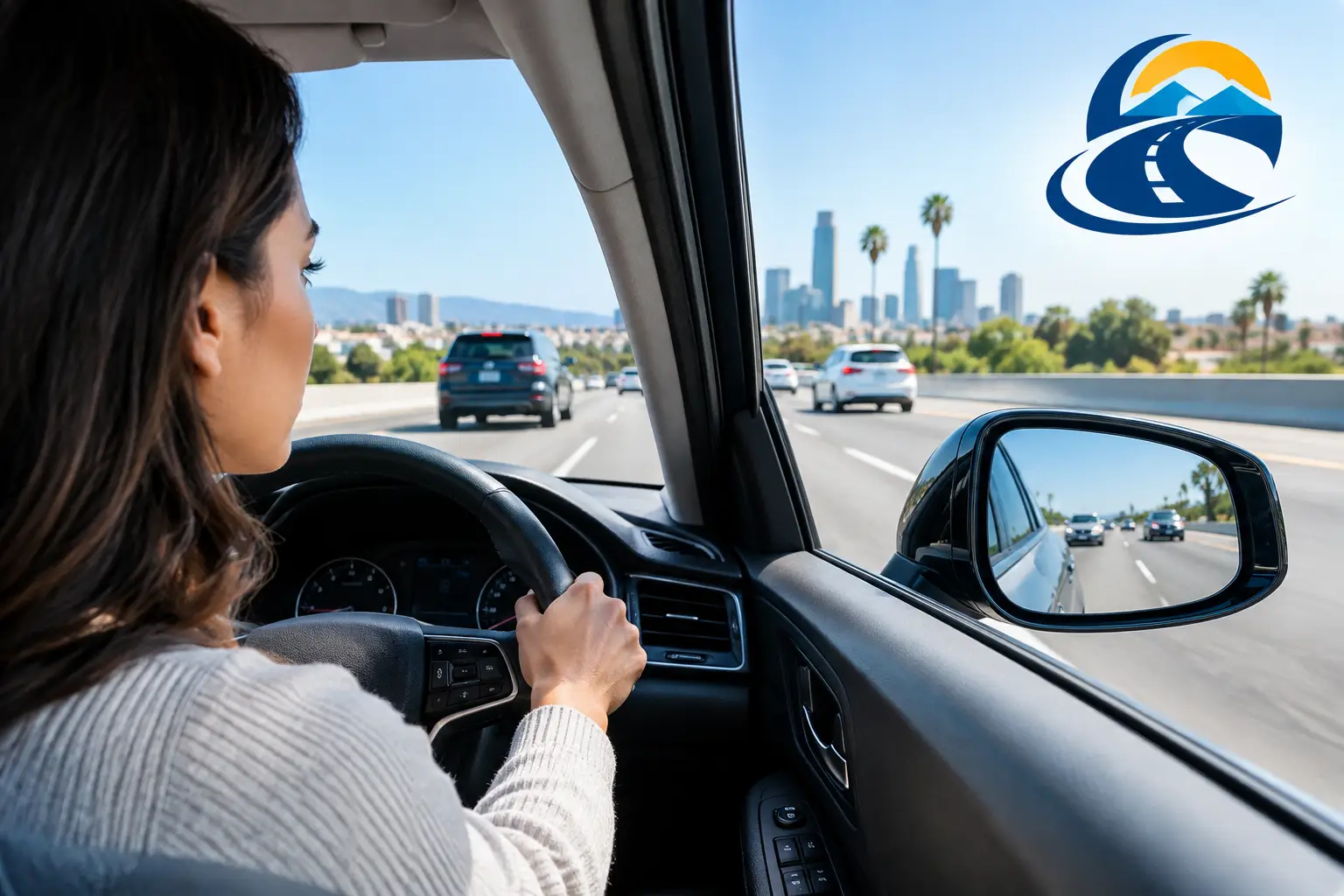
Freeway practice belongs later in the learning process. The driver should first be comfortable with mirrors, blind-spot checks, lane changes, speed control, and reading signs before entering high-speed traffic. Start with a short, familiar stretch during lighter traffic conditions and choose entry and exit points that are not unusually complex.
The first goal is not distance. It is entering safely, matching traffic speed as conditions allow, maintaining a steady lane position, leaving adequate following distance, and exiting without abrupt braking or late lane changes. A short on-ramp, one or two exits, and a calm review afterward can be more productive than a long freeway trip.
California freeways vary widely. A quiet suburban segment may be appropriate for a newer driver, while dense urban interchanges, mountain grades, or aggressive rush-hour traffic may be better reserved for advanced practice with a qualified instructor.
Build a Route Progression, Not a Random Drive
A strong practice plan usually moves from low-complexity environments to higher-complexity ones: residential streets, parking lots, arterial roads, business districts, DMV-area driving, and then freeway routes. Drivers do not all progress at the same pace. An adult learner who understands traffic rules may advance quickly, while a teen who is anxious behind the wheel may benefit from extra sessions in familiar areas.
Keep practice sessions focused and reasonably short. Forty-five to ninety minutes is often enough for a beginner. At the end of each drive, identify one skill that improved and one skill to repeat next time. Specific feedback works better than saying, “You need to be more careful.” For example: “Start checking your mirror earlier before every lane change” gives the driver a clear action to practice.
A Safer Way to Prepare for California Roads
The route matters, but patient coaching matters just as much. A calm supervising driver helps learners process feedback without feeling embarrassed or pressured. If a student needs more structured support, Newport Driving School provides personalized behind-the-wheel instruction designed around the driver’s current ability, learning style, and California driving goals.
The most effective practice route is the one that lets a driver finish a session more capable than when they started. Choose a manageable challenge, repeat it until it feels controlled, and let the next route earn its place through steady progress.

Related Posts

Comments (0)