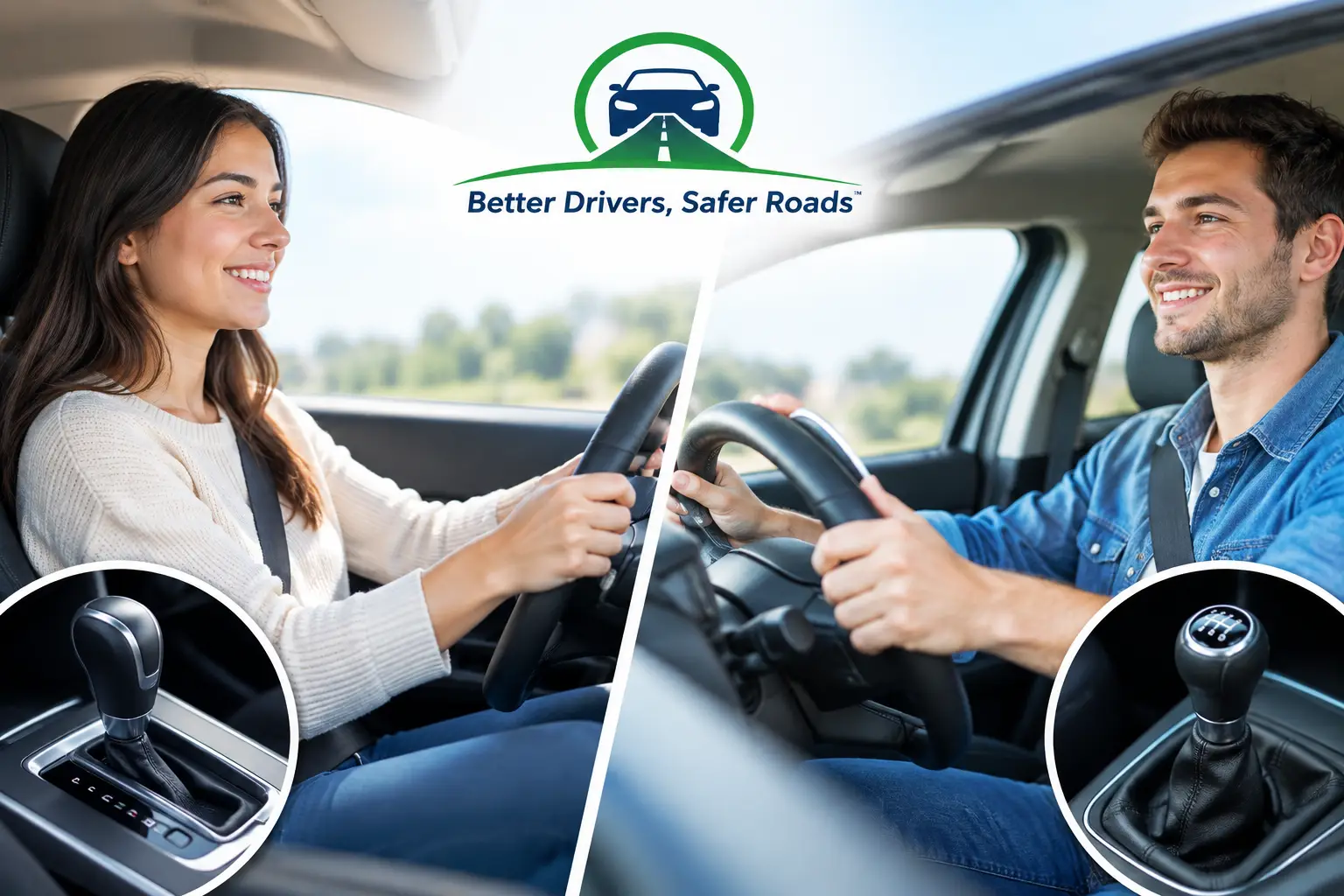
Choosing automatic versus manual driving lessons affects your license, confidence, practice options, and DMV goals. Learn which fit is right for you today.

Is Online Drivers Education Valid in California?
A parent may see a low-priced online driver education course advertised as “DMV approved” and wonder whether it will actually count when their teen applies for a permit. That is the right question to ask. Is online drivers education valid in California? Yes, it can be – but only when the course is properly licensed by the California DMV and used for the purpose it is approved to serve.
Online learning can be a practical, legitimate way to complete the classroom portion of driver education. It does not, however, replace professional behind-the-wheel instruction, supervised practice, or the judgment that develops only when a new driver is managing real traffic conditions. Knowing the difference protects your time, your money, and your student’s path toward a California license.
When Online Driver Education Is Valid
California allows eligible students to complete driver education through an approved online program. For teens under 18, driver education is part of the provisional licensing process. A qualifying course teaches California traffic laws, road signs, defensive driving principles, alcohol and drug awareness, sharing the road, and the responsibilities that come with a driver’s license.
The key word is approved. A valid online course must be offered by a DMV-licensed driving school or provider authorized to deliver online driver education in California. After the student completes the required curriculum and passes the course requirements, the provider issues the appropriate certificate of completion. That certificate is the documentation a teen may need during the DMV permit and licensing process.
A polished website, a short completion time, or a promise of an “instant certificate” does not prove that a course meets California requirements. Legitimate driver education takes time because safe driving knowledge takes time. If a program claims a student can finish a complete California driver education course in just a few hours, that is a reason to pause and verify its credentials.
What Valid Online Education Does and Does Not Cover
A DMV-approved online course can satisfy the educational portion of California driver education. It can help a student prepare for the DMV knowledge test and build a foundation before getting behind the wheel.
It does not replace the practical training required for a minor. California teens must still complete professional behind-the-wheel driver training and accumulate supervised practice with a qualified adult before they are eligible for the driving test. Online modules can explain how to make a lane change, scan an intersection, or parallel park. They cannot assess whether a student checks mirrors consistently, controls speed on a downhill grade, or stays calm when a vehicle suddenly turns across their path.
That distinction matters. A student may complete online driver education successfully and still need patient, structured support in the car. The strongest training plan treats online education as the starting point, not the finish line.
How to Verify an Online Course Before Enrolling
Before paying for a course, take a few minutes to confirm that it is designed for California licensing requirements. This is especially important for parents enrolling a first-time teen driver and for adults who may be unfamiliar with California’s DMV process.
First, look for the driving school’s California DMV license information. A reputable provider should make its authorization clear rather than burying it in vague marketing language. You should also confirm that the course specifically serves California students. Driver education rules differ by state, so a nationally marketed program is not automatically acceptable for a California permit application.
Next, review what happens at completion. The provider should explain the certificate process, any final exam requirements, how student identity and progress are handled, and whether a parent or guardian has access to progress information when appropriate. Be cautious about unclear statements such as “certificate guaranteed” without explaining what the student must complete.
Finally, consider the quality of the instruction. Validity is the minimum standard. A course should also be understandable, current, and organized in a way that helps students retain what they learn. Videos, knowledge checks, realistic traffic examples, and clear explanations can be especially helpful for students who feel nervous about the DMV written test or have limited prior exposure to driving rules in the United States.
Online Learning Works Best With a Real Driving Plan
Convenience is one of the main benefits of online driver education. Students can work through lessons at home, fit coursework around school and activities, and revisit difficult material before a test. For busy families in Orange County and surrounding Southern California communities, that flexibility can remove a major scheduling barrier.
Still, convenience should not become isolation. New drivers benefit when a parent, guardian, or instructor talks through what they are learning. If a lesson covers right-of-way rules at four-way stops, ask the student to explain who goes first in a few different scenarios. If they are studying freeway driving, discuss merging, space cushions, blind spots, and the pressure created by fast-moving traffic.
Once behind-the-wheel lessons begin, connect classroom knowledge to actual habits. A student who can correctly answer a question about following distance may still follow too closely in traffic. A student who knows the definition of a blind spot may still forget a shoulder check before changing lanes. Professional instruction closes that gap by giving immediate, specific feedback in a controlled learning environment.
At Newport Driving School, this combination is central to effective training: students need accurate rules, practical repetition, and instruction matched to their experience level. A confident teen may need help slowing down and improving hazard awareness. An anxious adult learner may need a calmer pace, repeated practice routes, and clear steps that make the road feel manageable.
What Teens Need Beyond the Online Course
For a California teen, the licensing process involves more than completing driver education. Requirements can change, and each student’s situation can differ, so families should confirm current DMV rules before scheduling an appointment. In general, minors need to meet age and eligibility requirements, pass the knowledge test, obtain an instruction permit, complete required professional training, practice with a qualified supervising driver, hold the permit for the required period, and pass the DMV driving test.
The behind-the-wheel portion is where many families underestimate the preparation needed. The required hours are a legal baseline, not a guarantee that a student is ready for complex traffic. A teen should have experience with residential streets, larger intersections, lane changes, parking, freeway entries when appropriate, night driving, and unexpected situations such as an aggressive driver or a pedestrian near a crosswalk.
Practice should be gradual. Starting in an empty parking lot is appropriate for basic vehicle control, but staying there too long can create false confidence. Likewise, sending a brand-new driver into dense traffic too early can create anxiety. A qualified instructor can help sequence lessons so each new skill builds on the last one.
Is Online Driver Education Right for Adults?
Adults are not always required to take a driver education course, but online instruction can still be useful. It is particularly valuable for adults who are learning later in life, international residents adapting to California rules, or drivers returning after years away from the road.
For an adult, the question is less about meeting a teen licensing requirement and more about choosing the right preparation. An online course can refresh road signs and traffic laws at a comfortable pace. In-car lessons then address the skills that written material cannot teach, including vehicle positioning, observation, braking control, local traffic patterns, and test-day decision-making.
Adults should be honest about where they need support. Someone who has driven abroad may understand vehicle control but need help with California right-of-way rules and DMV test expectations. Someone who has never driven may need a more gradual plan that begins with vehicle familiarity and low-pressure practice. There is no advantage in rushing through a course if the practical skills are not ready.
Warning Signs That a Course May Not Be Worth Your Trust
Not every online program deserves enrollment, even if it appears in a search result. Watch for claims that sound too good to be true, such as guaranteed DMV results, extremely short course completion times, missing California licensing details, unclear refund policies, or no explanation of how the final certificate is issued.
It is also wise to avoid providers that imply online learning alone qualifies a teen for a license. That is inaccurate. A responsible school explains the full process, including the need for behind-the-wheel training and supervised practice. Clear expectations are a sign of professionalism because they prepare families for the work safe driving requires.
Online driver education is valid when it is California DMV-approved, completed properly, and paired with the hands-on training a new driver needs. Choose a course that respects both the legal requirements and the real responsibility of driving. The goal is not simply to earn a certificate. It is to help a new driver make sound decisions long after the DMV test is over.

Related Posts
Comments (0)