Do instructors offer pickup service? Learn how lesson pickup works, what to confirm, and why it makes driving training easier for busy learners locally.
Automatic Versus Manual Driving Lessons Compared
The car at the curb can shape the entire learning experience. Automatic versus manual driving lessons is not simply a question of which vehicle feels easier on day one. It affects how quickly a student can focus on traffic decisions, the kind of practice vehicle available at home, future travel or work plans, and the confidence they carry into the DMV road test.
For many Orange County learners, an automatic is the practical starting point. For others, learning to drive a manual transmission is a worthwhile skill that creates more flexibility later. The right choice depends on your goals, comfort level, schedule, and access to a vehicle for practice.
The Main Difference Between Automatic and Manual Lessons
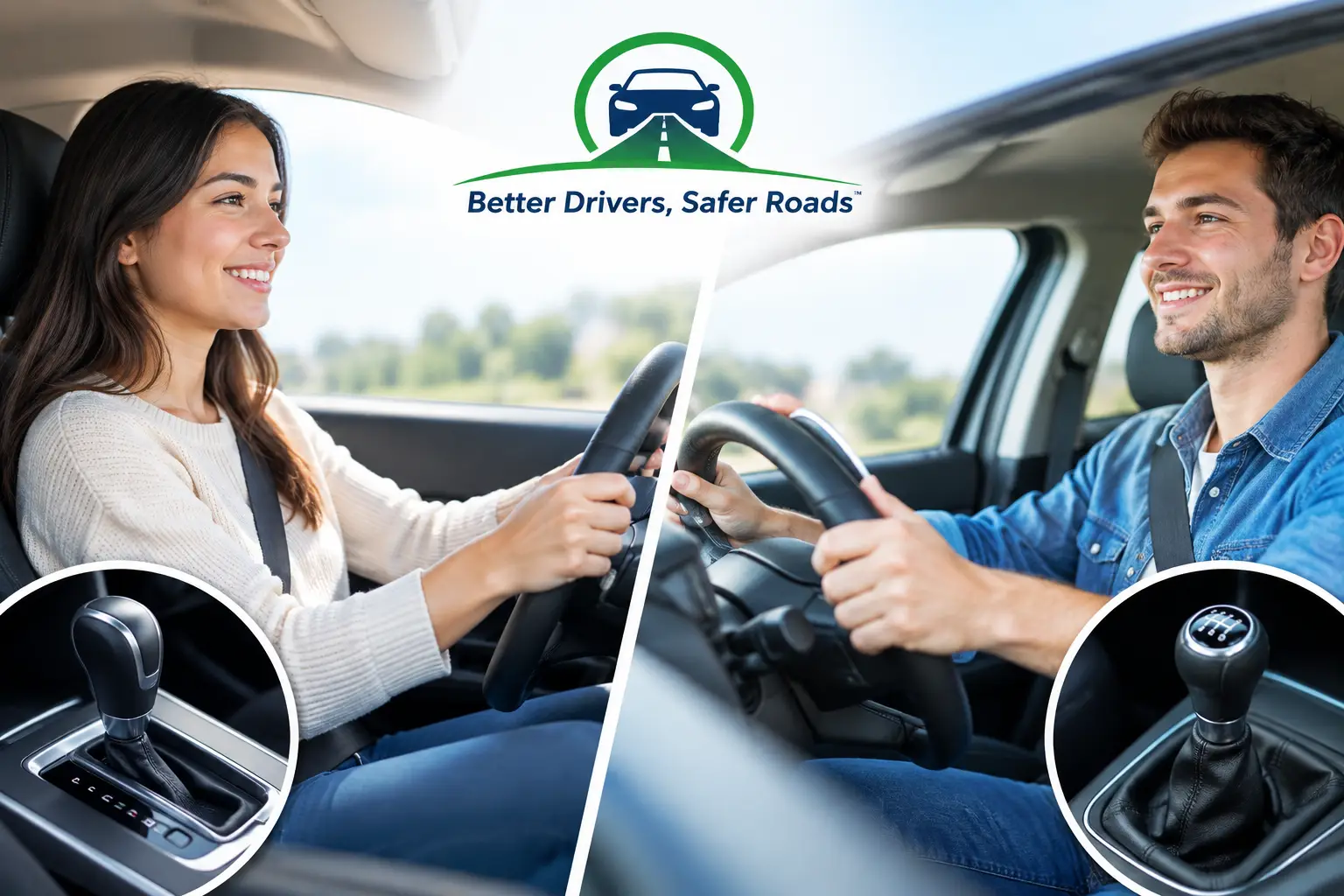
In an automatic vehicle, the car handles gear changes. The driver selects Park, Reverse, Neutral, or Drive, then focuses on steering, braking, acceleration, mirrors, lane position, right-of-way, and traffic conditions. This allows beginners to devote more attention to the skills that matter most for safe driving in busy Southern California traffic.
A manual transmission requires the driver to coordinate a clutch pedal, gear selector, accelerator, and brake. Students learn when to shift, how to release the clutch smoothly, how to avoid stalling, and how to start on an incline without rolling backward. These are valuable skills, but they add a layer of coordination during the earliest lessons.
Neither path is inherently better. Automatic lessons usually offer a faster route to everyday driving confidence, while manual lessons build a broader vehicle-handling skill set. A patient instructor can make either option manageable by introducing new tasks at a pace that fits the student.
When Automatic Driving Lessons Make the Most Sense
Automatic driving lessons are often the best fit for first-time drivers who want to build safe habits without being overwhelmed by mechanical tasks. A new driver already has a great deal to process: checking mirrors, scanning intersections, judging speed, maintaining space, responding to signs, and anticipating other drivers. Removing clutch and shifting duties can make those early lessons feel more focused and productive.
This can be especially helpful for teens preparing for their first license, adults learning later in life, and drivers who feel anxious behind the wheel. Students who have limited time before a road test may also benefit from training in an automatic vehicle because they can spend more lesson time on traffic awareness, parking, lane changes, freeway entry, and DMV test maneuvers.
Automatic lessons are also the practical choice when the family vehicle is automatic. Consistent practice matters more than the transmission type. A student who can safely practice several times a week in the same type of car they use for lessons usually progresses more steadily than someone learning manual without access to a manual vehicle between appointments.
For a standard noncommercial California Class C license, taking the road test in an automatic vehicle generally does not prevent a driver from operating a manual passenger vehicle later. Still, students should confirm current DMV requirements if they have special licensing circumstances or are pursuing a commercial license.
Automatic Does Not Mean Easier Standards
An automatic car may be simpler to operate, but the safety expectations remain high. DMV examiners still look for controlled steering, appropriate speed, smooth stops, proper observation, safe lane changes, and sound decision-making at intersections.
Students should not mistake fewer pedals for fewer responsibilities. The strongest automatic-driving students use the extra mental space to develop excellent scanning habits, manage following distance, and recognize hazards before they become emergencies.
When Manual Driving Lessons Are Worth It
Manual driving lessons are a strong choice for students who expect to drive a stick shift regularly. This may include someone whose household vehicle has a manual transmission, a driver planning to rent or drive vehicles abroad, or a person interested in certain enthusiast, classic, or work vehicles.
Learning manual can also give students a closer understanding of how a vehicle responds to speed, gears, and engine power. Students often develop more deliberate pedal control and a stronger awareness of vehicle movement. That said, these benefits come with a learning curve. Stalling at a stop sign, starting on a hill, or finding the correct gear can be frustrating at first, especially in heavy traffic.
The goal is not to rush through gears. It is to gain calm, repeatable control. A qualified instructor will usually begin in a low-pressure area, teaching clutch engagement and shifting before introducing complex intersections, hills, and congested roads. As coordination improves, students can apply those skills in the same real-world situations they will encounter after licensing.
Manual lessons can be particularly valuable for an experienced automatic driver who wants to add a new skill rather than learn every driving fundamental from the beginning. In that situation, instruction can focus more directly on clutch control, gear selection, hill starts, and smooth downshifting while reinforcing safe observation habits.
How to Choose Between Automatic Versus Manual Driving Lessons
Start with the vehicle you realistically expect to drive over the next year. If you will use an automatic family car, an automatic lesson program is usually the most efficient choice. It lets you transfer each lesson directly into home practice and prepare for the DMV road test in a familiar setup.
Next, consider your reason for learning. If your priority is getting licensed safely, reducing test anxiety, or becoming comfortable on California roads as soon as possible, automatic instruction may serve you best. If your priority is long-term flexibility and you have regular access to a manual vehicle, manual training can be a smart investment.
Be honest about your learning style as well. Some students enjoy the challenge of managing a manual transmission and feel motivated by the technical skill. Others become discouraged when they must divide attention between shifting and traffic. There is no prize for choosing the harder option if it delays confidence or makes safe decision-making more difficult.
Parents should also consider the practice plan, not just the lesson plan. A teen who takes manual lessons but only has an automatic vehicle available at home may need separate practice strategies. Likewise, a student training in an automatic should not assume they are ready to drive a manual without instruction. The controls and timing are meaningfully different.
What Both Lesson Types Should Teach
Transmission choice should never distract from the core purpose of professional driver training: helping students make safe, independent decisions. Whether a student drives automatic or manual, quality lessons should cover defensive following distance, mirror use, blind-spot checks, intersection approach, speed control, parking, lane changes, freeway skills, and communication with other road users.
Students also need practice handling imperfect conditions. A calm instructor can help them work through crowded parking lots, unfamiliar routes, sudden braking by traffic ahead, busy left turns, and the pressure of being evaluated during a DMV road test. These situations are where confidence becomes useful, because it is based on practiced habits rather than luck.
At Newport Driving School, instruction can be tailored to the student rather than forcing every learner into the same pace. That matters for nervous beginners, busy adults, international drivers adapting to California rules, and students who want focused manual transmission training.
Give Yourself Permission to Choose the Practical Path
A driver who learns in an automatic is not less capable, and a driver who learns manual is not automatically safer. The better choice is the one that gives you enough repetition to become alert, controlled, and responsible behind the wheel.
If manual driving is part of your future, learn it with structured guidance and patience. If your immediate goal is to drive your automatic vehicle safely and pass the DMV road test with confidence, start there. Good driving is ultimately measured by the decisions you make around other people, not by the number of pedals under your feet.

Related Posts

Comments (0)