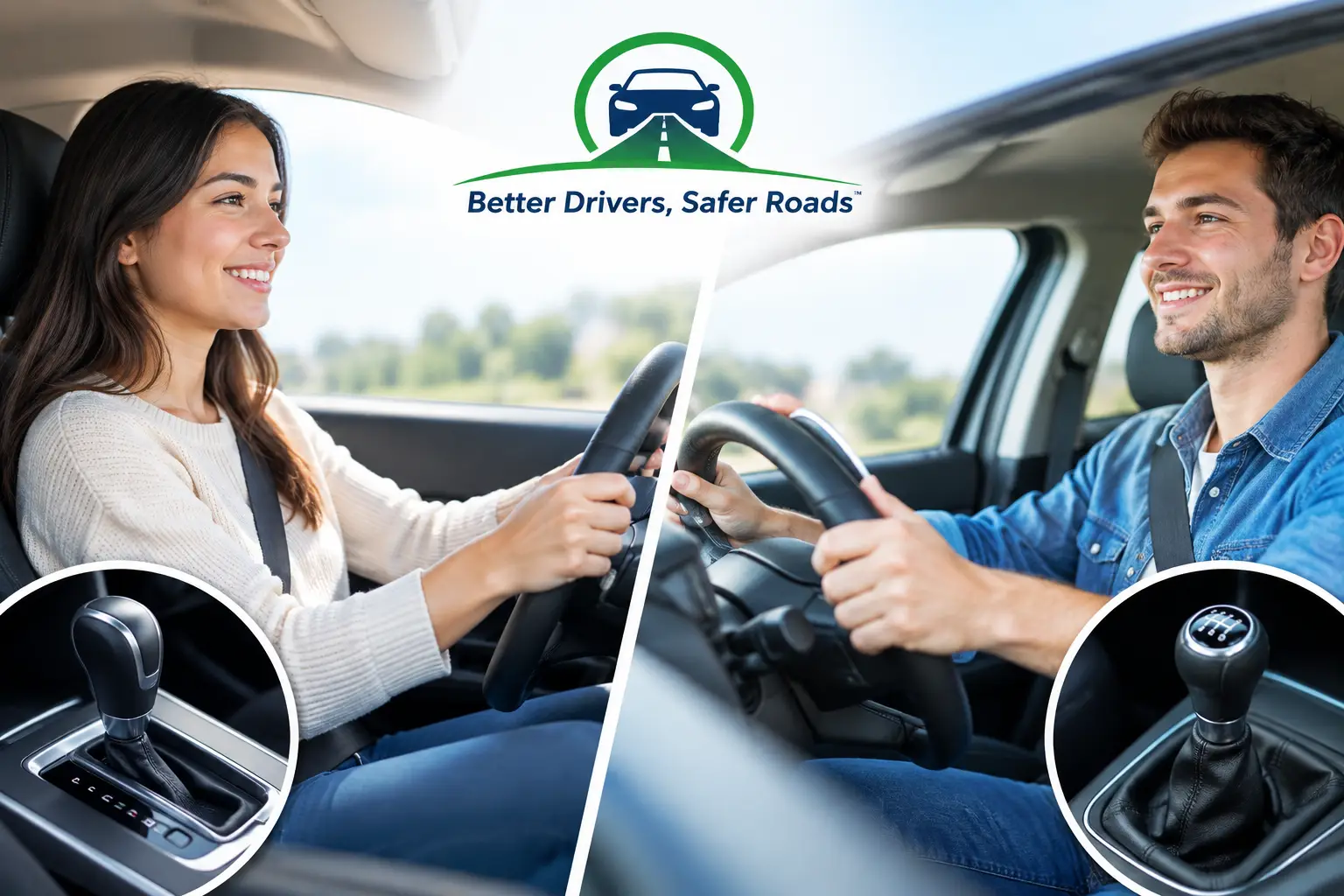
Choosing automatic versus manual driving lessons affects your license, confidence, practice options, and DMV goals. Learn which fit is right for you today.

Driver Education Builds Safer, Confident Drivers
A learner can memorize road signs and still freeze when traffic compresses near a freeway exit. They can pass a practice quiz and still misjudge a left turn, a blind spot, or the distance needed to stop. Driver education is where rules become usable decisions – the kind that protect a new driver, their passengers, and everyone sharing the road.
For California families, it is also the first step in a process with real legal requirements. For adults learning later in life, international drivers adapting to local laws, and people returning to driving after a long break, it provides structure that casual practice often cannot. The best instruction builds more than test readiness. It develops judgment, awareness, and calm under pressure.
What Driver Education Should Actually Teach
Quality driver education begins before anyone turns the key. A strong course explains California traffic laws, right-of-way rules, road signs, speed management, distracted-driving risks, and the responsibilities that come with a license. But information alone is not the finish line. Students need to understand why a rule exists and how to apply it when conditions are less predictable than a quiz question.
Consider a four-way stop. The basic rule may seem simple, yet real intersections introduce uncertainty: two vehicles arrive almost together, one driver waves another through, a pedestrian steps off the curb, or a cyclist approaches from a lane that is easy to overlook. Good instruction teaches students to slow down, scan carefully, communicate their intentions, and avoid assuming another person will do the expected thing.
This is especially valuable for teen drivers. New drivers are still building the habit of identifying hazards before those hazards become emergencies. They benefit from clear explanations, repetition, and opportunities to ask questions without feeling rushed or embarrassed. Parents often focus on the permit and license milestones, but the lasting value lies in the routines a student carries into every drive.
The classroom and online course have different jobs
Online and classroom driver education can both provide the knowledge required for a California learner’s permit path. The right format depends on the student. An online course can work well for a busy teen or adult who learns best in shorter, self-paced sessions. Classroom instruction can be a better fit for students who want live discussion, scheduled accountability, or direct access to an instructor.
Neither format replaces real driving practice. Studying prepares a student to recognize rules and risks; behind-the-wheel training teaches the physical and mental coordination required to respond safely. Treating these as separate but connected parts of learning produces better results than relying on either one alone.
Behind-the-Wheel Training Turns Knowledge Into Habits
A student may know that mirrors matter, yet still forget to check them before braking, changing lanes, or turning. That gap is normal. Behind-the-wheel lessons exist to turn individual actions into a consistent driving routine.
Early lessons should make space for vehicle familiarity: steering control, smooth braking, lane position, signaling, mirror adjustment, backing, and safe turns. As confidence grows, training should expand to more complex situations, such as multilane roads, busy intersections, freeway entrances, lane changes, parking, and night or low-visibility conditions when appropriate.
The order matters. Pushing a nervous beginner into fast, complicated traffic too soon can create panic rather than progress. On the other hand, staying only on quiet residential streets can leave a learner unprepared for the situations they will face after licensing. Personalized instruction finds the productive middle ground: enough challenge to build skill, with enough guidance to keep the student safe and focused.
A qualified instructor also sees patterns that family members may miss. Perhaps a student looks at the road directly ahead but does not scan far enough forward. Perhaps they brake late because they are following too closely, or hesitate at left turns because they have not learned how to judge gaps in traffic. Specific feedback gives the learner an actionable correction instead of the vague instruction to “be more careful.”
Passing the DMV Test Is a Milestone, Not the Whole Goal
The DMV knowledge and road tests are meaningful checkpoints. They confirm that a driver has met a defined standard, and thoughtful test preparation can reduce the anxiety that causes otherwise capable students to make avoidable mistakes. Still, driving safely requires more than performing a memorized test route.
Road test preparation should help students understand what evaluators are looking for: complete stops, proper observation, safe speed, correct lane positioning, controlled turns, backing skills, and calm decision-making. A practice evaluation can be particularly helpful because it identifies weak areas before test day. Some students need more work on parking and turns; others need to improve scanning, speed control, or confidence in traffic.
It is wise to avoid promising a pass after a certain number of lessons. Every learner begins at a different point. A teen who has practiced consistently with a responsible adult may need a different plan than an adult who has never driven, a driver returning after an accident, or an international resident who is experienced but unfamiliar with California rules. Progress should determine the training plan, not a one-size-fits-all timetable.
Driver Education for Adults, International Drivers, and Seniors
Learning to drive is not only a teenage experience. Adults may have delayed licensing because of city living, family circumstances, cost, anxiety, or lack of access to a practice vehicle. Adult learners often appreciate instruction that is direct, respectful, and paced around their goals. There is no benefit to being treated like a teenager, and there is no shame in starting from the beginning.
International drivers may already be comfortable operating a vehicle but need help adjusting to California signs, right-of-way expectations, freeway behavior, parking rules, and DMV testing standards. Experience is valuable, but habits developed in another country do not always transfer cleanly. Focused lessons can identify the differences without forcing an experienced driver through unnecessary repetition.
Senior drivers may seek a refresher after a long period of limited driving, a move to a busier area, a change in vision or mobility, or concerns raised by family members. The goal should be practical independence supported by honest assessment. In some cases, a refresher builds confidence quickly. In others, a more specialized evaluation may be appropriate. Safety requires candor, not pressure.
Anxiety needs a teaching plan, not criticism
Driving anxiety is common, particularly after a collision, a failed test, or a long break from driving. It can show up as gripping the wheel too tightly, braking abruptly, avoiding freeway entrances, or becoming overwhelmed when several things happen at once.
The most helpful response is structured exposure. Start with manageable routes, practice a specific skill until it feels familiar, then add complexity gradually. Students should leave each lesson knowing what improved and what to practice next. Patience is essential, but so is clear coaching. Confidence grows from evidence: “I handled that intersection safely,” not from empty reassurance.
How to Choose a Driver Education Program
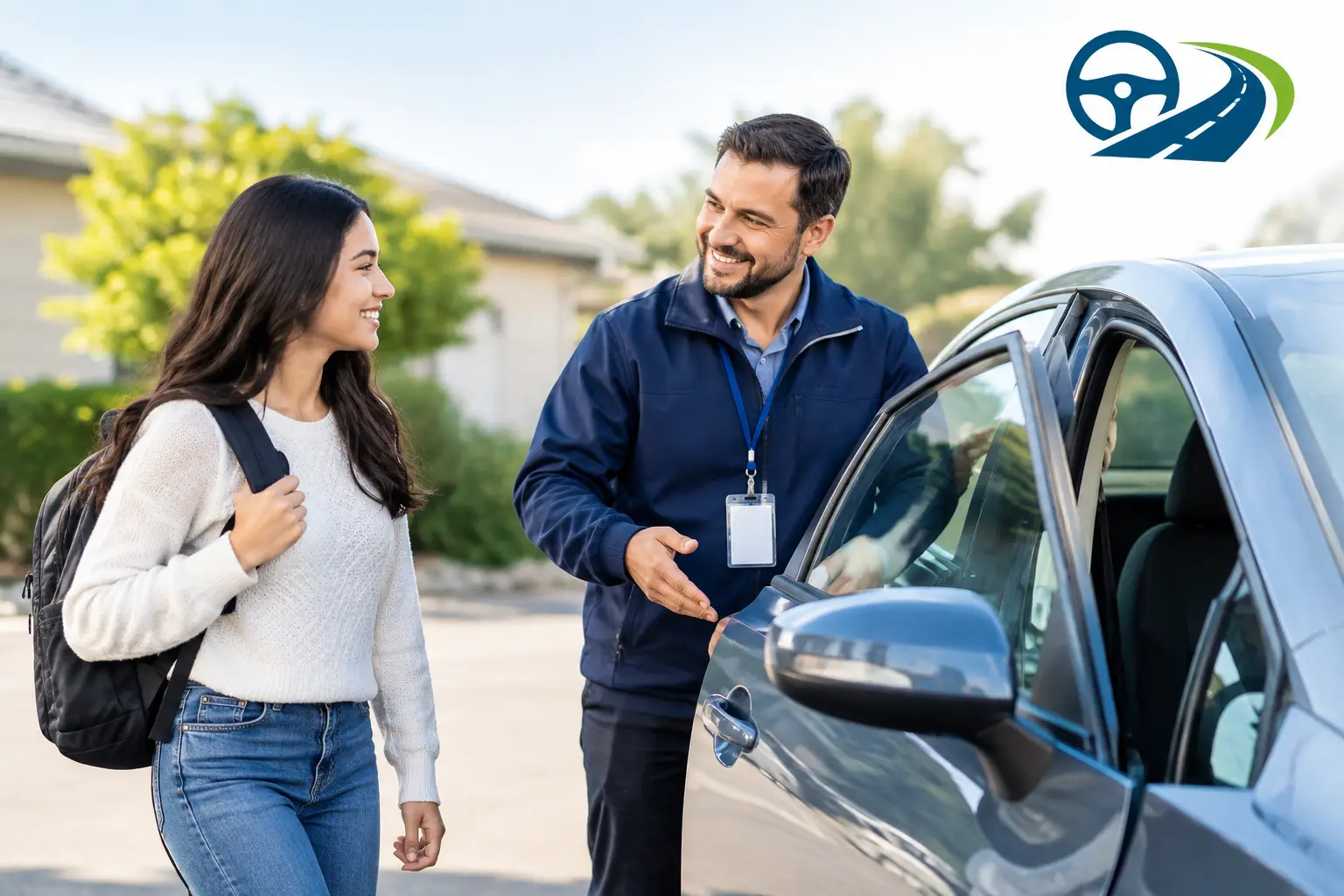
A driving school should be easy to evaluate before enrollment. Look for properly licensed, DMV-certified instructors and a program that explains what is included, how lessons are scheduled, and how progress is tracked. Ask whether instruction can be adapted for anxiety, different learning styles, prior driving experience, or a specific DMV test goal.
Convenience matters, but it should support quality rather than replace it. Pickup and drop-off service can make lessons much easier for Orange County families and busy adults. Flexible scheduling can keep a student practicing consistently. Yet the essential question remains: will the student receive enough individualized feedback to build safe habits?
Since 1997, Newport Driving School has focused on that combination of professional standards, patient instruction, and training options for different driver needs. Whether a student needs California driver education, behind-the-wheel lessons, manual transmission practice, or DMV road test preparation, the right path begins with an honest assessment of their current skills.
A license gives a driver permission to operate a vehicle. Good training gives them a reason to deserve that permission each time they pull into traffic.

Related Posts

Comments (0)