Freeway driving practice builds confidence with guided merging, lane changes, and safe exits. Learn how structured lessons help new drivers prepare safely.
Parallel Parking Lessons That Build Real Confidence
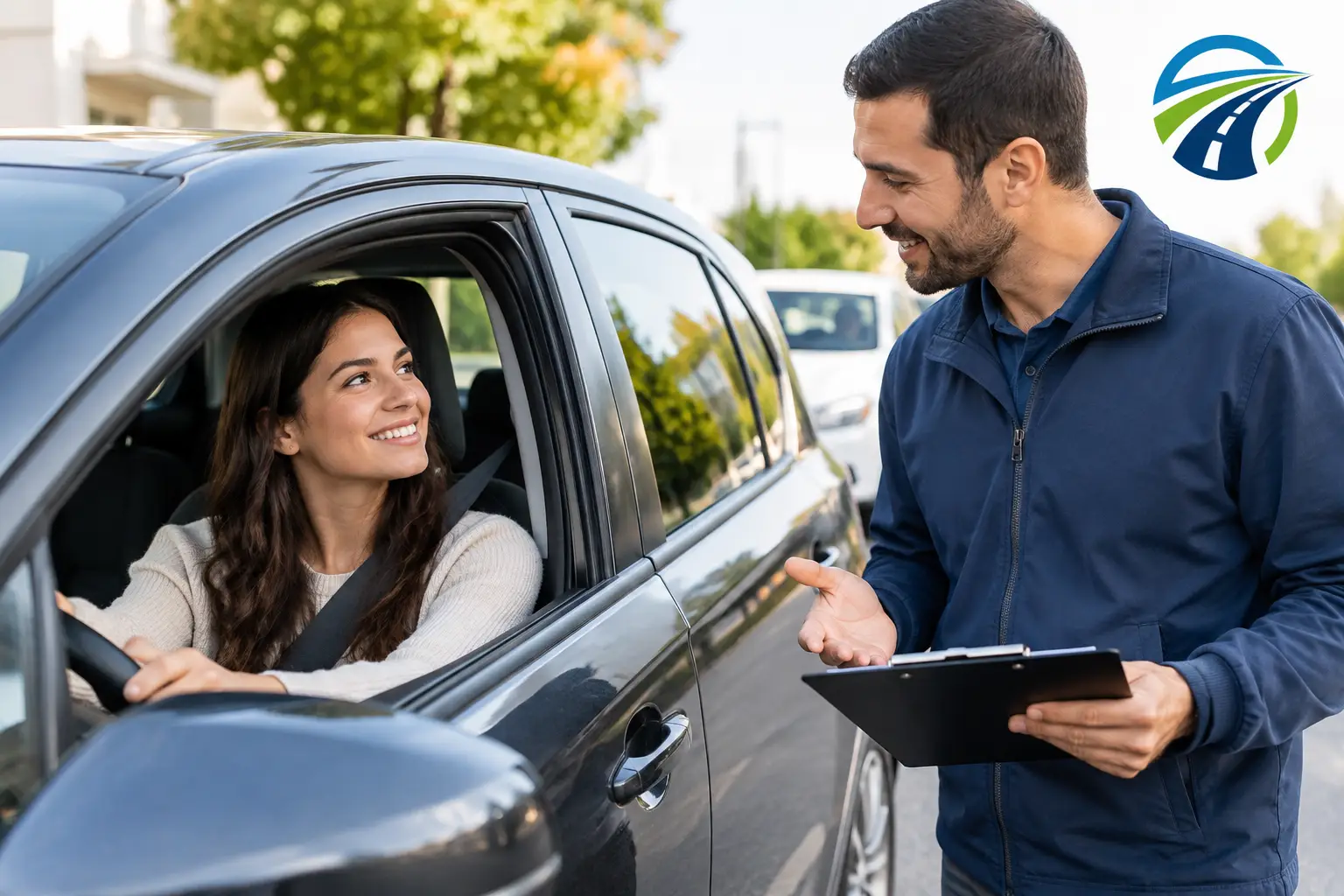
A parking space can look plenty large from the passenger seat and suddenly feel impossibly narrow once it is your turn to back in. That is why effective parallel parking lessons focus on more than memorizing a sequence of turns. They help you understand what the vehicle is doing, recognize when a correction is needed, and stay calm when cars are waiting behind you.
For new drivers, adult learners, and anyone preparing for a California DMV road test, parallel parking can carry extra pressure. The good news is that it is a learnable skill. With patient instruction, consistent reference points, and practice in progressively tighter spaces, parking beside a curb becomes a controlled maneuver rather than a stressful guess.
Why Parallel Parking Feels Harder Than It Is
Parallel parking asks a driver to coordinate several skills at once: mirror use, speed control, steering direction, awareness of nearby vehicles, and accurate judgment of space. Beginners often focus so intensely on the car behind them that they stop looking at the curb, their mirrors, or the front corner of their own vehicle.
There is also a common misunderstanding that a successful park must happen in one smooth motion. In real driving, safe corrections are normal. A driver who recognizes that the rear wheel is too far from the curb, stops, and adjusts is showing sound judgment. Rushing because another driver is waiting is far more likely to create a mistake.
The technique also changes slightly from vehicle to vehicle. A compact sedan, SUV, and longer vehicle have different turning circles and reference points. This is one reason a personalized lesson is more useful than watching a generic demonstration and trying to copy it exactly.
What Good Parallel Parking Lessons Teach
A productive lesson starts in a low-pressure setting, often with cones or ample space between parked vehicles. The instructor can explain each stage while the student drives slowly enough to process what they see. Once the basic path makes sense, practice can move to realistic curbside spaces.
Set Up Before You Reverse
Good parking begins before the vehicle moves backward. The driver should identify a legal space that is reasonably longer than the vehicle, check for signs and restrictions, signal early, and scan for traffic, cyclists, pedestrians, and opening car doors.
The vehicle is then positioned alongside the car in front of the space at an appropriate distance. Exact alignment depends on the vehicle, but the goal is to leave enough room to turn without crowding the neighboring car. An instructor can help a learner establish reliable visual reference points based on the mirrors, rear window, and vehicle body.
Control Speed With the Brake
Parallel parking should be slow. Very slow. At parking-lot speed, there is time to look, think, and correct. Most learners benefit from keeping the brake covered and allowing the vehicle to creep backward rather than using unnecessary accelerator input.
Slow movement is not hesitation. It is control. It gives the driver time to check both mirrors, look over the shoulder when appropriate, and pause if a pedestrian or vehicle enters the area.
Follow the Vehicle’s Arc, Not a Script
Students are often taught a basic sequence: back in at an angle, straighten as the vehicle enters the space, then turn the opposite direction to bring the front end in. That sequence is useful, but it should not become a rigid script.
The better question is: Where is the car now? If the rear of the vehicle is approaching the curb too quickly, the steering needs attention. If the front end is still sticking into traffic, the driver may need to pull forward and reposition. Strong instruction teaches drivers to read the car’s position rather than blindly continue turning because a certain step says so.
Finish With Curb Position and Space Awareness
After parking, the vehicle should sit reasonably parallel to the curb, close enough to avoid obstructing traffic but not so close that a tire contacts or climbs the curb. The driver should also leave sensible space ahead of and behind the vehicle.
A final check matters. Are the wheels straight enough for a safe departure? Is the car fully inside the parking space? Are there restrictions, driveways, hydrants, or other hazards nearby? Parking is complete only when the vehicle is legally and safely positioned.
Common Mistakes and How to Correct Them
The most common mistake is starting too far from the parked car. When the setup is too wide, the driver may turn sharply and still end up far from the curb. Starting too close, however, creates a risk of contact with the neighboring vehicle. Practicing the setup position repeatedly builds a dependable starting point.
Another issue is turning the wheel too early or too late. Early steering can bring the rear wheel toward the curb before the car has entered the space correctly. Late steering may leave the vehicle angled outward. Instead of trying to save every attempt with a dramatic last-second turn, students should learn to stop, assess, and reset when needed.
Some drivers stare only into the rearview camera, if their vehicle has one. Cameras can be helpful, but they do not replace mirror checks, shoulder checks, and awareness of the vehicle’s front end. A camera shows part of the picture. Safe driving requires the whole picture.
Finally, anxiety can cause drivers to rush. A calm instructor helps by giving clear, short direction and allowing enough repetition for the movements to become familiar. Confidence comes from successful practice, not from being told to relax.
Parallel Parking for the DMV Road Test
DMV test preparation should include parallel parking when it is relevant to the route, location, or skills being evaluated. Even when an examiner does not ask for a traditional parallel parking maneuver, the same foundational abilities matter: control at low speeds, correct steering, observation, smooth braking, and appropriate positioning near a curb.
Test-day habits are especially important. Signal when pulling toward a space, check mirrors and blind spots, obey all parking restrictions, and avoid touching another vehicle or creating a hazard. If an adjustment is allowed and can be made safely, use it rather than forcing the car into a poor final position.
A practice session near a DMV testing area can be valuable because it helps drivers get comfortable with local traffic patterns, curb conditions, and the pace of the road test. Still, the goal should never be to memorize one location. The goal is to build skills that work on any legal street.
How Many Lessons Do You Need?
It depends on your starting point. A driver who already has basic vehicle control may need only focused practice to understand positioning and corrections. A first-time driver may need several sessions because parallel parking works best after steering, braking, lane positioning, and mirror use feel more natural.
Adults returning to driving after a long break may progress quickly but benefit from time to rebuild confidence. International drivers may understand the maneuver yet need help adapting to California road rules, test expectations, or a different vehicle size. Students with anxiety often do best with shorter, structured sessions that add difficulty gradually.
At Newport Driving School, instructors can tailor behind-the-wheel training to the student’s experience level, learning style, and testing goals. That means spending time where it matters most, whether that is basic setup, curb distance, parking in heavier traffic, or preparing for a DMV road test.
Practice Between Lessons Without Building Bad Habits
Independent practice is helpful when it is supervised appropriately and done in a legal, low-stress location. Start with an open space and markers such as cones, then move to quiet residential streets with legal curbside parking. Avoid practicing where traffic is fast, visibility is poor, or parked cars leave almost no margin for error.
Rather than repeating attempts mindlessly, evaluate each one. Did you begin at the right distance? Did you keep your speed low? Where did the vehicle end up relative to the curb? One thoughtful correction teaches more than five rushed attempts.
The payoff of parallel parking is larger than fitting into a space. It teaches patience, visual judgment, low-speed control, and the confidence to make a safe decision when the road feels crowded. With the right instruction and enough deliberate practice, the space that once felt intimidating becomes simply another place to park.

Related Posts
Comments (0)