Freeway driving practice builds confidence with guided merging, lane changes, and safe exits. Learn how structured lessons help new drivers prepare safely.
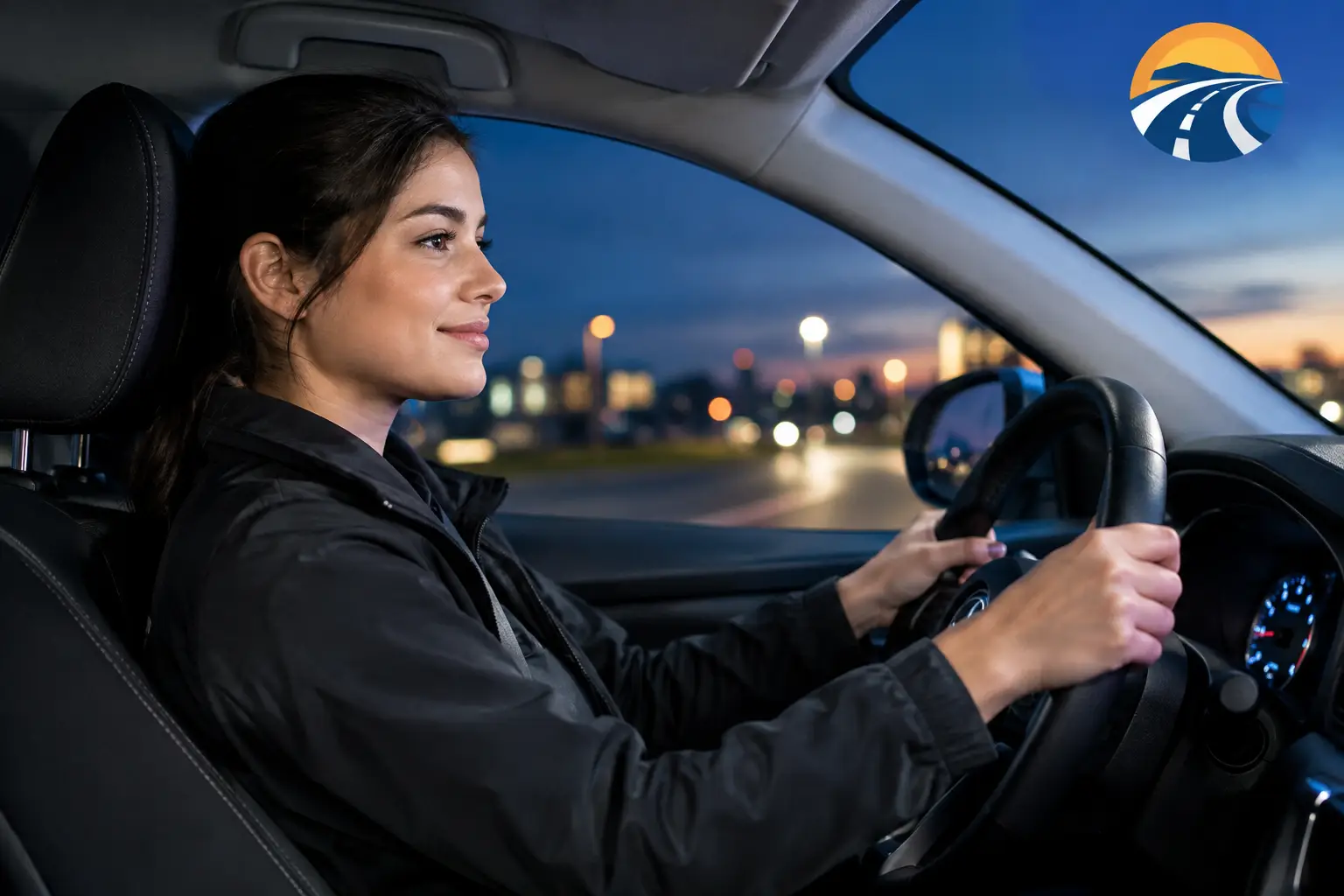
Night Driving Preparation for Safer First Drives
A familiar street can feel completely different after sunset. Lane markings are harder to read, pedestrians appear later, and a driver behind you with poorly aimed headlights can turn one mirror into a wall of glare. Thoughtful night driving preparation gives new drivers a practical advantage: more time to see, decide, and respond without panic.
For teens building experience, adults returning to driving, and international drivers adjusting to California roads, nighttime practice should be deliberate. The goal is not simply to drive in the dark. It is to develop the visual habits, vehicle checks, and judgment that make darkness less intimidating.
Start Night Driving Preparation Before You Move
Safe night driving begins in the driveway. A dirty windshield can scatter light from streetlamps and headlights across the glass, creating glare that is far worse than the dirt may look during the day. Clean the inside and outside of the windshield, along with side windows, mirrors, camera lenses, and headlights.
Check that every exterior light works: low beams, high beams, brake lights, turn signals, parking lights, and license plate lights. Ask someone to stand behind the vehicle while you test the brake lights if necessary. A burned-out bulb is both a safety problem and a reason to be stopped.
Give your eyes time to adjust before leaving a brightly lit house, restaurant, or parking structure. Set mirrors, climate controls, navigation, and music before pulling out. At night, even a brief glance down can mean traveling a surprising distance without seeing the road ahead.
Your dashboard brightness matters, too. If instrument lights are turned up too high, they can reduce your ability to see outside the vehicle. Dim them until gauges remain readable without lighting up the cabin. Avoid using a phone as a flashlight or holding it in your hand for directions. Set navigation in advance and rely on spoken guidance when possible.
See Farther Ahead, Not Just at the Hood
The biggest change at night is reduced visibility. A driver may be technically alert but still have much less information than during daylight. This is why speed needs to match what you can actually see, not merely the posted limit or the pace of nearby traffic.
Look well ahead into the area illuminated by your headlights. Scan between the roadway, lane edges, intersections, and mirrors instead of fixing your eyes on the car directly ahead. This wider visual pattern helps you spot a cyclist without reflective gear, an animal near the shoulder, a stopped vehicle, or a driver beginning to turn.
Increase following distance after dark. During the day, a minimum three-second gap may be appropriate in favorable conditions. At night, add more space, especially on unfamiliar roads, in rain, or when traffic is moving quickly. The extra distance provides time to recognize brake lights, judge what is happening ahead, and stop smoothly.
Do not overdrive your headlights. In simple terms, this means driving so fast that your stopping distance is longer than the distance you can clearly see. This risk rises on dark rural roads, around curves, and in poor weather. If the road disappears beyond your headlights, ease off the accelerator.
Use High Beams With Good Judgment
High beams can significantly improve visibility on dark, open roads, but only when they do not interfere with other drivers. In California, drivers must dim high beams within 500 feet of an oncoming vehicle and within 300 feet when following another vehicle.
Use low beams in fog, heavy rain, snow, or dust. High beams reflect off moisture and particles in the air, often creating more glare and reducing visibility. If conditions are poor enough that you are struggling to see, slowing down or delaying the trip may be the safer choice.
Manage Glare Without Looking Away From the Road
Oncoming headlights are one of the most common sources of anxiety for night drivers. The instinct is to stare directly at the lights, but that makes glare feel stronger and can leave a temporary afterimage.
Instead, keep your eyes aimed toward the right side of your lane and use the road edge, lane line, or shoulder as a visual reference while the vehicle passes. You are not looking away from the road. You are giving your eyes a steadier point of focus.
Adjust the rearview mirror to its nighttime setting if it has one. Most manual mirrors have a small tab that reduces glare from vehicles behind you. If your mirrors are auto-dimming, make sure that function is enabled. Side mirrors should be positioned to minimize blind spots without reflecting excessive light into your eyes.
If glare, halos around lights, headaches, or trouble seeing signs have become frequent, schedule an eye exam. Night vision can be affected by an outdated prescription, dry eyes, certain medications, and normal changes in vision. Drivers should never assume that discomfort is something they simply need to tolerate.
Practice the Situations That Cause the Most Stress
A confident night driver is not someone who has driven for hours without an issue. It is someone who has practiced specific situations until the right response feels familiar. Start on streets you know well, with light traffic and good pavement markings. Then build up gradually to busier roads, freeway driving, rain, and unfamiliar routes.
Intersections deserve special attention. At night, speed and distance are harder to judge, particularly when an oncoming vehicle has only one visible headlight or when a motorcycle blends into surrounding lights. Before turning left, wait for a safe, clear gap. Never assume an approaching vehicle is farther away or moving slower than it appears.
Parking lots can also be deceptively challenging. People walk behind vehicles, carts cross travel lanes, and lighting may be uneven. Drive slowly, use your mirrors and backup camera as aids rather than substitutes for checking around the vehicle, and expect pedestrians to emerge from between parked cars.
Freeways require a different kind of discipline. Use the right lane when you are still gaining confidence, leave more room ahead, and avoid abrupt lane changes. Check mirrors, signal early, and turn your head to verify blind spots. Bright city lighting can make it tempting to drive as though it were daytime, but shadows, glare, and sudden slowdowns still require a larger margin for error.
Avoid the Fatigue Trap
Night driving is not only about darkness. It is also about fatigue. Reaction time, attention, and decision-making decline when you are tired, even if you do not feel sleepy enough to fall asleep. Young drivers are especially vulnerable because many are on the road after a full school day, sports practice, work shift, or social event.
Do not try to solve serious drowsiness by turning up music or opening a window. Those tactics may make you feel temporarily more awake, but they do not restore alertness. If your eyes feel heavy, you miss turns, drift within your lane, or cannot remember the last few miles, pull over somewhere safe and reassess the trip.
Alcohol, cannabis, prescription medications, and some over-the-counter cold or allergy medicines can add to nighttime impairment. Even legal medication can carry warnings about drowsiness or operating machinery. Read labels, ask a pharmacist or physician when appropriate, and arrange another ride when alert driving is in doubt.
Build Skill With Purposeful Instruction
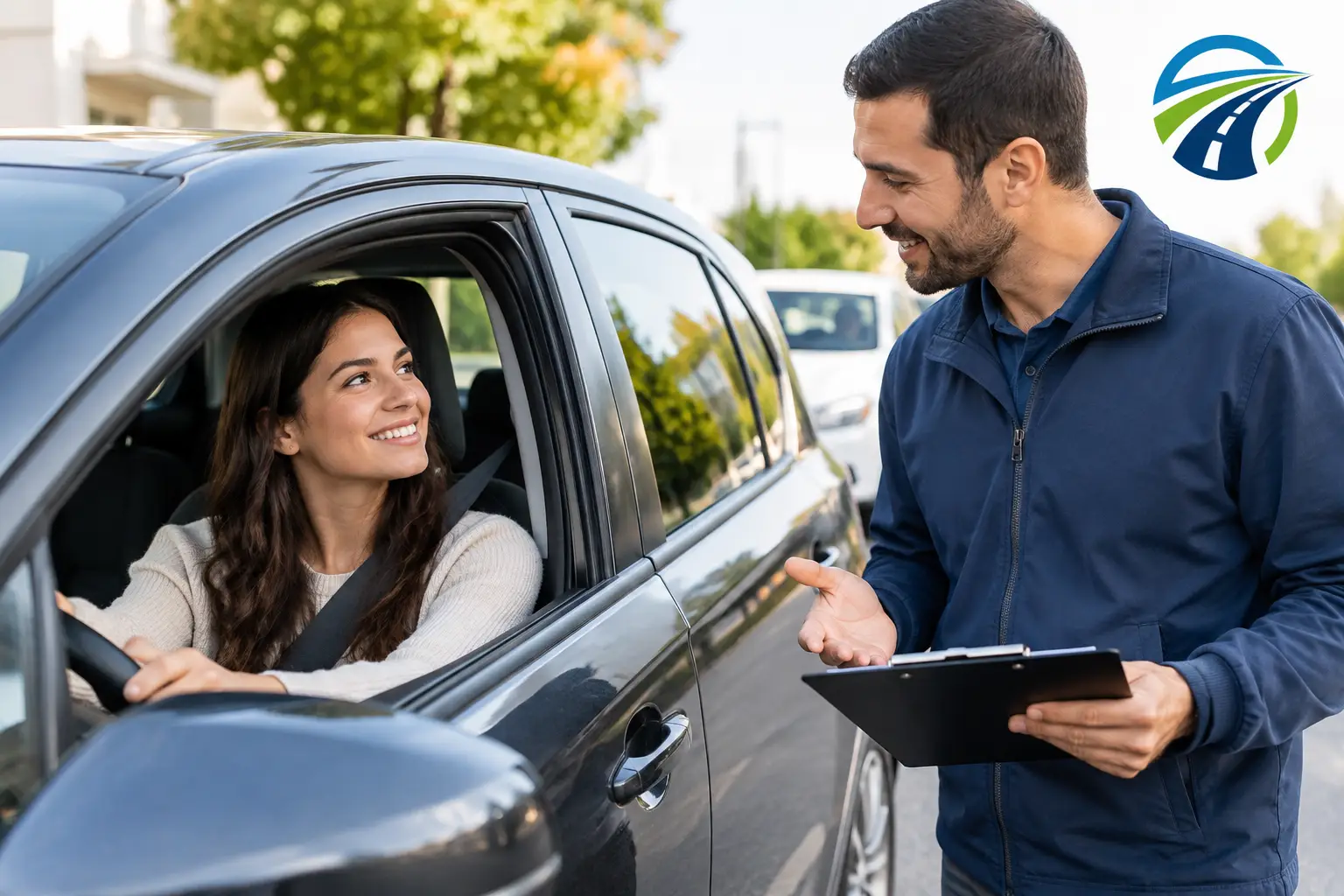
Night driving should be part of a driver’s education, not an afterthought once a license is issued. A trained instructor can help a student recognize where their vision narrows, correct steering habits affected by glare, practice proper following distance, and make calm decisions at dark intersections.
For anxious drivers, the right progression matters. Beginning with a quiet route and clear goals builds confidence more effectively than being pushed immediately into crowded nighttime traffic. For experienced drivers, a focused lesson can identify habits that may have developed over years, such as following too closely or relying too heavily on bright lights.
Newport Driving School provides patient, personalized training for drivers who want structured practice in the situations that feel most challenging. Whether a student is preparing for a DMV road test or simply wants more confidence after dark, targeted instruction can turn uncertainty into repeatable safe habits.
Before your next evening drive, take two extra minutes for the windshield, lights, mirrors, and route. That small routine creates the space to focus on what matters most once the road gets dark: seeing clearly, leaving room, and making the next safe decision.

Related Posts
Comments (0)