Freeway driving practice builds confidence with guided merging, lane changes, and safe exits. Learn how structured lessons help new drivers prepare safely.
Safe Lane Change Technique for California Drivers
A lane change can take only a few seconds, but it asks a driver to process more information than almost any other routine maneuver. You must judge traffic ahead, traffic behind, vehicles in the next lane, lane markings, road conditions, and your own speed. A safe lane change technique turns that busy moment into a repeatable sequence instead of a guess.
For new drivers, the goal is not to change lanes quickly. The goal is to make a decision early, check thoroughly, communicate clearly, and move only when there is enough space. This approach supports safer everyday driving and helps DMV road test applicants demonstrate calm, controlled judgment.
Why Lane Changes Go Wrong
Many unsafe lane changes begin before the vehicle moves sideways. A driver notices a turn, exit, or slow vehicle too late and feels pressured to act. They may turn the wheel sharply, merge into a small opening, or focus on the vehicle directly beside them while missing a faster vehicle approaching from behind.
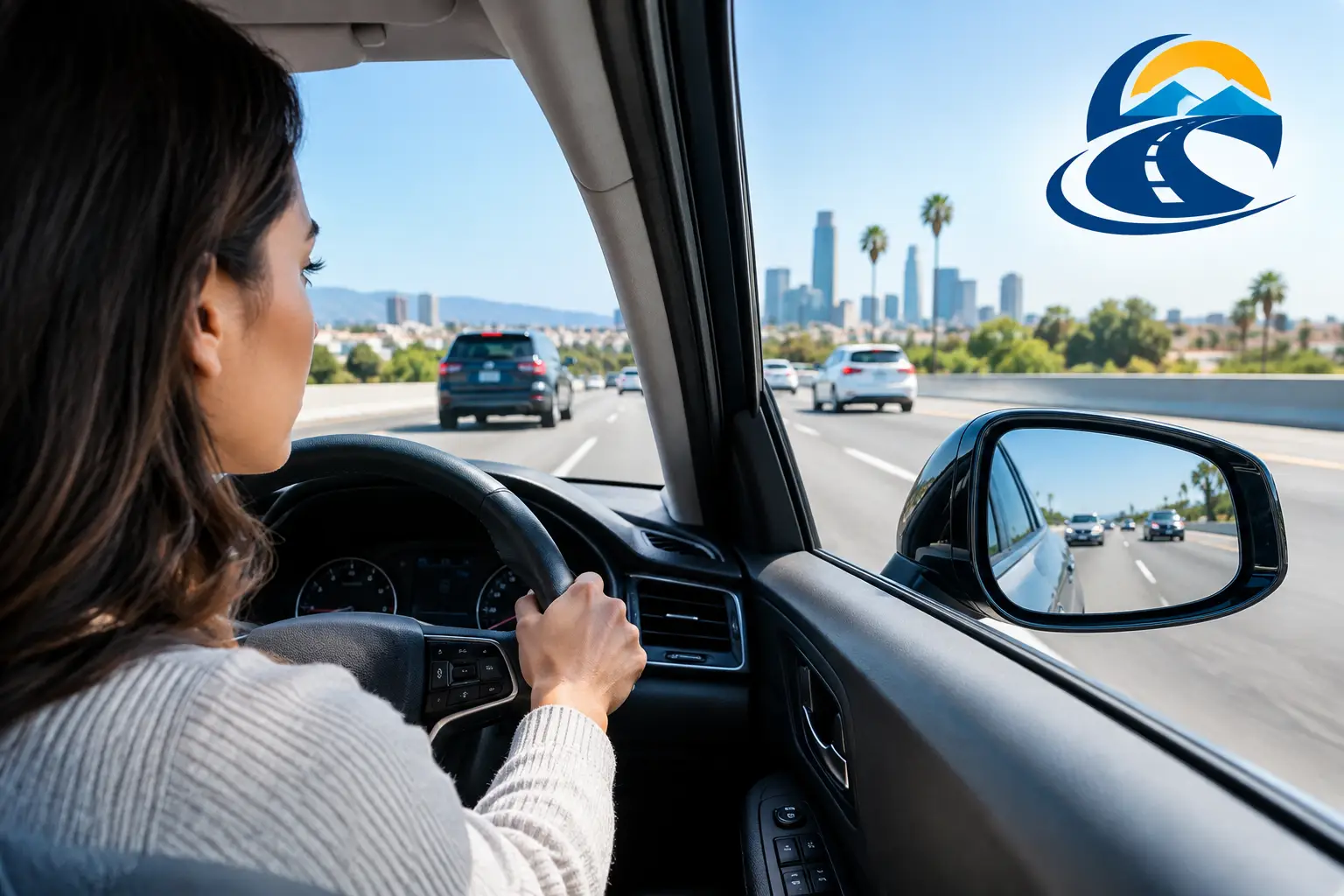
The other common problem is incomplete observation. Mirrors are essential, but mirrors do not show every area around your vehicle. The spaces beside and slightly behind your car are blind spots. A vehicle, motorcycle, cyclist, or even a fast-moving car can be there without appearing in your rearview or side mirrors.
Good lane changes are built on planning. If you know you will need to turn, enter a freeway, or position yourself for an exit, begin looking for the correct lane well in advance. Missing one turn is inconvenient. Making a rushed move to avoid it can be dangerous.
The Safe Lane Change Technique, Step by Step
A consistent process helps drivers avoid skipping a critical check. Practice the same order every time until it becomes natural: assess the road ahead, check mirrors, signal, check the blind spot, create a safe gap, and move smoothly.
Start with the road ahead
Before looking to the side, make sure the vehicle ahead of you is not braking or slowing. Maintain your lane position and leave enough following distance to react. If traffic in front is congested, a lane change may not be the best immediate choice, even if the next lane appears open.
Also look for conditions that make lane changes less predictable. Construction zones, freeway entrances, exits, intersections, school zones, wet pavement, and heavy traffic require extra patience. In some situations, the safest decision is to stay in your lane until traffic opens up.
Check mirrors early and continuously
Use the rearview mirror to understand traffic approaching from behind. Then check the side mirror on the side you intend to enter. You are looking for more than an empty space. Consider the speed of nearby vehicles, whether another driver is signaling, and whether a vehicle is closing the gap quickly.
A gap that looks comfortable at low speed may disappear quickly at freeway speed. If a vehicle behind you in the target lane is approaching much faster than your car, wait. Do not assume that driver will slow down or make room.
Signal before you move
Activate your turn signal early enough to give other road users useful information. Signaling is not a request for permission to force your way into a lane, and it does not guarantee the lane is clear. It is communication.
After signaling, continue checking traffic. A nearby driver may respond by creating space, but another may speed up, drift toward the lane line, or begin changing lanes at the same time. Keep your decision based on what you observe, not on what you hope another driver will do.
Look over your shoulder for the blind spot
After checking mirrors and signaling, briefly look over your shoulder toward the lane you plan to enter. This is the shoulder check that confirms whether a vehicle, motorcycle, bicycle, or other road user is in the blind spot.
Keep the glance brief. Your eyes need to return to the road ahead promptly. New drivers sometimes turn their head too far or stare too long, allowing their vehicle to drift. A trained instructor can help you develop a quick, effective shoulder check while maintaining steady steering.
Do not depend solely on blind-spot warning systems, cameras, or alerts. These features can be helpful, but they may not detect every road user in every condition. Your mirrors and direct visual check remain necessary.
Choose a real gap, not just an opening
A safe gap gives you room both in front of and behind your vehicle after you enter the lane. Avoid pulling closely in front of another vehicle and forcing that driver to brake. Avoid moving into a space where the vehicle behind you must immediately slow down to avoid following too closely.
The right amount of space depends on speed, traffic flow, weather, vehicle size, and visibility. At higher speeds, you need substantially more room. In rain, darkness, or heavy traffic, give yourself additional distance and more time to evaluate the lane.
If no safe gap is available, continue in your current lane. This may feel frustrating when you are trying to reach an exit or make a turn, but patience is a driving skill. You can take the next exit, make a legal turn later, or safely reroute. Never cut across multiple lanes because you are running out of road.
Move smoothly into the lane
When the lane is clear and the gap is appropriate, maintain a speed that fits the flow of traffic. Make one gradual steering movement into the new lane. You should not jerk the wheel, accelerate aggressively, or brake suddenly while moving over.
Enter the center of the lane rather than drifting onto the line. Once established, straighten the steering wheel and cancel the signal if it has not canceled automatically. Then check your following distance again. A lane change is not finished until your vehicle is stable, centered, and safely spaced from traffic ahead.
Situations That Require Extra Caution
Freeways demand more planning because traffic speeds are higher and drivers may approach quickly from behind. Before changing lanes, identify a gap early and match the pace of traffic as safely as conditions allow. Avoid changing lanes repeatedly just to gain a few car lengths. Frequent lane changes often create more risk than benefit.
Large trucks deserve additional space. Their blind spots are larger, their stopping distances are longer, and their lane position may vary with wind or road conditions. Do not linger beside a truck, especially on the right. If you need to pass, do so with adequate space and return only when you can see the truck clearly in your rearview mirror.
Motorcycles require careful attention because they are smaller and can be harder to notice in mirrors. A motorcycle may be traveling in a position that makes it appear farther away than it really is. Complete the shoulder check every time, even when you believe the lane is empty.
At intersections, avoid changing lanes unnecessarily. Drivers may be turning, pedestrians may be entering crosswalks, and traffic patterns can shift quickly. Focus first on the intersection, signals, and vehicles directly ahead. If you need a different lane, wait until you have cleared the intersection and can evaluate traffic safely.
Common Mistakes During DMV Road Tests
DMV examiners look for observation, control, and sound decision-making. A student can lose confidence by treating a lane change as a memorized routine rather than responding to actual traffic conditions.
One mistake is signaling and moving immediately without a mirror check and shoulder check. Another is checking the blind spot but failing to look back ahead before steering. Examiners also notice when a driver changes lanes too close to another vehicle, slows suddenly to force an opening, or drifts across a lane line without a clear purpose.
It is completely acceptable to wait for a better opening. During a road test, a safe decision to remain in your lane is better than an unsafe attempt to complete the maneuver. If an examiner gives a direction that cannot be followed safely, continue driving safely and follow the next available legal opportunity when possible.
Build Confidence Through Deliberate Practice
Lane-changing confidence comes from supervised repetition in progressively more demanding conditions. Start on quieter multi-lane streets where you can practice mirror checks, signaling, shoulder checks, and smooth steering without freeway-speed pressure. Then work up to busier roads and freeway driving as your observation skills improve.
Parents and practice partners can help by giving directions early rather than at the last second. Instead of saying, “Get over now,” try, “We will need the right lane after the next light.” This gives the learner time to scan, decide, and execute the maneuver safely.
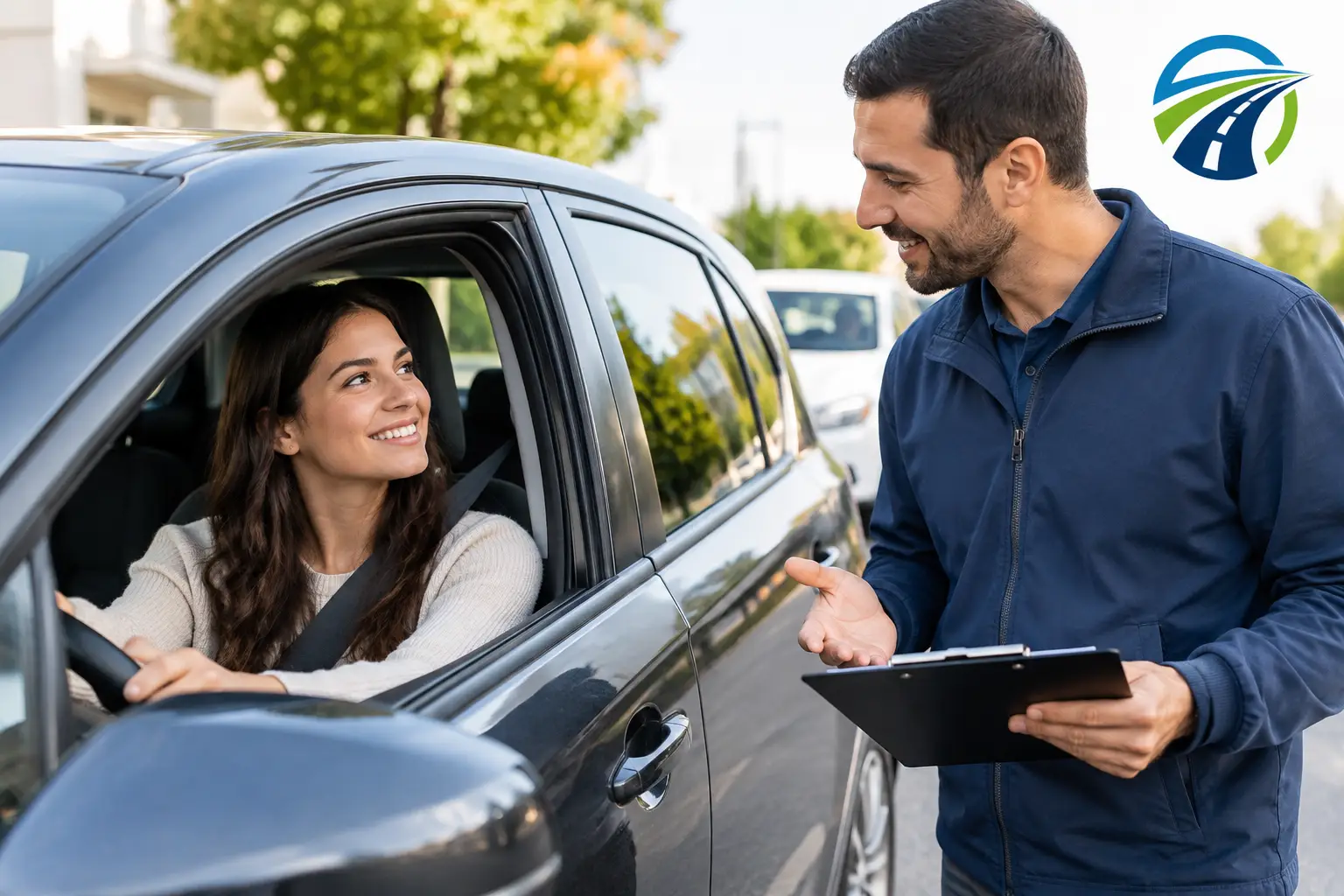
At Newport Driving School, instructors help students practice lane changes at a pace that fits their experience level, from first-time teen drivers to adults rebuilding confidence behind the wheel. The objective is not simply to complete a maneuver for a test. It is to develop habits that still protect you when traffic is unpredictable.
The next time you need to move over, give yourself permission to wait for the right gap. A calm, well-observed lane change is always worth more than a hurried one.

Related Posts
Comments (0)