Learn a safe lane change technique for California roads, DMV tests, and daily driving with steps that build awareness, timing, and confidence safely.
Freeway Driving Practice: A Safer Way to Start
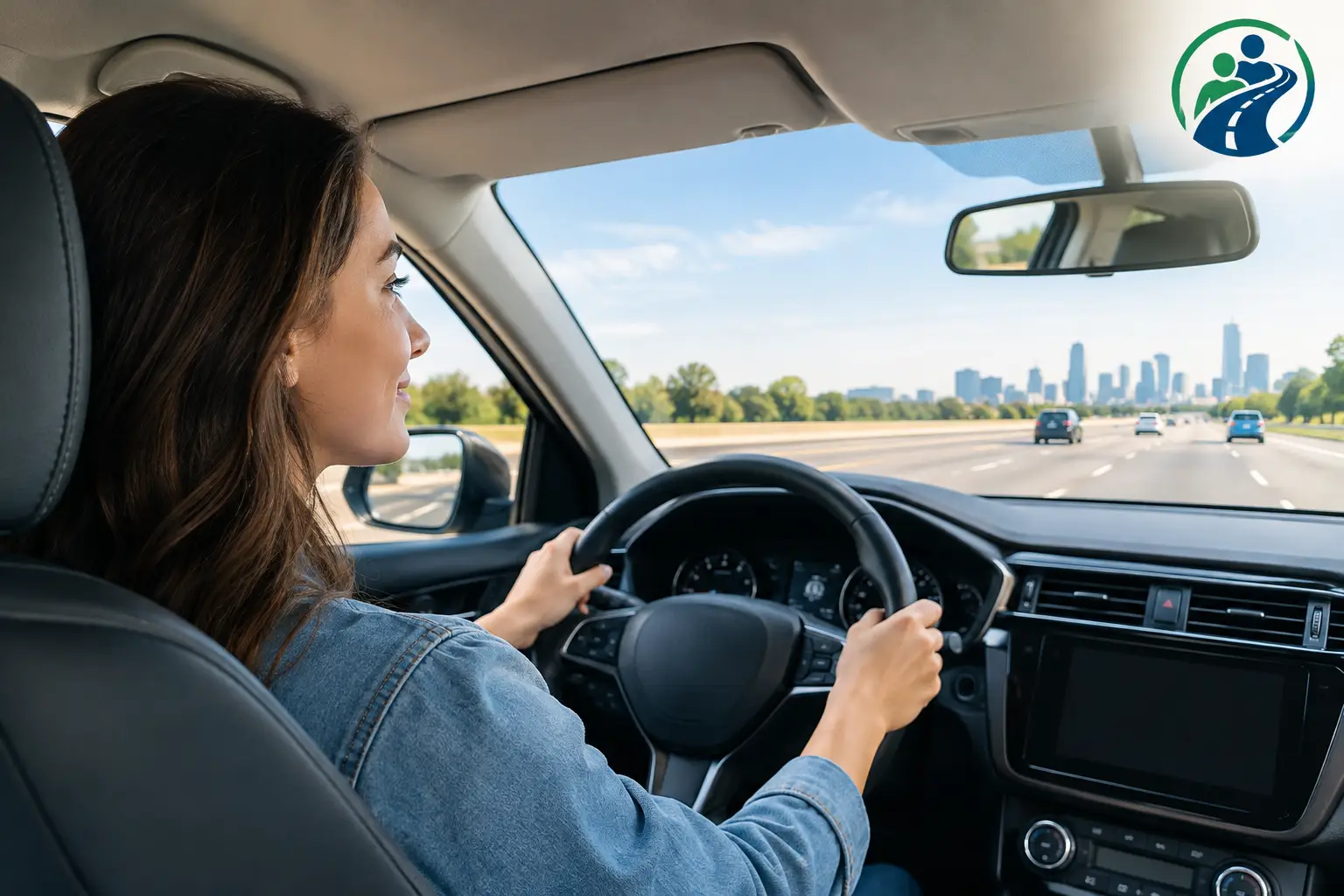
A freeway entrance can make even a capable new driver feel rushed. Cars are moving quickly, mirrors seem full, and the gap you planned to use can disappear in seconds. That is why freeway driving practice should be intentional, gradual, and supervised – not a first attempt made under pressure on the way to an appointment.
For teen drivers, adult beginners, and drivers who are new to Southern California traffic, freeway skills are about far more than reaching the speed limit. They require observation, timing, lane discipline, judgment, and a calm response when conditions change. The right practice plan helps students build those habits one skill at a time.
Why freeway driving feels different
Surface-street driving gives learners more time to process what is happening. Speeds are lower, intersections create natural pauses, and a missed turn is usually easy to correct. On a freeway, vehicles often travel at 55 to 70 mph or faster depending on conditions, traffic is continuous, and decisions need to be made early.
The most common source of anxiety is merging. New drivers may hesitate at the end of an on-ramp, brake too early, or focus so intensely on freeway traffic that they stop watching the road ahead. Others accelerate well but enter without enough space, then make sudden corrections. Neither response means a student cannot become a safe freeway driver. It means the student needs repetition in a controlled learning environment.
California freeways also add local challenges. Dense traffic, frequent lane changes near major interchanges, short entrance ramps, motorcycles filtering between lanes, and aggressive driving behaviors all require extra awareness. A learner should not be expected to figure out these situations alone.
Start freeway driving practice at the right time
A student does not need to be completely fearless before going on the freeway. They do need dependable basic control. Before practicing at freeway speeds, a driver should be able to maintain a steady position in the lane, check mirrors without drifting, use turn signals consistently, make smooth steering adjustments, and respond predictably to signs and traffic lights.
Comfort on multilane streets is also a useful checkpoint. If changing lanes on a busy boulevard still feels overwhelming, it makes sense to strengthen that skill before adding high speeds. There is no prize for rushing the process. A few more sessions on surface streets can prevent a stressful freeway experience that sets confidence back.
For some students, the best first session is during lighter traffic on a familiar route with a long on-ramp and a simple exit. For others, especially drivers who have already had an anxious freeway experience, a professional instructor can provide the structure and calm coaching needed to reset that experience. The pace should reflect the student, not a fixed schedule.
The core skills to practice first
Build speed on the entrance ramp
The entrance ramp is designed to help drivers approach the flow of freeway traffic. A common beginner mistake is treating the ramp like a yield sign where they should slow down and wait. Instead, the driver should scan ahead, check mirrors, signal early, and accelerate smoothly toward a speed that fits the traffic flow.
This does not mean blindly forcing a way into traffic. It means using the available ramp to create options. Looking far ahead helps the driver identify a possible gap before reaching the merge point. If traffic is heavy, adjusting speed slightly can help place the vehicle ahead of or behind another car. Sudden braking at the end of the ramp should be a last resort, not the plan.
Merge with a complete traffic check
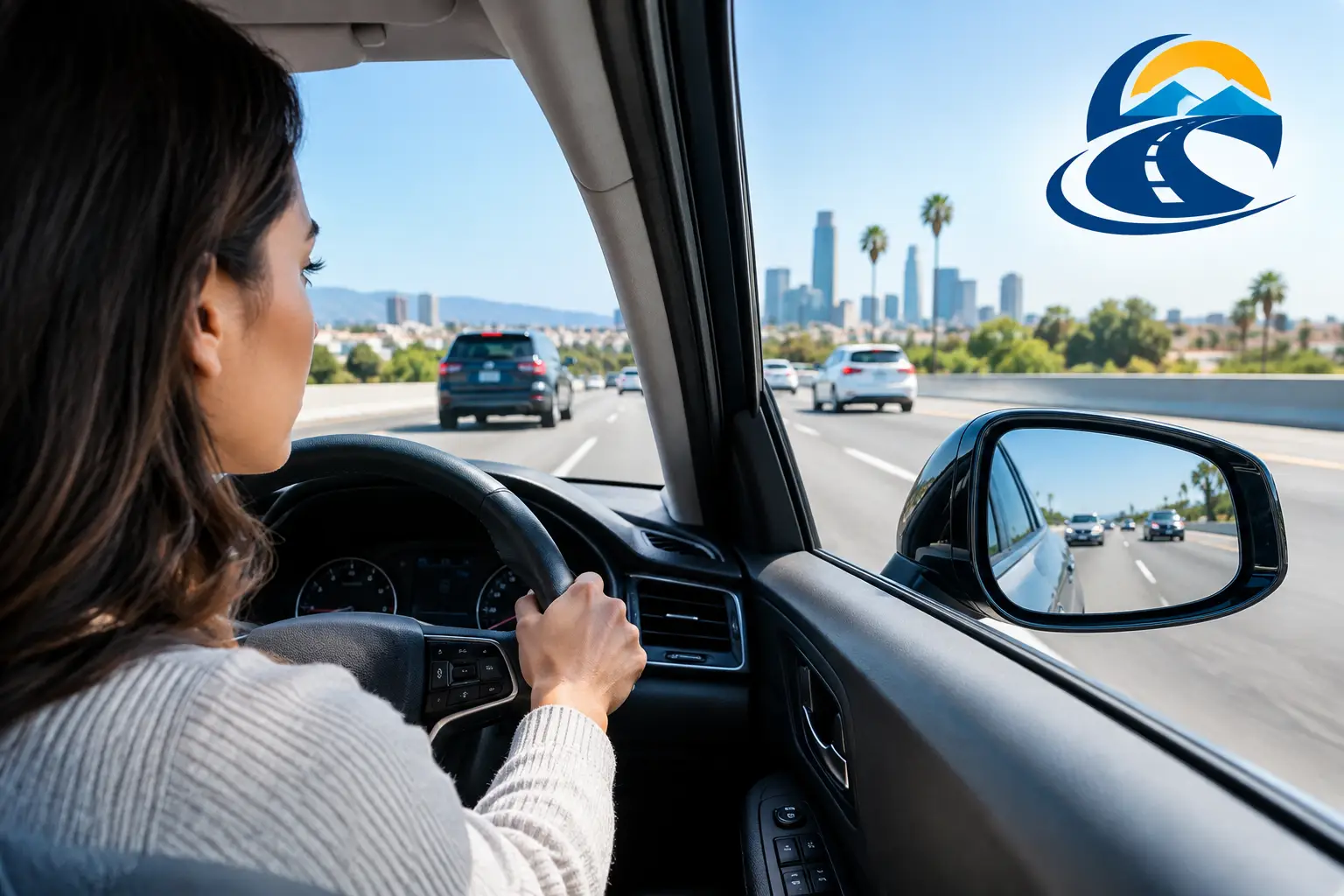
A safe merge requires more than a quick glance over the shoulder. Drivers should use their mirrors to understand the traffic pattern, signal their intention, and make a brief blind-spot check immediately before moving over. The steering movement should be gradual. Sharp turns at freeway speed can create instability and make it harder for other drivers to predict what the learner is doing.
Students should practice recognizing when a gap is actually usable. A gap that looks open in the side mirror may close quickly if a vehicle behind is traveling faster. An instructor can help learners judge closing speed and learn when waiting for the next gap is the safer choice.
Hold a steady lane position
Once on the freeway, some new drivers become so relieved that they stop scanning. Others grip the wheel tightly and make small, repeated corrections that cause the vehicle to wander. A relaxed but secure hand position, eyes looking well ahead, and regular mirror checks support smoother driving.
A driver should also leave adequate following distance. At freeway speed, stopping distance grows quickly. The exact space needed depends on speed, weather, visibility, traffic flow, and the condition of the road. When roads are wet, traffic is stop-and-go, or visibility is limited, increase that cushion substantially.
Change lanes for a reason
Safe freeway driving is not about changing lanes constantly to gain a few car lengths. Each lane change should have a purpose, such as preparing for an exit, moving around a slower vehicle when appropriate, or avoiding a developing hazard.
The routine remains the same: check mirrors, signal, check the blind spot, move gradually when the lane is clear, and cancel the signal. Learners should practice this sequence until it becomes consistent. They should also understand that a missed lane change is not an emergency. Staying in the current lane and continuing safely is always better than making a sudden move.
Plan the exit early
Exiting is often where new drivers make their biggest last-minute decisions. Navigation instructions, unfamiliar roads, or fear of missing the exit can lead to cutting across multiple lanes. Good freeway drivers begin preparing well in advance. They identify the exit, move toward the correct lane when it is safe, and reduce speed after entering the off-ramp.
If the exit is missed, continue to the next one. It may be inconvenient, but it is manageable. A missed exit never justifies an abrupt lane change, stopping on the freeway, or backing up.
Practice in stages, not all at once
A productive freeway lesson does not need to cover every possible situation on day one. Starting with one or two exits in light traffic allows the student to focus on entering, maintaining speed, and exiting safely. The next practice session can add lane changes, moderate traffic, and longer stretches of freeway driving.
As confidence develops, students can work through more demanding conditions: heavier traffic, complex interchanges, night driving, and routes with short ramps. Weather should be introduced carefully. Rain changes traction and visibility, so it is not the ideal setting for a first freeway experience. It can, however, be valuable practice once basic skills are solid.
Practice should include conversation before and after a route, not constant talking while the car is moving. A student benefits from clear coaching before a maneuver and direct feedback afterward. Too many instructions in the moment can increase distraction, especially for anxious drivers.
Habits that make freeway practice safer
Preparation begins before the vehicle moves. Set the seat, mirrors, climate controls, and navigation route in advance. Secure loose items, silence unnecessary notifications, and decide which freeway entrance and exit will be used. A distracted learner has less attention available for speed, space, and traffic patterns.
During practice, avoid turning every mistake into a major event. Safe drivers make adjustments. If a merge takes longer than expected, if the driver chooses not to change lanes, or if an exit is missed, the goal is to respond calmly and continue making legal, predictable choices.
It also helps to limit passengers. A supportive, qualified supervisor is useful; a car full of friends is not. New drivers need an environment where they can hear instructions, think clearly, and keep their attention on the road.
When professional instruction makes sense
Family practice can be valuable, but it is not always enough. Parents may be understandably nervous, may not know how to explain a maneuver clearly, or may have limited availability. Adult learners and international drivers may not have a qualified person to practice with at all.
A trained instructor can select routes that match the student’s current ability, demonstrate freeway techniques, and give feedback without adding family stress. At Newport Driving School, instruction can be tailored to drivers who need a first introduction to freeway travel, targeted DMV road test preparation, or extra help overcoming driving anxiety.
The best lesson is not the one with the most miles. It is the one that leaves the driver with one clear improvement to use on the next trip. With patient repetition and sound coaching, the freeway can become another familiar part of driving rather than the road a new driver tries to avoid.

Related Posts
Comments (0)