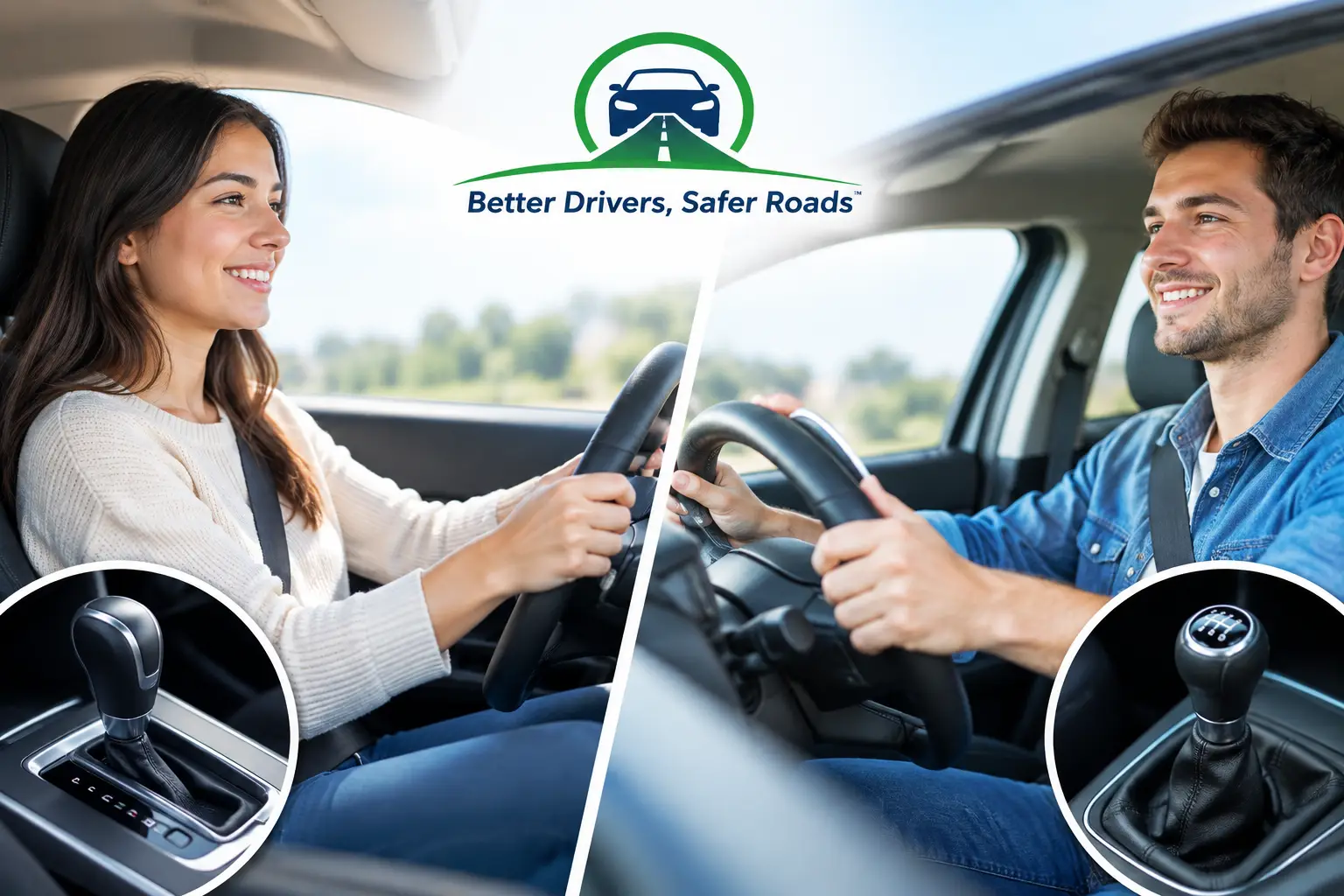
Choosing automatic versus manual driving lessons affects your license, confidence, practice options, and DMV goals. Learn which fit is right for you today.

California Permit Test Study Guide
The night before the DMV written test is when most students realize they have been reading without really studying. They skim a few pages, answer random practice questions, and hope the test will be easy. A strong california permit test study guide should do the opposite. It should narrow your focus, show you what the DMV actually cares about, and help you study in a way that sticks when you are under pressure.
At Newport Driving School, we work with teens, adults, and first-time California drivers who need more than general advice. Some are confident but rushed. Others are nervous because English is not their first language, or because they have failed once already. The pattern is usually the same – students do better when they stop trying to memorize everything at once and start learning the logic behind California driving laws.
What the California permit test really measures
The written permit test is not designed to trick you, but it does expect you to recognize safe choices quickly. That means your study time should center on judgment, not just vocabulary. You need to know what signs mean, when to yield, how speed laws work, and what California expects in common situations like school zones, intersections, lane changes, parking, and sharing the road.
Many students assume the hardest part is memorizing numbers, such as stopping distances or BAC rules. Those facts matter, but the bigger issue is reading carefully. The DMV often presents two answers that both sound reasonable. One is technically safer or more legal. If you only studied by glancing at summaries online, those questions can feel harder than they should.
A practical california permit test study guide that works
A good study plan is simple enough to follow and specific enough to catch weak spots. Start with the California Driver Handbook and treat it as your main source, not your backup source. Practice tests are helpful, but they work best after you have read the actual material.
Read the handbook in sections instead of trying to finish it in one sitting. Focus first on signs, right-of-way rules, speed laws, turns, lane use, and alcohol or drug laws. Those areas appear often because they affect real-world safety. After each section, stop and explain the rule in plain language. If you cannot explain it clearly, you probably do not know it well enough yet.
Then move to practice questions. Do not use them just to collect a high score. Use them to diagnose confusion. If you miss a question about a flashing red light, for example, go back and review the full rule, not just the correct answer. Students who only memorize question banks often get stuck when the DMV changes the wording.
The topics students miss most often
The most common mistakes are rarely about the hardest-looking material. They usually happen in ordinary situations that students think they already understand.
Right-of-way rules
This is one of the biggest problem areas because people rely on instinct or what they have seen others do. California law is more precise than that. At four-way stops, uncontrolled intersections, crosswalks, and when entering traffic, the details matter. The safest answer is often the correct answer, but not always if it ignores a specific legal rule.
Traffic signs and signal meanings
Students usually remember stop signs, speed limit signs, and green lights. They struggle more with less common signs, colored curbs, lane control signals, and what to do at flashing red versus flashing yellow lights. The DMV expects quick recognition, so this section deserves repeated review.
Speed and space management
Many people think speed questions are just about posted limits. California also tests whether you understand basic speed law, following distance, and when you must slow down even if the sign allows a higher speed. A posted limit is not permission to drive too fast for weather, traffic, or visibility.
Alcohol, drugs, and distracted driving
These questions are often straightforward, but students become careless because the answers seem obvious. Read every word. The DMV may ask about penalties, age-specific rules, or how impairment affects judgment and reaction time.
How to study if you are anxious or short on time
Not every student has a week of calm, focused preparation. Some are juggling school, work, family schedules, or test anxiety. In those cases, efficiency matters.
If you only have a few days, do not try to master every page equally. Spend most of your time on high-frequency topics and on the rules you keep missing. Read for understanding first, then test yourself. A short session with full attention is better than an hour of distracted scrolling through random quiz apps.
If anxiety is the bigger issue, practice under test-like conditions. Set a timer, sit somewhere quiet, and answer a full set of questions without interruptions. This helps in two ways. First, it shows whether you truly know the material. Second, it makes the real test feel more familiar.
For younger students, parents can help by asking scenario-based questions instead of saying, “Did you study?” Try questions like, “What do you do at a flashing red light?” or “Who has the right-of-way when a pedestrian steps into the crosswalk?” That kind of review turns passive reading into active recall.
Common study mistakes that waste time
Students often fail not because the test is impossible, but because their prep is unfocused. One common mistake is relying only on social media clips or unofficial summaries. Those can be useful for review, but they are not a substitute for the handbook.
Another mistake is cramming practice tests without reviewing wrong answers. A score means very little if you cannot explain why an answer is correct. It is also a mistake to ignore weak sections because they feel frustrating. Those are exactly the sections that deserve more attention.
Some learners over-study tiny details and under-study safety principles. Others do the opposite and skip the specifics. The best approach is balanced. Learn the rules, but also learn how California expects drivers to think.
California permit test study guide for teens and adult learners
Teens and adults often need different study strategies. Teen students usually benefit from structure. Short daily review, repeated practice tests, and parent check-ins tend to work well. They may understand the material but struggle with consistency.
Adult learners are often more disciplined, but they can bring extra pressure. Some are learning later in life, some are adapting to California rules from another country, and some are returning to driving after a long break. In those cases, it helps to compare what is familiar with what is different. California-specific laws, signage, and right-of-way expectations deserve extra attention.
If English is not your first language, slow down and focus on meaning rather than speed. Many students know the rule but miss the question because of wording. Reading carefully is part of the test.
What to do the day before and the day of the test
The day before your exam, review your missed questions, not just your best scores. Re-read the sections that still feel uncertain. Then stop. Studying while exhausted usually hurts more than it helps.
On test day, give yourself enough time so you are not rushed before you even begin. Read each question fully. Watch for words like always, except, or best. If two answers seem close, choose the one that matches the safest legal action. That is often where the DMV is aiming.
If you do not pass on the first attempt, treat it as feedback, not failure. Most students who miss the test can improve quickly once they identify the patterns in their mistakes. The key is to adjust your study method instead of simply repeating it.
Passing the permit test is only the first step, but it matters because it sets the tone for everything that comes next. Study to understand the road, not just to beat a quiz, and you will walk into the DMV more prepared than most people in the room.

Related Posts


Comments (0)