Choosing automatic versus manual driving lessons affects your license, confidence, practice options, and DMV goals. Learn which fit is right for you today.
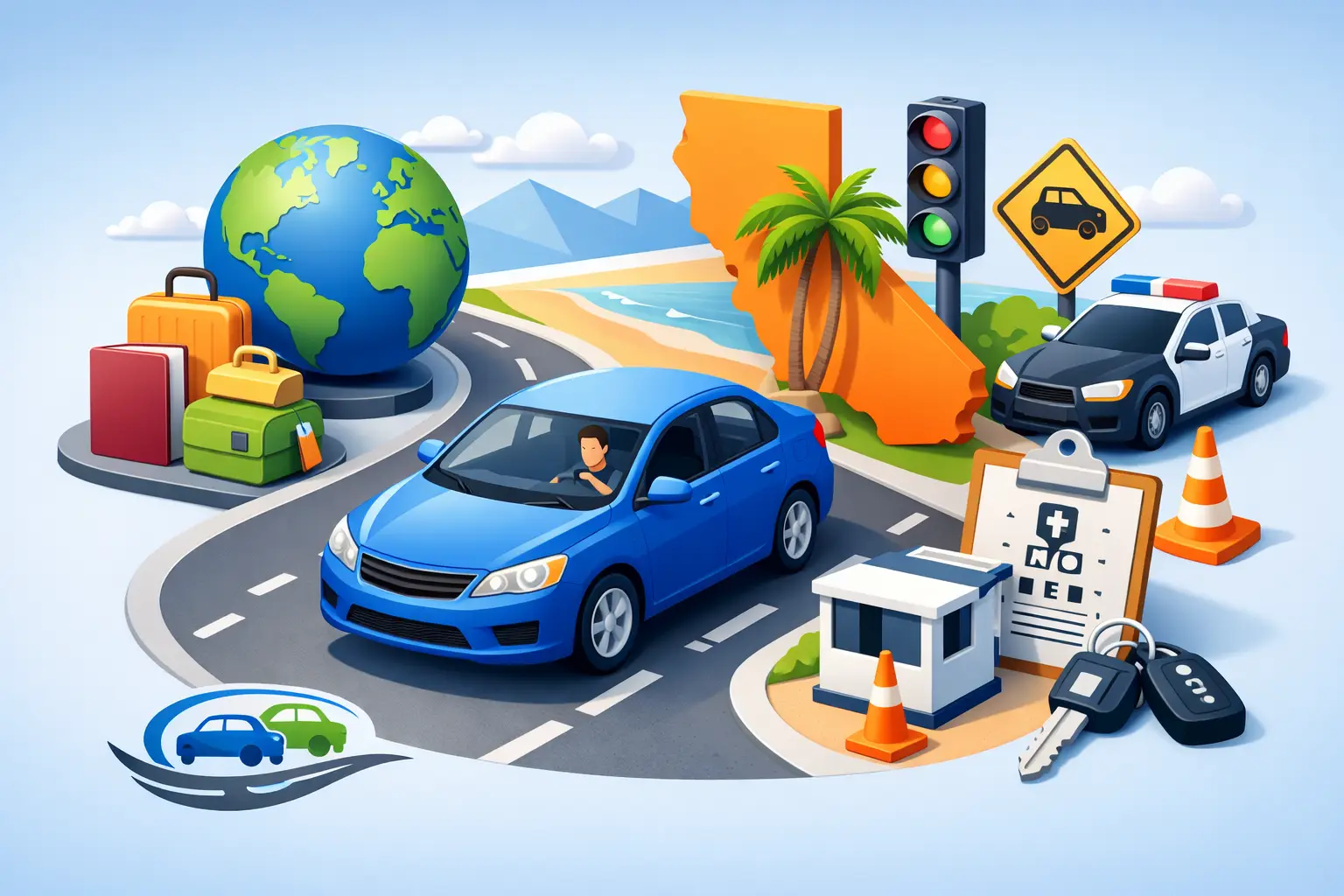
Foreign Driver California Rules Explained
If you recently moved to California or you’re planning to drive here with a license from another country, the question usually comes up fast: what are the actual foreign driver California rules, and how long can you legally drive before you need a California license? The short answer is that it depends on whether you are visiting or living here. That distinction matters more than most people expect.
California is not especially difficult for international drivers, but it is specific. Many people assume an overseas license automatically works the same way as a license from another US state. It does not. Others assume an International Driving Permit solves everything. It does not. If you get this wrong, the problem is not just a ticket. It can affect insurance, liability after a crash, and your ability to pass a DMV test on schedule.
Foreign driver California rules start with residency
The most important rule is simple: visitors can usually drive in California with a valid driver’s license from their home country. Residents are expected to get a California driver’s license within a short period after establishing residency.
That sounds clear until you ask what counts as a visitor and what counts as a resident. In practice, California looks at whether you are living here on more than a temporary basis. If you moved here for work, rented or bought a home, registered to vote, paid resident tuition, or took other steps that show California is now your home, the DMV may treat you as a resident.
For new residents, California generally expects you to get a state license within 10 days of becoming a resident. That rule catches many foreign drivers off guard. Someone may have a valid license from abroad and still be considered unlicensed for California purposes if they have already established residency.
If you are only here for tourism, business meetings, or a short family visit, the analysis is different. A valid foreign license is often enough for temporary driving, assuming the license class matches the vehicle you are driving.
Can visitors drive with a foreign license in California?
Yes, in many cases they can. A nonresident who is at least 18 years old and holds a valid driver’s license from their home country may generally drive a car in California without getting a California license right away.
The key word is valid. If the license is expired, suspended, restricted in a way that does not allow the driving you are doing, or not appropriate for the vehicle, you can run into trouble. The license also needs to be carried with you while driving.
Language can be another practical issue. California officers may accept a foreign license, but if the document is not in English, an International Driving Permit can help translate the license details. That permit is not a stand-alone license. It works only alongside your actual valid foreign license.
What an International Driving Permit does and does not do
An International Driving Permit is often misunderstood. It is basically a translation document. It can make communication easier during a traffic stop, rental car pickup, or insurance claim. It does not replace your original license, and it does not give you independent permission to drive.
This matters because some drivers carry only the permit and leave the home-country license elsewhere. That is a mistake. If you are stopped, you should have the valid foreign license with you, and the permit if applicable.
When foreign drivers need a California license
If you become a California resident, you should plan to get a California license quickly. For most international drivers, that means applying at the DMV, passing the knowledge test, meeting identity and residency requirements, and taking a behind-the-wheel test unless a specific exception applies.
California does not generally allow a simple conversion from a foreign license the way some countries do. Even experienced drivers often need to complete the full testing process. That can be frustrating, especially for drivers who have years of experience abroad, but the state wants to verify knowledge of California laws and local driving habits.
This is where preparation matters. Strong drivers can still fail because the test is not only about vehicle control. It also measures observation, lane positioning, speed management, right-of-way decisions, and consistency with California DMV expectations.
Common situations where the answer changes
A college student is one example of where it depends. Some students may remain nonresidents for licensing purposes, while others take enough steps in California that they appear to be residents. A long-term work visa holder may also be treated differently from a short-term business traveler. Someone staying with family for a few weeks is not in the same position as someone who signed a year-long lease and started a local job.
If there is any doubt, it is safer to treat the issue seriously and verify your status before you keep driving. Waiting until after a stop, collision, or failed DMV appointment creates avoidable risk.
Insurance matters just as much as license rules
One of the biggest gaps in conversations about foreign driver California rules is insurance. Legal ability to drive and insurance coverage are related, but they are not identical.
Even if a visitor can legally drive with a foreign license, that does not guarantee every insurance carrier will handle the risk the same way. Rental car companies, personal auto policies, and temporary insurance options may all have different documentation requirements. Some may want a translated license or an International Driving Permit. Some may insure a foreign driver easily, while others may place limits or charge more.
If you are borrowing a friend’s car, do not assume you are automatically covered. Coverage can depend on the policy language, the driver’s status, and whether the owner gave permission. After a crash, those details matter a lot.
For new residents, delaying the California license process can create even more insurance complications. A carrier may ask when residency began. If there is a mismatch between your residency status and your licensing status, that can become a problem at exactly the wrong time.
California driving rules that surprise international drivers
Even experienced drivers from other countries need time to adjust. California roads move fast, and the expectations are different from what many drivers learned at home.
Right turns on red are legal in many situations after a full stop, unless a sign prohibits it. Four-way stops depend on order of arrival, with tie situations typically going to the driver on the right. School zones, bicycle lanes, and pedestrian right-of-way rules are enforced seriously. Freeway merges are another stress point because traffic may be heavier and faster than what some international drivers are used to.
Cell phone laws also catch people off guard. Handheld phone use while driving is restricted, and that includes common behaviors like checking directions in your hand at a stoplight. California also expects drivers to understand lane discipline, safe following distance, and the difference between posted speed and safe speed for conditions.
These are not small technicalities. They are some of the exact areas where capable drivers lose points on the DMV road test or make expensive mistakes in real traffic.
Preparing for the DMV as a foreign driver
If you need a California license, do not treat the process as a formality. Many international drivers are confident behind the wheel but unfamiliar with how the DMV scores performance.
Start with the California Driver Handbook and focus on local rules, signage, and right-of-way decisions. Then practice in the exact type of traffic you expect on test day. Residential streets, multilane roads, lane changes, intersections, and curbside maneuvers all matter. If English is not your first language, give yourself extra time to study the wording of questions, not just the concepts.
Professional instruction can speed this up because it closes the gap between driving experience and California test expectations. At Newport Driving School, this is often where international drivers make the biggest jump in confidence. A patient instructor can identify habits that were perfectly normal in another country but create problems here, such as rolling stops, different mirror routines, or hesitation during unprotected left turns.
The safest approach if you’re unsure
If your situation falls into a gray area, do not rely on guesses from friends, landlords, or social media posts. Foreign driver California rules are manageable, but the details matter. Your visa type, living arrangement, employment, and length of stay can all affect what you should do next.
The safest approach is to assume that residency triggers action quickly. If you are becoming established in California, start planning for the DMV process now rather than later. If you are visiting, keep your license valid, carry proper documents, and make sure insurance is handled before you drive.
A good rule of thumb is this: if California is becoming part of your daily life, your driving documents should reflect that too. Getting ahead of the process does more than keep you legal. It makes you calmer, better prepared, and much more confident every time you get behind the wheel.

Related Posts

Comments (0)