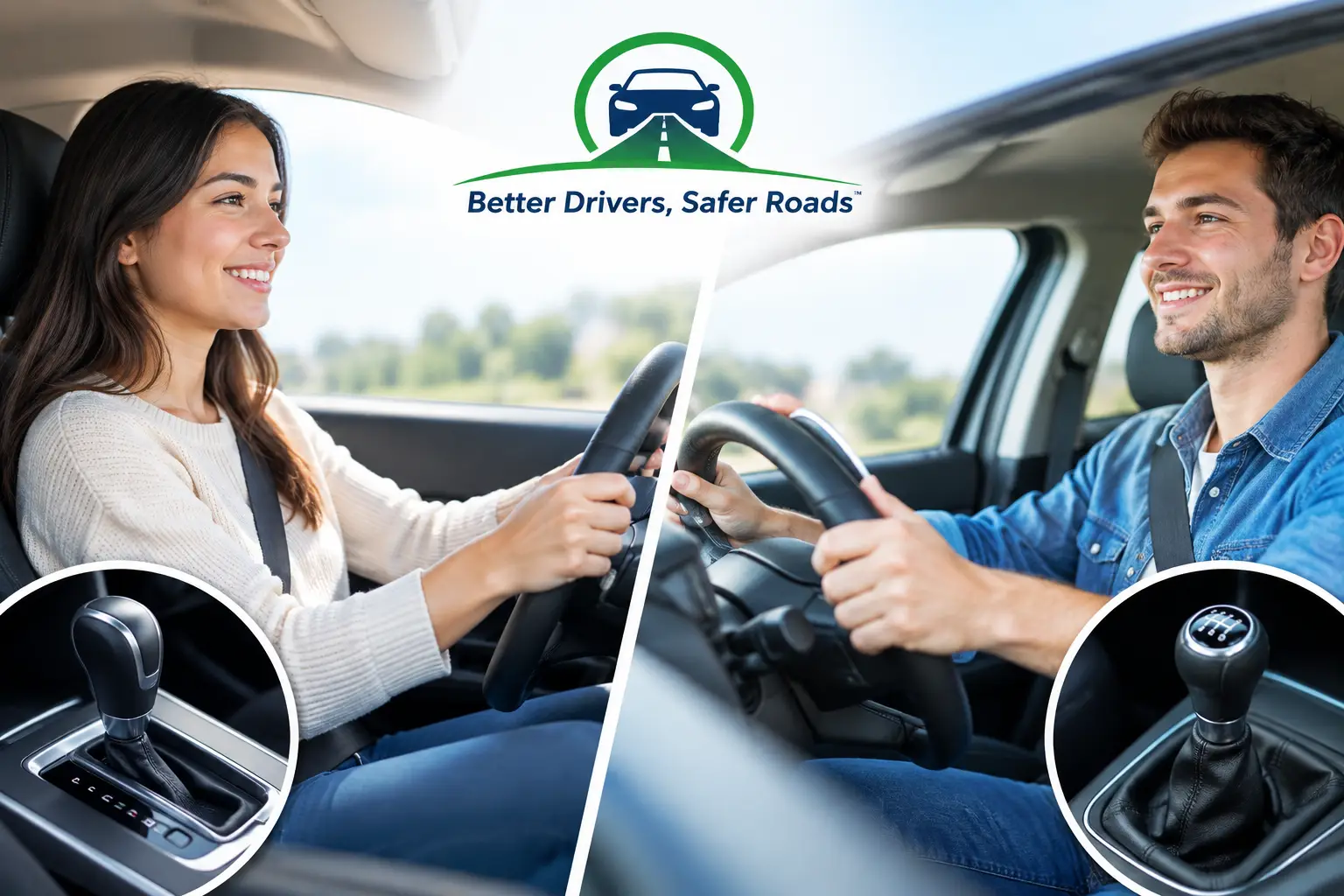
Choosing automatic versus manual driving lessons affects your license, confidence, practice options, and DMV goals. Learn which fit is right for you today.
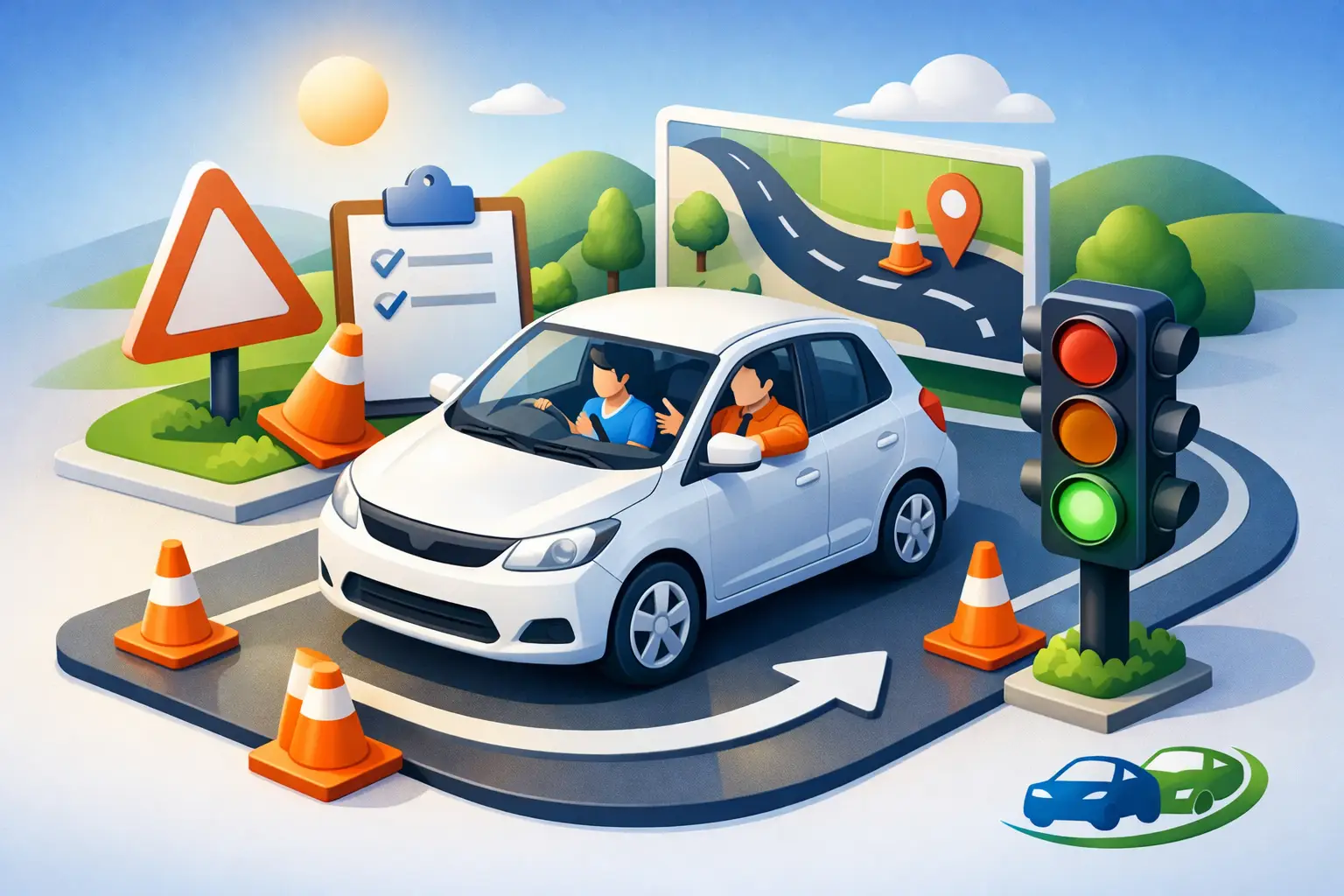
Driving Lessons That Build Real Confidence
A student can spend hours watching driving videos, reading the handbook, and practicing in an empty parking lot – then freeze the moment traffic starts moving around them. That gap is exactly why driving lessons matter. Good instruction does more than explain the rules. It teaches you how to apply them calmly, safely, and consistently when the road gets busy, the test feels close, and the pressure is real.
For some students, the challenge is obvious. They are teenagers with little experience, adults learning later than expected, or drivers who recently moved to California and need to adjust to different laws and road habits. For others, the issue is less visible. They may already know the basics but still struggle with lane changes, left turns, freeway merging, or test anxiety. In both cases, the right training path is not just about seat time. It is about structured practice with an instructor who can identify what is holding a student back and correct it before it becomes a habit.
What good driving lessons actually teach
A lot of people think driving instruction is mostly about parallel parking, stop signs, and passing the road test. Those skills matter, but they are only part of the picture. Strong lessons are built around judgment. Students need to learn how to scan ahead, manage speed, read other drivers, and respond early instead of reacting late.
That is one reason personalized instruction makes such a difference. Two students can make the same mistake for completely different reasons. One may be rushing because of nerves. Another may not yet understand right-of-way. A patient instructor can spot the difference and teach the correction that fits the student, rather than repeating the same generic advice.
The best results usually come from lessons that combine technical skill with confidence-building. If a learner can steer smoothly but panics at an unprotected left turn, that student is not road-ready yet. If another student knows the rules but hesitates so long at intersections that traffic stacks up behind them, that also needs attention. Safe driving requires control, awareness, and decision-making working together.
Driving lessons for different kinds of students
Not every learner starts at the same place, and a one-size-fits-all approach rarely works for long. Teen drivers often need step-by-step coaching and clear repetition. Parents also want reassurance that their child is learning from a professional who prioritizes safety, not shortcuts.
Adult learners often bring a different set of concerns. Some are busy professionals who want efficient, focused training. Others have delayed learning for years and feel embarrassed to begin. In practice, adult students usually do best when instruction is direct, respectful, and paced around real-world goals such as commuting, school pickup, or preparing for the DMV test.
International drivers are another group that benefits from targeted support. Many already know how to operate a vehicle, but California driving expectations can be different from what they are used to. Right turns on red, lane discipline, residential speed control, school zones, and DMV road test standards may all require adjustment. In these cases, lessons should not start from zero, but they should never assume every existing habit will transfer safely.
Seniors and drivers returning after a long break may need something else entirely. Sometimes they want a refresher to feel comfortable again. Sometimes a family member wants reassurance that their loved one can still drive safely. That kind of instruction should be respectful, calm, and specific. The goal is not to create stress. It is to honestly assess current ability and strengthen the skills that support independence.
Why practice alone is not always enough
Private practice is helpful, but it has limits. Friends and family members often mean well, yet they may give inconsistent directions, miss safety issues, or pass down habits that do not match current DMV expectations. Some become impatient. Others overcorrect every move, which can make an anxious student even more tense.
Professional instruction offers a different environment. Lessons are designed around observation, correction, and repetition. Students get feedback in real time, not later when the moment has passed. They also learn in a vehicle set up for instruction, which adds another layer of safety while new drivers build skill.
There is also a practical advantage. An experienced instructor knows the difference between a minor mistake and a pattern that could lead to a failed road test or a dangerous situation. That means lessons can focus where they matter most. A student who is already comfortable with basic turns may need far more work on mirror checks, speed management, or decision-making at busy intersections.
What to look for in driving lessons
The first thing to look for is legitimacy. Students and parents should want trained, qualified instructors and a school with a long record of serving drivers responsibly. Safety claims should be backed by real experience, not just marketing language.
After that, look closely at personalization. Good programs are not built around a fixed script for every student. They adjust based on age, experience, confidence level, and the reason the student is seeking help. Someone preparing for a first license has different needs than someone who failed a DMV road test, wants manual transmission training, or needs defensive driving support after years away from the wheel.
Convenience matters too, especially for busy families and working adults. Pickup and drop-off options, flexible scheduling, and access to both in-car and classroom or online learning can make training much easier to complete consistently. The most effective plan is the one a student can actually follow.
It also helps to choose a school that can support more than one stage of the process. Some students need driver education, behind-the-wheel instruction, road test preparation, and test-day support. Others only need a refresher lesson before the exam. Having those options in one place tends to create a smoother experience because the instruction stays consistent from start to finish.
How driving lessons help with DMV test success
Passing the DMV road test is not the only goal, but it is still a major milestone. Students naturally want to know whether their training will help them perform under test conditions. The answer is yes – if the lessons include more than casual practice.
Road test preparation should teach students what examiners watch for every time: observation habits, smooth control, safe lane changes, stops made in the right place, proper signaling, and overall awareness. It should also prepare them for the stress of being evaluated. Many students do not fail because they lack all ability. They fail because nerves cause rushed decisions or forgotten routines.
That is why repetition matters. When a student has practiced key maneuvers correctly enough times, the basics hold up better under pressure. A calm, structured lesson plan can reduce uncertainty and replace it with routine. This is especially useful for students who have already failed once and feel that the next attempt carries more weight.
Still, there is an important trade-off to understand. A lesson plan focused only on passing the test may produce short-term results without building long-term confidence. The stronger approach is to prepare for both. A student should leave training ready to pass and ready to drive independently afterward.
Confidence comes from competence, not hype
Many people say they want to feel confident behind the wheel. That makes sense, but confidence by itself is not the target. Real confidence grows from competence. It comes from knowing how to merge safely, handle a four-way stop without confusion, recover from a minor mistake, and stay focused when other drivers behave unpredictably.
That kind of confidence takes guided repetition. It also takes instruction that is patient without being passive. Students need encouragement, but they also need honest correction. If an instructor avoids hard feedback to keep the lesson comfortable, the student may feel better in the moment and less prepared later.
At Newport Driving School, that balance matters. Students need professionalism, clear teaching, and an approach that respects different learning styles without lowering standards. Whether someone is a first-time teen driver, an adult beginner, an international driver adapting to California rules, or a nervous test-taker, the most effective lessons are the ones built around that individual student.
Driving is one of the few daily skills where small decisions carry serious consequences. That is why quality instruction is worth choosing carefully. The right lessons do not just help you get through the test. They help you become the kind of driver who can handle real roads with sound judgment, steady habits, and confidence that lasts after the instructor steps out of the car.

Related Posts


Comments (0)