Use this teen driving lesson timeline guide to plan California permit practice, professional lessons, and road-test readiness without rushing safety first.
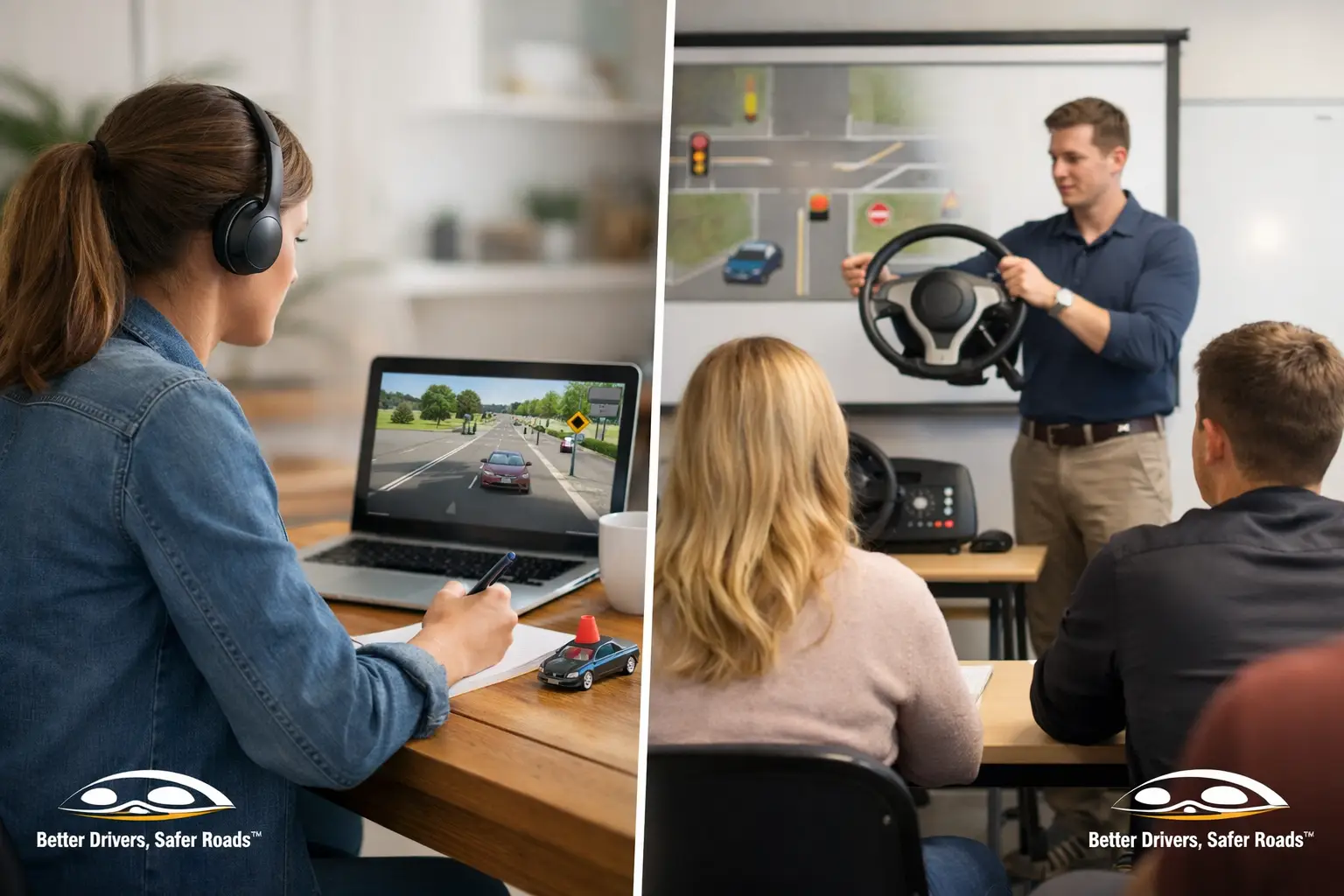
Online Drivers Ed Versus Classroom Compared
A teen may finish a lesson at the kitchen table after soccer practice. Another may learn better by sitting in a room, hearing an instructor explain a right-of-way rule, and asking a question before the bell rings. That is the real choice in online drivers ed versus classroom instruction: not which format is universally better, but which one helps a student retain safe-driving knowledge and stay on track.
For California learners, driver education is more than a box to check before applying for a permit. It builds the traffic-law knowledge that supports every behind-the-wheel decision later, from recognizing a school zone to judging a safe gap at an intersection. The right format should make that information understandable, manageable, and memorable.
What Both Driver Education Formats Should Provide
A state-approved driver education program, whether online or in a physical classroom, should teach the same essential foundation. Students need a clear understanding of California traffic laws, road signs, licensing rules, sharing the road, distracted driving, alcohol and drug risks, defensive-driving habits, and the responsibilities that come with a license.
Neither option replaces professional behind-the-wheel training. Reading about a blind spot is not the same as checking one before changing lanes. Learning a parking procedure is useful, but performing it safely with an instructor in the passenger seat is where knowledge becomes skill. The strongest training plan pairs quality driver education with sufficient supervised practice and professional in-car lessons when needed.
The meaningful difference is how students receive, process, and review the material.
Online Drivers Ed Versus Classroom: The Key Differences
Online driver education is designed around flexibility. Classroom instruction is designed around structure and live interaction. Each can be effective, but they serve students differently.
Online driver education offers control over time and pace
Online courses are often a practical choice for busy high school students, working adults, parents managing family schedules, and learners who prefer to study in shorter sessions. A student can complete a module after dinner, pause when they need a break, and return to a difficult topic for review. That flexibility can reduce the pressure of trying to fit fixed class meetings into an already full week.
It can also help students who learn best independently. Many online courses use lessons, videos, quizzes, and progress checks to break large topics into manageable pieces. A learner who needs extra time with freeway rules or DMV signs can revisit those sections instead of trying to absorb everything during one classroom session.
The trade-off is personal accountability. Online learning works best when students set aside regular study time and complete the work thoughtfully. Clicking through a lesson just to finish it may satisfy a task list, but it does not prepare someone to make sound decisions in traffic. Parents can help teens by checking progress, discussing lessons, and connecting course material to situations they see on real drives.
Classroom instruction creates routine and real-time support
A classroom course provides scheduled meeting times, direct instruction, and the chance to ask questions at the moment confusion arises. For students who benefit from a predictable routine, that structure can make it easier to complete driver education without procrastinating.
The classroom environment can be especially valuable for learners who feel overwhelmed by written material, have trouble staying focused alone, or want to hear an instructor explain how rules apply in everyday situations. A qualified instructor can clarify why a particular right-of-way rule matters, address common misunderstandings, and use discussion to make safety lessons feel more concrete.
Classroom learning also creates a shared experience. When students hear questions from others, they often discover gaps in their own understanding. For example, one student may ask about a four-way stop, while another realizes they were also unsure about who moves first. That kind of immediate discussion is difficult to duplicate in a self-paced course.
The limitation is scheduling. Students must attend at designated times and locations, which may be challenging for families with demanding school, work, or transportation commitments. Missing a session can also create more work later, depending on the program’s attendance and make-up policies.
Which Format Fits Your Learning Style?
The best choice usually becomes clearer when students and parents look beyond convenience. Consider how the learner has succeeded in other subjects.
A self-motivated student who regularly completes schoolwork independently and prefers working at their own pace may do very well with online driver education. This format can also be a strong fit for adults who need to fit licensing preparation around work or family obligations. International drivers reviewing California-specific rules may appreciate the ability to revisit lessons before taking the written test.
A student who learns through conversation, benefits from direct reminders, or tends to delay independent assignments may be better served by a classroom setting. This is not a question of intelligence. Driving involves a large amount of new information, and some learners retain it best when an experienced instructor presents it in person and checks for understanding along the way.
For nervous beginners, the answer may depend on what creates confidence. Some feel calmer studying privately before asking questions during in-car lessons. Others are reassured by being able to ask an instructor for clarification immediately. The goal is not to force a learner into a preferred format. It is to choose an environment where they can focus and ask for help.
Safety and DMV Preparation Matter More Than Format
Families often compare online and classroom options as if the decision ends with convenience. A better question is whether the program gives the student practical knowledge they can use on the road and supports their path toward the California DMV knowledge test.
Look for a course that explains rules in plain language, includes meaningful review questions, and addresses real risks rather than treating driver education as memorization. Students should come away understanding why scanning intersections matters, how speed affects stopping distance, when to yield, and how distractions change reaction time.
It is also wise to verify that the course meets California requirements for the learner’s age and licensing stage. Teen drivers working toward a permit have different requirements than adults who are preparing for a knowledge test after moving to California. A reputable school should clearly explain what the course covers, what certificate or completion record is provided, and what additional training the student may need.
At Newport Driving School, students can choose driver education and behind-the-wheel instruction that match their schedule and learning needs while keeping safety, professionalism, and California licensing requirements at the center of the plan.
How Parents Can Support Either Choice
Parents do not need to become driving instructors to reinforce good learning. A few short conversations can make driver education more useful. Ask your teen what they learned about intersections, pedestrians, or freeway merging. Point out road signs during errands. Discuss how a driver’s choices affect passengers, cyclists, and people walking nearby.
For an online course, help establish a realistic schedule. Completing smaller sections consistently is usually more effective than rushing through hours of material in one weekend. For classroom instruction, make attendance a priority and encourage the student to write down questions that come up between sessions.
Most importantly, treat the course as the beginning of a longer safety process. Permit practice should be calm, gradual, and matched to the student’s readiness. A new driver may first need quiet neighborhood streets before moving to busy intersections, multilane roads, night driving, or freeways. Professional instruction can provide the patient guidance and objective feedback that family practice alone may not always provide.
Make the Choice Based on Follow-Through
Online driver education is not automatically easier, and classroom instruction is not automatically more effective. A motivated student can gain a great deal from online lessons. A student who needs schedule flexibility may have a better chance of completing an online program carefully than a classroom course they struggle to attend. At the same time, a learner who needs live explanation and a consistent routine may get far more value from an in-person class.
Choose the setting that makes it most likely the student will show up, pay attention, ask questions, and retain what they learn. A driver education course lasts a limited number of hours. The habits it encourages can shape every mile that follows.

Related Posts


Comments (0)