
Use this adult beginner driving guide to build safe habits, manage nerves, prepare for California DMV requirements, and progress safely on the road now.
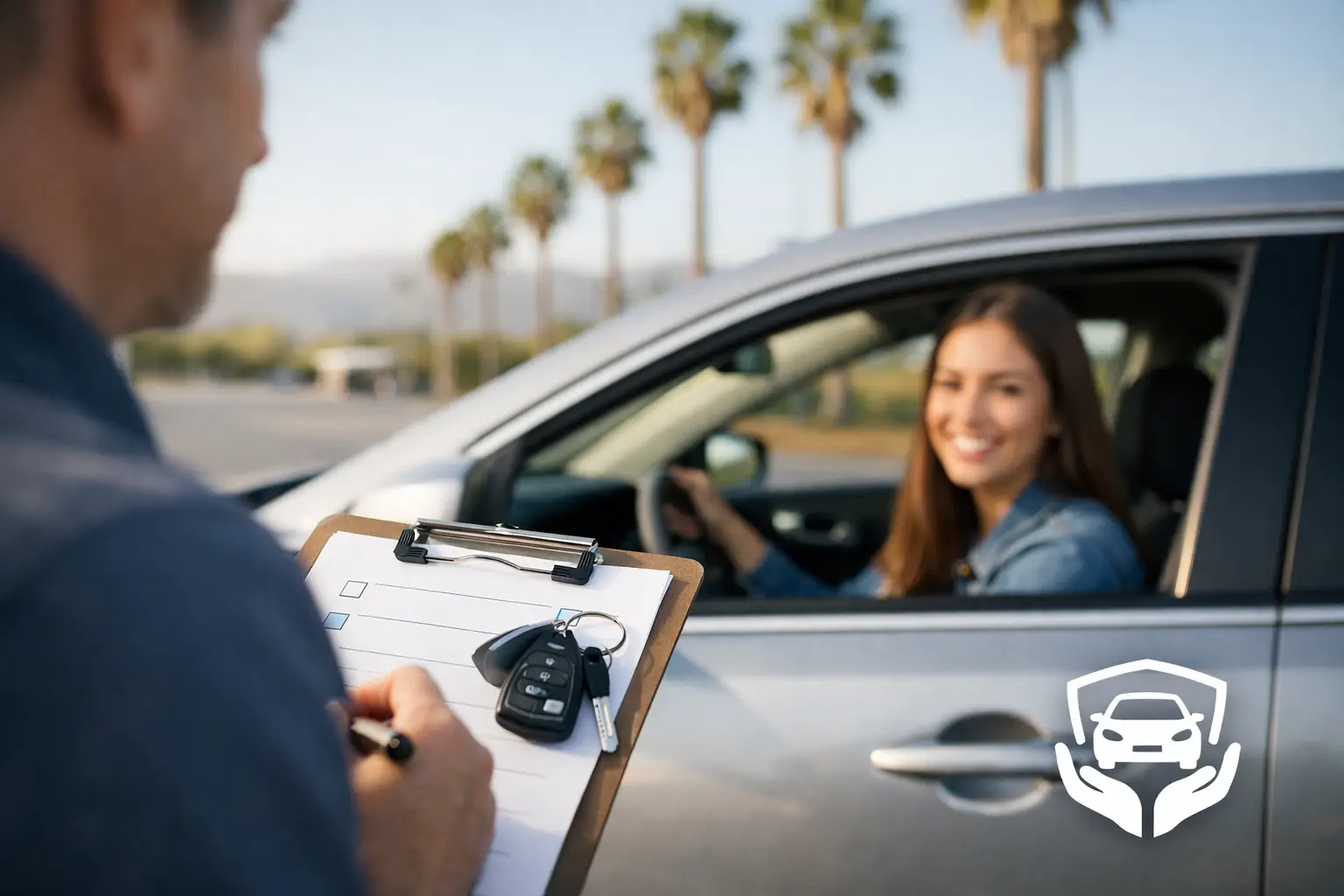
California Road Test Checklist Guide for Test Day
A road test can feel like one short drive with a lot riding on it. The good news is that the examiner is not looking for perfect nerves or flashy driving. This California road test checklist guide focuses on what matters: arriving prepared, operating a safe vehicle, and making steady decisions that show you can drive responsibly on your own.
The best preparation starts before test day. A student who knows where the controls are, has the correct documents, and has practiced the required maneuvers can spend their attention on the road instead of scrambling in the parking lot.
California Road Test Checklist Guide: Before You Leave Home
Start with your appointment details. Confirm the DMV office, date, arrival time, and any instructions provided with your appointment. Plan to arrive early enough to park, check in, and settle your nerves without rushing. Being late can mean losing the appointment, even if you are otherwise ready.
Bring the documents required for your situation. Most applicants need their permit or license document, proof of financial responsibility for the vehicle being used, and any required completion certificates or paperwork. Minors may have additional requirements, including a parent or guardian signature. Requirements can change, so review your DMV appointment confirmation and current instructions before the test rather than relying on an old checklist from a friend.
Your vehicle must also be legal and safe to use for the exam. A test cannot begin in a car with an obvious safety issue, expired registration, or missing proof of insurance. If you are borrowing a vehicle, check these items well in advance. Do not assume the owner keeps every document in the glove box.
Before leaving, complete a simple vehicle walk-around:
- Make sure the license plates are properly attached and the registration is current.
- Check that the headlights, brake lights, turn signals, and horn work.
- Confirm the windshield is clear, mirrors are secure, and tires appear properly inflated.
- Verify that the doors, seat belts, parking brake, and front passenger seat are working correctly.
- Remove dashboard clutter or loose items that could distract you or roll under a pedal.
A warning light does not always mean an automatic rejection, but a vehicle with a safety concern may not be accepted. If there is any doubt, use a dependable test vehicle that you have already practiced in.
Set Up the Car Before the Examiner Enters
The first few minutes tell the examiner whether you understand basic vehicle control. Adjust your seat so you can press the brake pedal firmly without stretching and can maintain a comfortable bend in your arms. Set the inside and outside mirrors before putting the car in motion. Buckle your seat belt, make sure your phone is silenced and put away, and ask passengers to remain quiet.
Be ready to identify and operate the vehicle controls. The examiner may ask you to show the left or right turn signal, hazard lights, headlights, windshield wipers, defroster, horn, or parking brake. You do not need to narrate every action, but you should know the controls without searching for them.
If you are using an unfamiliar car, practice with it first. A larger SUV, a sensitive brake pedal, a backup camera layout, or a different turn-signal position can affect your confidence. Back-up cameras are helpful, but they do not replace checking your mirrors and looking over your shoulder when appropriate.
Driving Skills the Examiner Needs to See
California road tests evaluate safe habits, not just whether you reach the end of the route. Examiners watch your observation, speed control, lane position, right-of-way decisions, signaling, and ability to respond to ordinary traffic conditions.
Start by making your safety checks visible. Before pulling away from the curb or parking space, check mirrors and blind spots, signal if needed, and enter traffic only when there is a safe gap. A quick shoulder check matters because mirrors do not show every area beside your vehicle.
Maintain a speed that fits the posted limit and the conditions. Driving too fast is risky, but driving far below the flow of traffic without a reason can also create problems. Near schools, intersections, parked cars, pedestrians, or limited-visibility areas, reduce speed and show that you are actively scanning for hazards.
At stop signs, make a complete stop behind the limit line, crosswalk, or intersection edge. Let the car settle fully before proceeding. Then check left, right, and left again before entering. At four-way stops, do not wave others through when right-of-way rules clearly apply. Predictable decisions are safer than overly polite but confusing ones.
For turns, signal early, move into the correct lane, slow smoothly, and check for pedestrians and cyclists before turning. Finish in the appropriate lane. On a right turn, avoid swinging wide. On a left turn, do not cut into the wrong lane or pull into the intersection so far that you block cross traffic if the light changes.
Lane changes deserve deliberate attention. Check mirrors, signal, check your blind spot, and move only when the lane is clear. Keep your movement gradual and maintain a steady speed. A signal by itself is not permission to change lanes.
Practice the Maneuvers That Create Test-Day Mistakes
Many applicants know the rules but lose points during low-speed maneuvers because they stop looking around. Practice in the same type of car you will use for the exam whenever possible.
You may be asked to back in a straight line along a curb. Keep the vehicle close to the curb without touching it, move slowly, and look over your right shoulder while reversing. Do not rely only on the rearview mirror or camera.
Curb parking is another skill worth practicing. Know how to park uphill and downhill, including the direction to turn your front wheels when a curb is present. Secure the vehicle with the parking brake when appropriate. Even when the route does not include a formal parallel parking exercise, you should be comfortable controlling the car at low speeds near curbs.
You should also rehearse entering and exiting traffic, making unprotected turns, handling intersections with pedestrians, and following directions without panicking if you miss a turn. If you take a wrong turn, continue safely. The examiner can redirect you. A sudden correction, unsafe lane change, or rushed turn is much worse than going slightly off route.
Common Reasons Otherwise Capable Drivers Lose Points
The road test is not designed to trick you, but small habits can add up. Rolling stops, late signals, incomplete blind-spot checks, drifting within a lane, and stopping too far from an intersection are common issues. So is treating a green light as a guarantee that the intersection is clear.
Anxiety can make these mistakes more likely. Try a short practice drive before your appointment, but do not exhaust yourself with hours of last-minute driving. Eat something light, hydrate, and give yourself extra travel time. If you feel tense, take one slow breath whenever the car is safely stopped. Your goal is not to perform perfectly. Your goal is to drive with the same calm, legal habits you have practiced.
For teens, a parent can help by avoiding test-day coaching in the parking lot. For adult and international drivers, the adjustment is often less about basic vehicle control and more about California-specific habits, including complete stops, blind-spot checks, pedestrian awareness, and right-of-way rules. Personalized practice can make that transition much faster.
A Final Practice Plan That Builds Confidence
In the week before the test, complete several focused drives instead of repeating the same familiar route. Spend one session on intersections and turns, another on lane changes and traffic flow, and another on parking, backing, and curb procedures. Ask a qualified instructor or experienced supervising driver to point out patterns, not just single mistakes.
A DMV road test preparation lesson can be especially useful when you have failed before, feel anxious, have limited practice support, or are unfamiliar with the testing area. Newport Driving School has worked with California learners since 1997 and can tailor behind-the-wheel practice to the skills that need the most attention.
On test day, trust the preparation you have done. Check your documents, inspect the car, set up your seat and mirrors, and drive one decision at a time. Safe, observant driving is the result you are there to demonstrate.

Related Posts

Comments (0)