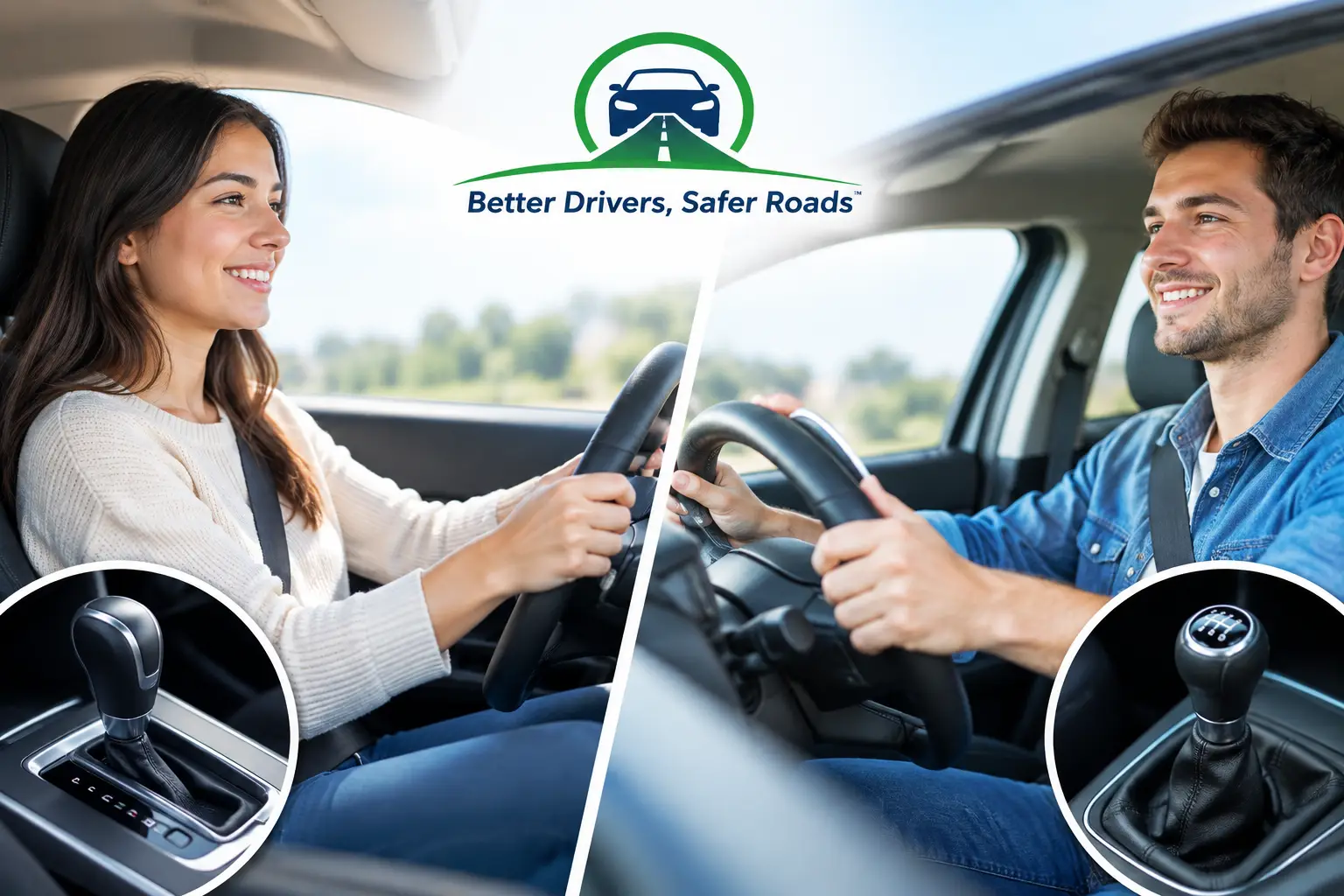
Choosing automatic versus manual driving lessons affects your license, confidence, practice options, and DMV goals. Learn which fit is right for you today.
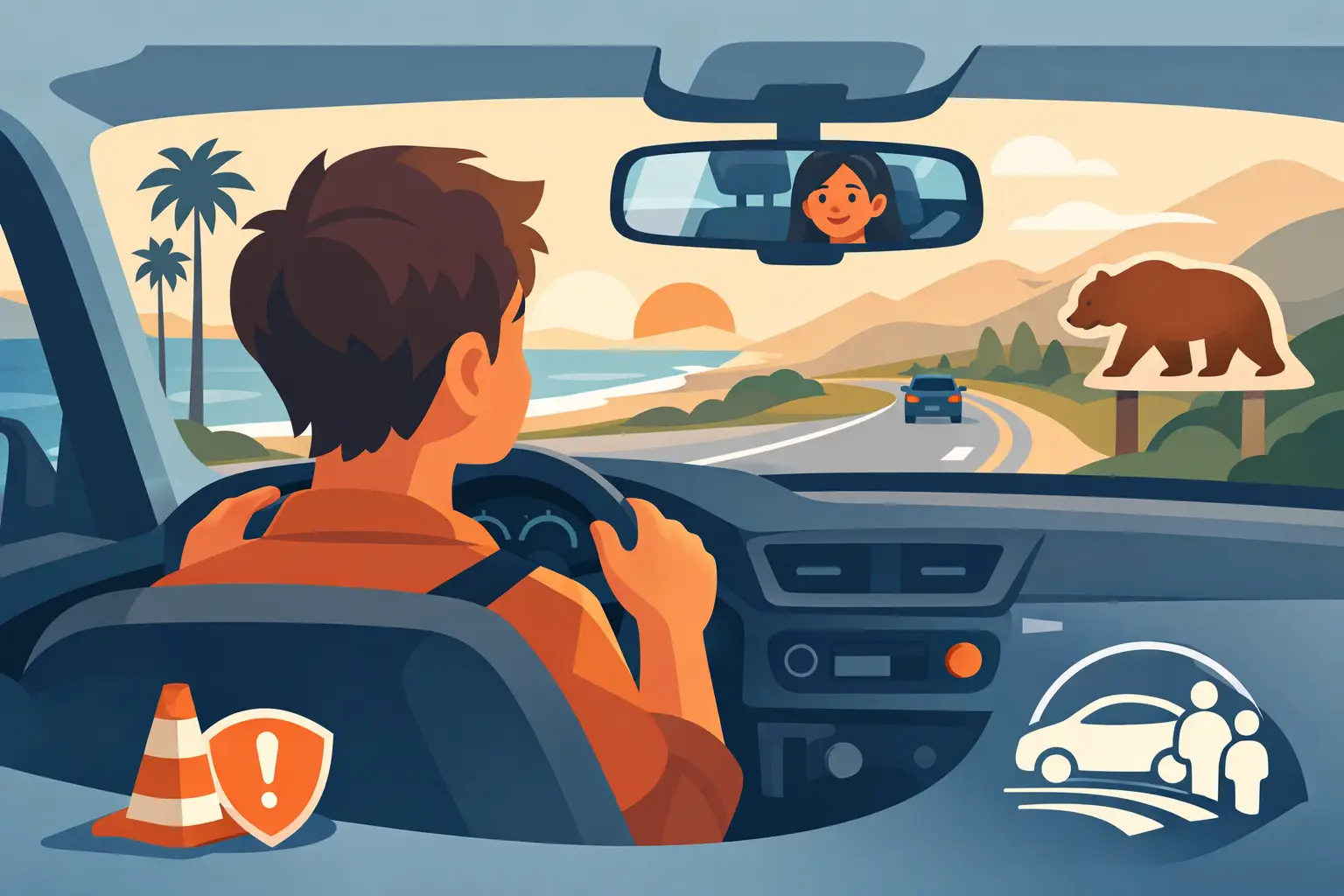
California Teen Driving Guide for Safer First Years
A learner’s permit is more than a ticket to sit behind the wheel. It is the start of a high-responsibility skill that a teen will carry into school, work, family life, and every trip in between. This California teen driving guide gives teens and parents a practical path from the first DMV test through the early months of independent driving, when good habits matter most.
For parents, the goal should not be to get a license as quickly as possible. The real goal is to help a young driver make calm, informed decisions in traffic, manage distractions, and recognize risks before they become emergencies. A road test is one checkpoint. Safe driving is the long-term result.
Start With California’s Permit Requirements
Most California teens can apply for an instruction permit at age 15 1/2. Applicants who are under 17 1/2 generally need to complete an approved driver education course before receiving a permit. They must also pass the DMV knowledge test, pass a vision screening, provide required identity documents, and have a parent or guardian sign the application.
Passing the written test shows that a student has studied the rules. It does not mean they are ready for busy intersections, freeway merges, or an unexpected pedestrian stepping into the road. That is why the permit phase is so valuable. It gives teens time to connect classroom rules with real road situations under supervision.
A permit holder may drive only with a qualified supervising driver. In most cases, that means a California-licensed parent, guardian, driving instructor, spouse, or other adult who is at least 25 years old. The supervising driver needs to be close enough to take control if necessary. A distracted adult scrolling through a phone is not providing meaningful supervision.
California DMV requirements can change, so families should always confirm current forms, fees, and testing rules before scheduling an appointment. Still, the preparation strategy remains the same: study carefully, ask questions, and treat the permit test as the beginning of training rather than the finish line.
Build Practice Hours That Actually Teach Something
Before a teen can apply for a provisional license, California generally requires the permit to be held for at least six months. During that time, the teen must complete at least 50 hours of supervised driving practice, including 10 hours at night. They also need six hours of professional behind-the-wheel instruction with a licensed driving school instructor.
Fifty hours can sound like a box to check. It should be treated as a structured learning plan. Repeating the same quiet neighborhood route may build basic steering confidence, but it will not prepare a teen for the full range of California driving conditions.
A productive practice schedule gradually introduces new environments. Begin with vehicle controls, smooth braking, turns, lane position, parking, and scanning at low speeds. Move next to residential streets and light traffic. As control improves, add multi-lane roads, busy shopping areas, freeway entrances and exits, nighttime driving, rain when conditions are safe, and unfamiliar routes.
Practice the decisions, not just the maneuvers
Many teens can make a clean three-point turn but still struggle to judge a safe gap in traffic. Others can merge onto a freeway but follow the vehicle ahead too closely once they are there. These are decision-making issues, and they need deliberate practice.
During each drive, parents can ask short questions before a situation develops: What is your next move? Where is your escape space? Who has the right-of-way here? What did you notice in that crosswalk? The purpose is not to overwhelm the student. It is to help them build the habit of seeing, predicting, and planning.
Keep feedback specific and calm. “You started braking too late for that red light” is more useful than “You need to be more careful.” Correct one or two priority issues at a time. Too much commentary can make a nervous teen freeze up or tune out.
Professional lessons are especially useful because they add a neutral voice and a proven progression. An instructor can identify habits a parent may miss, such as drifting in the lane, incomplete stops, late mirror checks, or braking too abruptly. Newport Driving School provides personalized behind-the-wheel instruction so students can work on the skills that need the most attention, rather than receiving a one-size-fits-all lesson.
A California Teen Driving Guide to the Provisional License
At age 16, a teen may qualify for a provisional driver’s license after meeting permit-holding, practice-hour, driver education, and professional training requirements and passing the DMV driving test. The provisional license creates more independence, but it comes with restrictions designed to reduce the risk of the first year of solo driving.
For the first 12 months, a provisional driver generally may not transport passengers under age 20 unless accompanied by a parent or guardian, a licensed driver age 25 or older, or a certified driving instructor. They also generally may not drive between 11 p.m. and 5 a.m. Exceptions may apply for work, school, medical needs, or other authorized reasons, but those situations have documentation requirements.
These rules can feel inconvenient, particularly when friends are making plans. They exist because passengers and late-night driving are two of the biggest risk multipliers for inexperienced drivers. A teen’s attention is limited at first. Add conversation, music, peer pressure, darkness, fatigue, or unfamiliar roads, and a normal trip can become much harder to manage.
Parents should set household rules that are at least as strong as state rules. Consider agreeing in advance on phone expectations, passenger limits, curfews, ride requests, and what a teen should do if they feel unsafe driving. A simple rule such as “Call home, no questions asked, if you are tired or uncomfortable” can prevent a bad decision.
Prepare for the Road Test Without Driving Like a Script
The DMV road test checks whether a student can drive safely, legally, and independently. Examiners look for observation, control, proper lane use, safe turns, speed management, right-of-way decisions, and awareness of conditions around the vehicle. They are not looking for a perfectly robotic performance.
Students often lose points because of small habits that signal a lack of awareness. Common examples include rolling through stop signs, failing to scan intersections, turning from the wrong lane, forgetting blind-spot checks before a lane change, speeding through a school zone, or parking too far from the curb. Nerves can make these problems more likely, which is why test preparation should include practice under realistic conditions.
A worthwhile road test lesson does more than rehearse a likely route. It helps a student develop a repeatable routine: adjust the seat and mirrors, check the surroundings before moving, look well ahead, maintain space around the vehicle, and make every maneuver with enough time to observe and respond. If the test location is unfamiliar, a professional pre-test evaluation can reveal whether the student is ready or needs more practice first.
Bring a properly registered and insured vehicle that is safe to drive. Check lights, signals, tires, mirrors, windshield wipers, brakes, and license plates before test day. Mechanical issues can delay a test before the student has a chance to demonstrate their skills.
The Habits That Matter After the License Arrives
The most dangerous moment for many new drivers is not the road test. It is the first stretch of unsupervised driving, when confidence often rises faster than judgment. A teen who has driven successfully for a few weeks may begin taking shortcuts, following too closely, or assuming other drivers will behave predictably.
Encourage a simple driving standard: leave space, look far ahead, and never let a phone compete with the road. California law restricts handheld phone use for drivers, and for teens, the safest approach is to put the phone away before the vehicle moves. Set navigation, select music, and respond to messages while parked.
Sleep also deserves more attention than it gets. A tired teen can be as impaired in judgment and reaction time as a distracted one. If a student has had little sleep, is upset, or feels pressured to rush, postponing the trip or finding another ride is a mature driving choice, not a failure.
Parents can keep the learning process going by occasionally riding along after licensure. Frame these drives as support, not surveillance. Ask what felt challenging, praise good decisions, and revisit skills that have not been used recently, such as freeway driving, parallel parking, or night driving.
A license gives a teen new freedom, but practice, patience, and sound judgment are what make that freedom safer. Give your young driver enough time to learn well, and the confidence that follows will be earned rather than assumed.

Related Posts

Comments (0)