Choosing automatic versus manual driving lessons affects your license, confidence, practice options, and DMV goals. Learn which fit is right for you today.
Emergency Braking Practice for Safer Stops
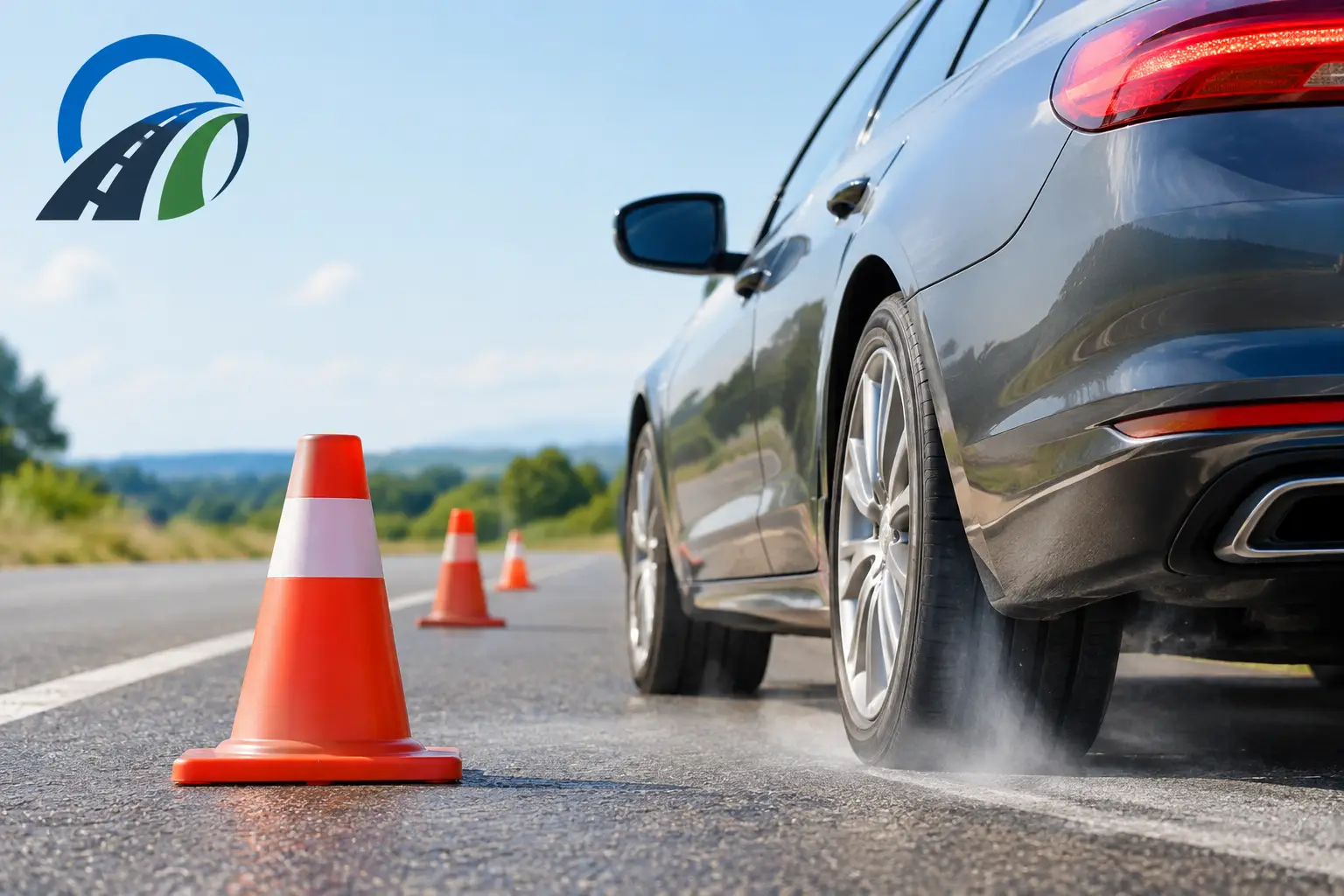
A child chasing a ball, a vehicle stopping suddenly in front of you, or traffic compressing on the freeway can leave only seconds to respond. Emergency braking practice gives drivers a chance to replace panic with a clear physical routine: recognize the hazard, brake firmly, keep the vehicle under control, and look for a safe path forward.
For new drivers, the goal is not to create fear or encourage aggressive driving. It is to understand what a modern vehicle feels like during a hard stop before a real emergency makes that lesson necessary. For parents, adult learners, and drivers rebuilding confidence, structured practice can make a meaningful difference.
Why Emergency Braking Practice Matters
Many students learn the rules of following distance and scanning traffic before they ever experience a true quick stop. Those rules matter because the best emergency stop starts well before the brake pedal is pressed. Space, attention, and a reasonable speed create the time needed to react.
Still, knowing the rule and applying it under pressure are different skills. A driver who has never felt the brake pedal pulse, heard tires working against the pavement, or experienced the car’s weight shift forward may hesitate or brake too lightly. Others may slam the brakes, stiffen their arms, close their eyes, or steer abruptly. Practice helps correct these natural but unsafe reactions.
It also teaches a practical truth: stopping distance is not fixed. Speed, tire condition, wet pavement, vehicle weight, road slope, and reaction time all affect how much room a vehicle needs. A hard stop at 25 mph in a dry, empty training area is very different from braking at freeway speed in rain. Good instruction builds respect for those differences rather than promising that any driver can stop instantly.
What a Controlled Emergency Stop Should Feel Like
In most late-model vehicles, anti-lock braking systems, commonly called ABS, are designed to prevent wheel lockup during severe braking. When ABS engages, the pedal may pulse or vibrate and the driver may hear a mechanical grinding or buzzing sound. That sensation can be surprising, but it is generally the system doing its job.
For an ABS-equipped vehicle, the usual response is to press the brake pedal firmly and continuously while keeping both hands steady on the wheel. Do not pump the brakes. Pumping can reduce braking effectiveness because the system is already rapidly modulating brake pressure.
The vehicle may still require more distance than expected, especially on wet, sandy, oily, or uneven pavement. ABS helps preserve steering control, but it does not repeal the laws of physics. Drivers should continue looking where they want the vehicle to go, not lock their vision on the obstacle ahead.
Older vehicles without ABS require a different technique, and a qualified instructor can explain it. That distinction is one reason emergency braking should not be taught as a one-size-fits-all internet tip. The vehicle, road conditions, and driver’s experience all matter.
How to Practice Emergency Braking Safely
Emergency braking practice belongs in a controlled environment with adequate space, clear visibility, and permission to use the area. It is not something to attempt in neighborhood traffic, parking-lot lanes with pedestrians, or on a public road simply to see what the car can do. A DMV-certified instructor can select an appropriate location and introduce the exercise at a speed that matches the student’s ability.
Before beginning, make sure the driver is seated correctly. The seat should allow a firm, full press of the brake pedal without stretching, and the steering wheel should be within comfortable reach. Secure loose items in the cabin, confirm tire condition is appropriate, and remove distractions. A driver who is adjusting a seatbelt or looking for a phone is not ready for a controlled drill.
Start at a low speed in an open area. The instructor should explain the stopping point, the visual cue for braking, and what the student should do after the vehicle stops. At first, the exercise may be more of a decisive stop than a full emergency stop. This lets the student feel weight transfer and pedal pressure without becoming overwhelmed.
As confidence and consistency improve, the driver can practice responding to a clear signal. The sequence is simple, but it takes repetition to become dependable: release the accelerator, look ahead and keep steering straight, apply firm brake pressure, and remain stopped until it is safe to proceed. Students should also practice checking mirrors and surroundings before moving again, since the hazard does not always end when the car stops.
A productive session focuses on quality rather than quantity. Two or three well-coached repetitions may teach more than repeated hard stops that fatigue the driver or the vehicle. If a student becomes tense, confused, or inconsistent, lower the speed and rebuild the movement with calm instruction.
Common Mistakes to Correct
The most common mistake is delayed braking. Drivers sometimes lift off the accelerator, pause, and then begin braking. In an emergency, that hesitation costs distance. The goal is not to stomp thoughtlessly on the pedal, but to move promptly from recognition to controlled action.
Another mistake is looking down at the pedal or staring at the object ahead. Keep the eyes up. Looking through the intended path helps the hands remain steadier and supports better decisions if steering is needed after braking.
Students may also loosen their grip on the wheel or turn sharply while braking. If the vehicle is traveling straight and there is no safe escape route, maintain a balanced grip and brake in a straight line. If an escape path is truly available, the driver must make that decision early and steer smoothly. Sudden swerves can create a second collision, especially around curbs, parked vehicles, cyclists, or adjacent traffic.
Finally, some drivers assume that a successful hard stop means they can follow more closely. The lesson should be the opposite. Emergency braking is a last line of defense, not a substitute for space, speed control, and focused driving.
Braking Drills for Different Drivers
Teen drivers often benefit from a gradual approach. They may understand the instructions quickly but lack the experience to judge how quickly conditions can change. Practice should connect braking to scanning ahead, maintaining a safe following distance, and anticipating traffic lights, crosswalks, and vehicles turning across their path.
Adult beginners may need extra time to coordinate steering, braking, and visual attention. Their practice should begin slowly and without pressure to perform perfectly. A patient instructor can identify whether hesitation comes from anxiety, unfamiliarity with the vehicle, or difficulty judging speed.
International drivers may already be experienced but unfamiliar with California traffic patterns, road widths, or vehicle controls. For them, emergency braking practice can be a useful adjustment exercise, particularly when moving from a manual-transmission vehicle to an automatic or from a smaller vehicle to an SUV.
Senior drivers or drivers returning after a long break may benefit from refreshed practice as well. Reaction time, medication changes, vision, and confidence can affect braking decisions. The right training approach is respectful and individualized, with realistic goals based on the driver’s current needs.
Practice the Prevention Skills Too
Hard braking is only one part of defensive driving. The safest drivers routinely reduce the need for it by leaving a proper following distance, scanning well ahead, checking intersections before entering, and slowing early when traffic conditions become uncertain.
A useful rule is to create more space when visibility or traction is reduced. Rain, darkness, road construction, heavy traffic, and an unfamiliar route all justify a larger cushion. Drivers should also avoid relying on brake lights alone. Watch the traffic pattern ahead of the vehicle in front of you whenever possible. Early clues such as a growing line of stopped cars, a changing signal, or a merging vehicle give you more options than a last-second stop.
At Newport Driving School, behind-the-wheel instruction can be tailored to the student who needs more than basic driving practice. Whether the challenge is test anxiety, a recent move to California, or a lack of opportunities to practice with family, structured coaching helps drivers build skills at an appropriate pace.
The most valuable result of emergency braking practice is not dramatic braking. It is the quiet confidence of knowing what to do, while driving with enough attention and space that you rarely need to do it.

Related Posts


Comments (0)