Driver education gives new and returning drivers the knowledge, practice, and judgment needed to meet California licensing requirements safely every day.
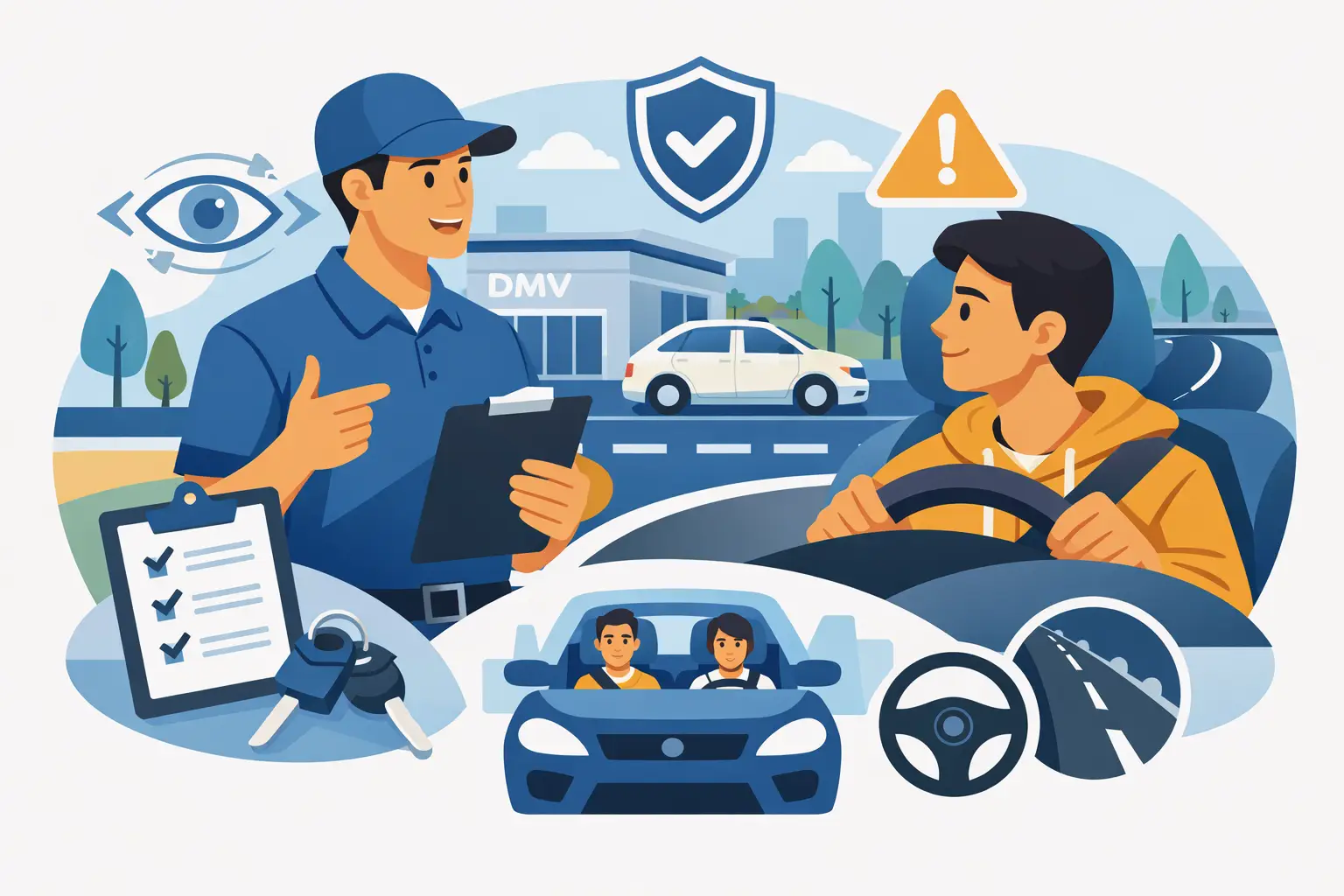
How DMV Certified Driving Instructors Build Safe Drivers
A driving lesson can feel very different depending on who is in the passenger seat. For a nervous teen, a first-time adult driver, or someone adjusting to California traffic rules from another country, the right guidance can turn a stressful hour behind the wheel into measurable progress. That is why working with DMV certified driving instructors matters. Their role is not simply to help students pass a road test. It is to teach safe decision-making that holds up after the license is issued.
At Newport Driving School, instruction begins with the student, not a one-size-fits-all script. Some learners need to build comfort with steering, braking, and lane position. Others already drive but need focused preparation for a California DMV road test. A qualified instructor can recognize the difference and create a lesson plan that matches the student’s skill level, learning pace, and goals.
What DMV Certified Driving Instructors Are Trained to Do
The phrase “DMV certified” is often used by families searching for a legitimate driving school. In California, driving school instructors must meet state requirements to be licensed to provide professional instruction. That licensing process is designed to help ensure instructors are qualified to teach driving skills and follow the rules that govern commercial driving schools.
A professional instructor does more than explain stop signs and parallel parking. They observe how a student processes information, responds to traffic conditions, manages distractions, and recovers from mistakes. That real-time observation is especially valuable because driving is not a written subject. A student may understand right-of-way rules in theory but hesitate at an uncontrolled intersection or misjudge a safe gap when turning left.
Good instruction connects California traffic laws to practical actions. Instead of telling a student to “be careful,” an instructor can explain where to look before changing lanes, when to start braking for a yellow light, how to maintain a safe following distance, and why scanning ahead prevents last-second decisions. These small habits are what make a new driver more predictable and safer around other road users.
Licensing is a starting point, not the whole standard
State credentials matter, but they are only part of what parents and adult learners should evaluate. Experience, patience, communication, and a structured teaching process all affect the quality of a lesson.
A capable instructor knows when to give immediate direction and when to let the student think through a situation. Too much correction can overwhelm a beginner. Too little guidance can allow poor habits to repeat. The best balance depends on the learner. A confident student who rushes through turns may need coaching on observation and speed control, while an anxious student may need calm repetition on quiet streets before entering heavier traffic.
How to Choose DMV Certified Driving Instructors
Choosing a driving school is a safety decision as much as a scheduling decision. The lowest lesson price is not always the best value if the program is rushed, vague, or poorly matched to the student’s needs. Before enrolling, ask direct questions about instructor licensing, lesson structure, vehicle safety, and the school’s experience teaching students with goals similar to yours.
A reputable school should be clear about its credentials and explain what happens during behind-the-wheel training. Families should know whether lessons include pickup and drop-off, how progress is documented, what type of vehicle is used, and how the school prepares students for both everyday driving and the DMV road test.
It also helps to ask how the instructor adapts instruction. Teen drivers often benefit from lessons that reinforce the habits they are practicing with parents or guardians. Adult beginners may prefer a slower introduction that begins in low-pressure areas. International drivers may need focused coaching on California signs, right-of-way rules, freeway behavior, and the specific expectations of the licensing exam.
Look for a school that can answer these questions clearly:
- Are instructors properly licensed to provide driving instruction in California?
- Is each lesson tailored to the student’s current skills and confidence level?
- Are training vehicles maintained, insured, and equipped for instruction?
- Does the school offer road test preparation and practical feedback after lessons?
- Can the program accommodate specialized needs, such as manual transmission training, senior refresher lessons, or instruction for anxious drivers?
Clear answers signal professionalism. Vague promises about guaranteed results should prompt more questions. No responsible instructor can control every DMV examiner, traffic condition, or student decision on test day. What a school can do is prepare the student thoroughly, identify weak areas early, and provide repeated practice under qualified supervision.
What Personalized Behind-the-Wheel Lessons Should Cover
A useful driving lesson has a purpose. Early lessons may focus on vehicle controls, smooth acceleration and braking, turning, mirror use, and basic traffic flow. As the student develops control, the instructor can introduce more demanding situations, such as multilane roads, busy intersections, parking lots, freeway entry and exit, and complex right-of-way decisions.
The order matters. Throwing a brand-new driver into congested traffic too soon can increase anxiety without improving skill. On the other hand, staying only on quiet residential streets can leave a student unprepared for real-world driving. DMV certified driving instructors should increase difficulty gradually, giving students time to develop control before adding more traffic, speed, and decision-making pressure.
Road test preparation should also be specific. Students need to practice the maneuvers commonly evaluated on the DMV test, including safe lane changes, intersections, turns, backing, parking, speed management, and visual checks. But memorizing a test route is not a substitute for sound driving. Examiners look for safe, consistent behavior, not a performance that works only on one familiar street.
A strong instructor explains the reason behind corrections. “Check your blind spot before moving over” is useful. Explaining that mirrors do not show every vehicle, bicycle, or motorcycle near the car makes the habit more likely to stick. That understanding matters long after the road test is over.
Feedback should be direct and encouraging
Students need honest feedback, especially when a mistake could create risk. Yet the delivery matters. A student who feels embarrassed may become tense, silent, or afraid to try again. A professional instructor can correct an error without making the learner feel incapable.
The most productive feedback is timely and specific. Rather than saying, “Your turns need work,” an instructor might point out that the student began braking too late, entered too quickly, or failed to look through the turn. The student then has a clear action to practice on the next attempt.
For parents, this outside perspective can be helpful. Teaching a teenager to drive is personal, and family practice sometimes creates tension. Professional lessons give the student a neutral setting to learn while giving parents a clearer picture of what to reinforce between appointments.
When Specialized Instruction Makes Sense
Not every driver is starting from the same place. A learner with test anxiety may need a mock road test and extra practice with examiner-style directions. A driver who has failed a previous test may need an objective assessment rather than more unstructured practice. Someone returning to driving after years away may need a refresher focused on confidence, current laws, and defensive driving techniques.
Specialized instruction is also valuable for manual transmission learners, senior drivers, foreign drivers, and people who need support because of a medical, cognitive, or learning concern. These situations call for patience and a plan, not assumptions. The right program should identify the driver’s current ability, set realistic goals, and progress at a safe pace.
Convenience can matter, too. Busy adults may need lessons around work schedules. Teens may need pickup and drop-off that fits school and family logistics. In Orange County and surrounding Southern California communities, flexible scheduling can make it easier to practice consistently, which is often more effective than cramming several lessons into a short period.
A license is an important milestone, but confident driving is built one well-practiced decision at a time. Choose an instructor who treats every lesson as preparation for the road ahead, not just the test at the end of it.

Related Posts



Comments (0)